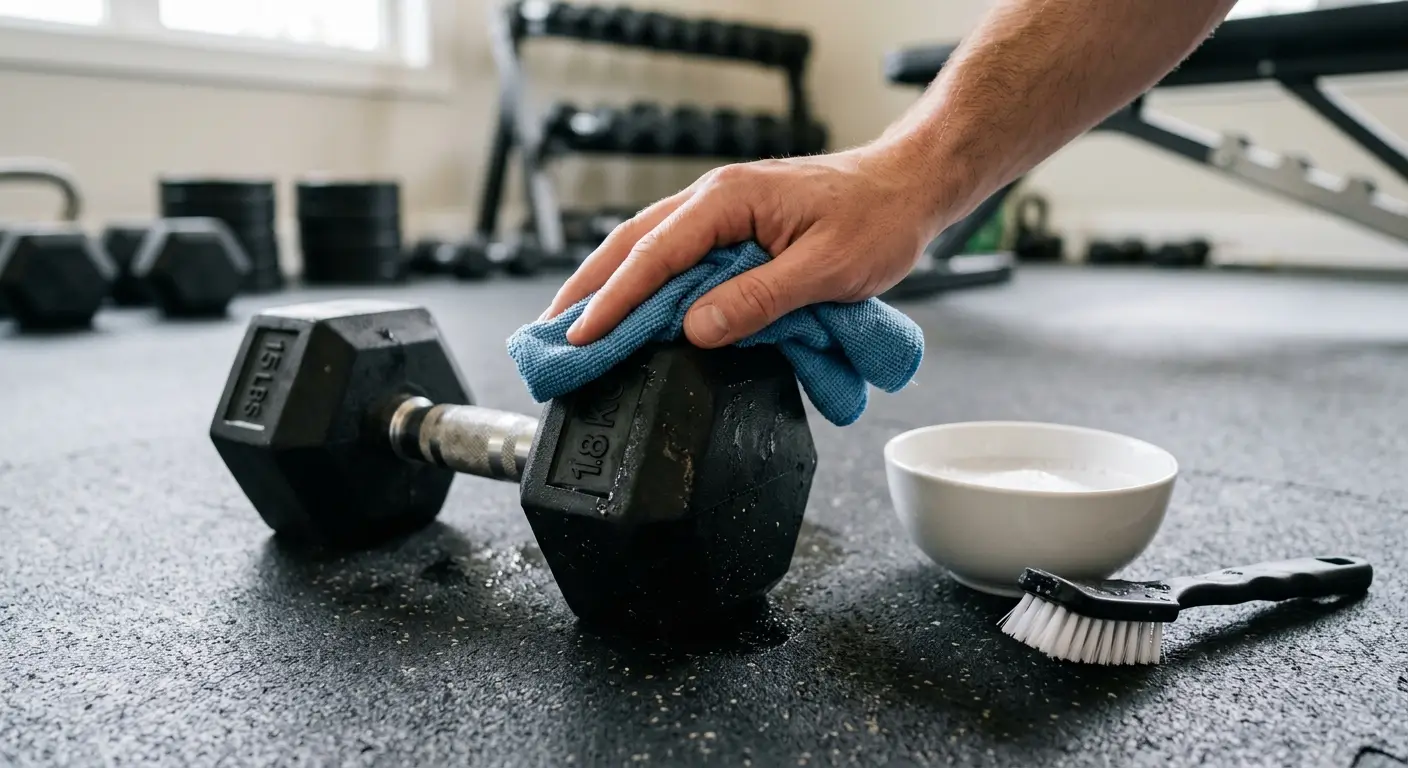
Knowing how to clean rubber dumbbells takes five minutes and a few items you already own. It protects your grip, your skin, and the coating that shields your floors and your weights.
Rubber looks tough, but sweat, skin oils, and the wrong cleaner can dry it out or make it sticky. Below, you’ll get a safe method, a cleaning schedule, and a list of products to avoid.
Quick Answer
Wipe rubber dumbbells with a soft cloth dampened with warm water and a few drops of mild dish soap, then dry them fully. Do this after sweaty workouts, and give them a deeper clean every few weeks. Skip solvents, petroleum-based cleaners, abrasive scrubbers, and soaking. Always check your manufacturer’s care page first.
Why You Should Know How to Clean Rubber Dumbbells
Dumbbell handles collect sweat, skin oils, and chalk. Over time, that film turns slippery, smelly, or sticky. If several people share your weights, hygiene matters even more.
For shared gear, the CDC advises cleaning equipment after each use and letting it dry before the next person lifts. The same page says to follow the manufacturer’s instructions so the cleaner doesn’t harm the item. It also notes that there is little evidence that heavy disinfectant use prevents MRSA better than targeted surface cleaning. In other words, regular, gentle cleaning beats harsh chemicals.
Cleaning also protects your money. A clean, dry coating lasts longer, and a clean handle gives you a steadier grip on rows, carries, and curls. That matters most on heavy sessions, like the dumbbell lifts in our leg and shoulder workout.
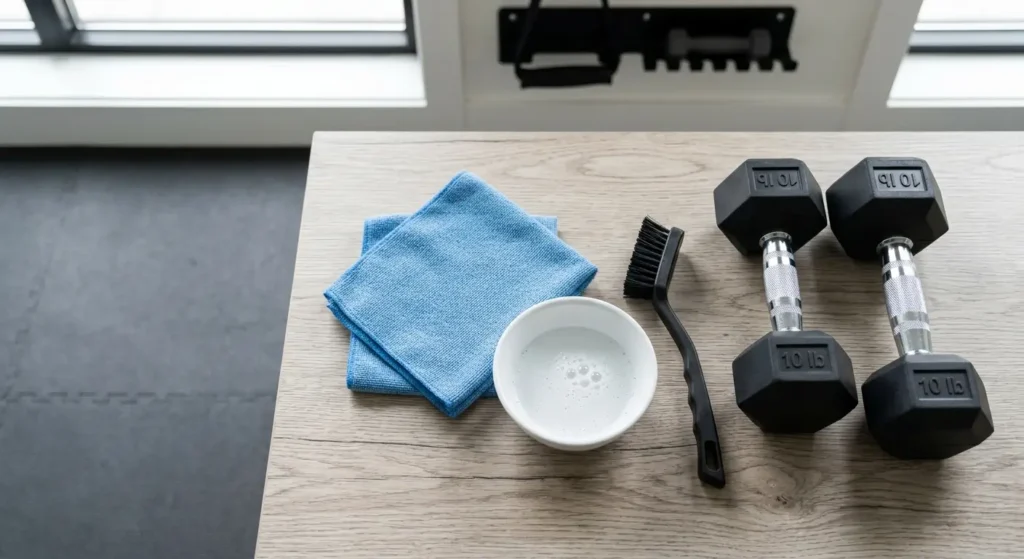
How to Clean Rubber Dumbbells: What You Need
You probably own everything already. Gather these before you start:
- Two soft microfiber cloths: one for washing, one for drying
- Mild dish soap: about 1/2 teaspoon per 1 cup (240 ml) of water
- Warm water: comfortably warm, not hot, around 100°F (38°C)
- A small bowl or spray bottle
- A soft nylon brush: for knurled handles only
- Optional: gym wipes labeled safe for rubber, and a rubber-safe conditioner
Avoid steel wool, scouring pads, and stiff bristle brushes. They scratch the coating, and scratches trap dirt.
How to Clean Rubber Dumbbells Step by Step
Here is how to clean rubber dumbbells in seven steps. The method suits rubber hex dumbbells, round rubber-coated dumbbells, and most fixed-weight pairs.
- Set up a work area. Place the dumbbells on a towel or mat so they can’t roll or scratch the floor.
- Mix your solution. Combine warm water and a few drops of mild dish soap in the bowl or bottle.
- Dampen the cloth, don’t soak it. Wring it out well. A dripping cloth lets water creep into the seams.
- Wipe the rubber heads. Use slow, even strokes. Focus on the flat edges and corners, where grime hides.
- Clean the handle. Wipe it down. Then brush the knurling (the textured grip pattern) gently with the nylon brush to lift chalk and skin oils.
- Rinse with a clean, damp cloth. Soap left behind can leave a sticky or hazy film.
- Dry completely. Use the second cloth. Then let the weights air dry for 10 to 15 minutes before they go back on the rack.
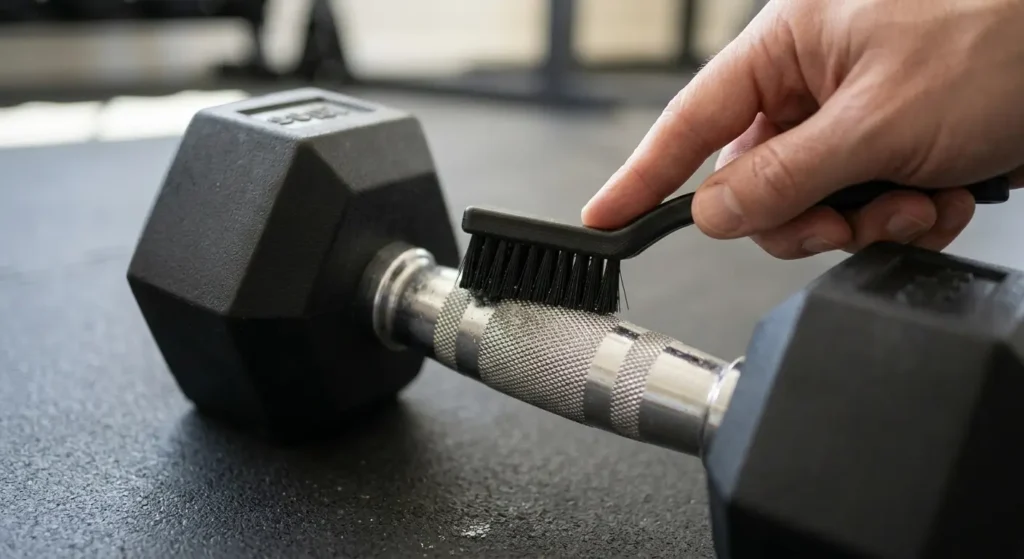
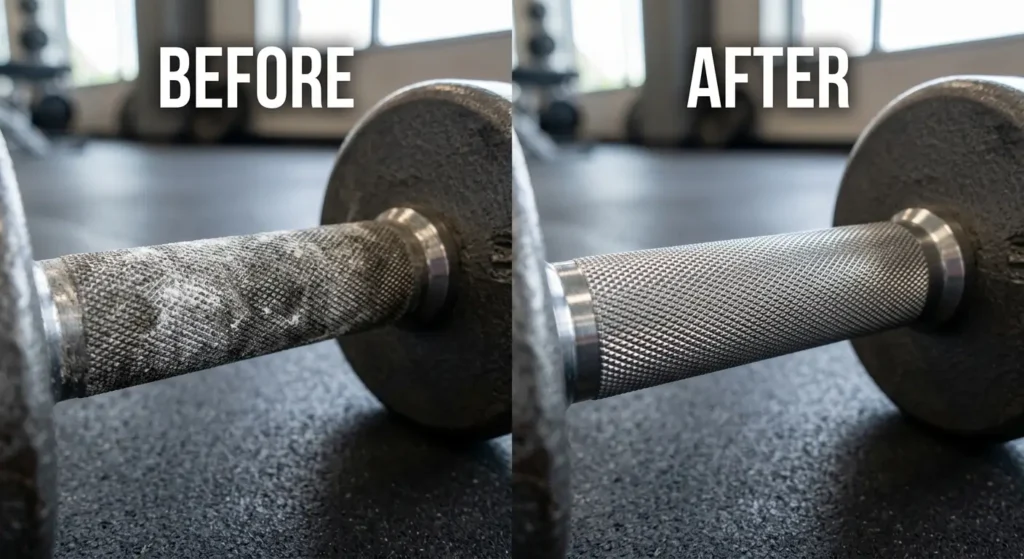
Coach’s Tip: Dry the handle last, then check how it feels. It should feel clean and slightly grippy. If it feels slick, soap is still on it, so wipe it again with a clean damp cloth.
Easier version (2-minute wipe): After a workout, run a damp cloth over the handles and heads, then dry them. This habit prevents most buildup.
Harder version (monthly deep clean): Follow all seven steps, brush every handle, inspect the rubber for cracks, and wipe down the rack and floor mat too.
How Often Should You Clean Dumbbells?
Frequency depends on how much you sweat and how many people share the weights. Use this table as a starting point.
| Situation | Quick wipe | Full cleaning |
|---|---|---|
| Solo home gym, light use | After sweaty sessions | Every 2-4 weeks |
| Solo home gym, hard training | After every session | Every 2 weeks |
| Shared by family or roommates | After each person finishes | Weekly |
| Garage or humid space | After every session | Weekly, plus a dryness check |
| New dumbbells with a strong smell | Wipe once with mild soap | Repeat after a few days if needed |
Damp spaces need extra care. Moisture can lead to mildew on the rubber and rust where the metal handle meets the head. Therefore, dry your weights thoroughly if you train in a garage or basement.
How to Clean Rubber Dumbbells Safely: Products to Use and Avoid
Brands word their advice differently, but the guidance lines up. Rogue’s care guide for its rubber hex dumbbells says to wipe handles and heads with mild soap and water or a non-acidic gym wipe. It also warns that petroleum-based cleaners can degrade rubber over time.
Ivanko, a commercial equipment maker, suggests a rubber cleaner and conditioner every 30 to 60 days for busy clubs. It also advises against Armor-All-type sprays, saying they dry out rubber. A home gym can usually go longer between conditioning, but check your own brand’s guidance [VERIFY].
| Product | Safe for rubber? | Notes |
|---|---|---|
| Mild dish soap and water | Yes | Best everyday option |
| Non-acidic gym wipes | Usually | Read the label and wipe off residue |
| Rubber-specific cleaner or conditioner | Yes | Use sparingly and follow the label |
| Alcohol-based cleaners | Use caution | Check your manufacturer first |
| Bleach | Skip it | Not needed for routine cleaning, unless your manufacturer approves |
| Acetone, paint thinner, solvents | No | Can strip or soften the coating |
| Petroleum-based cleaners and oils | No | Can degrade rubber over time |
| Abrasive pads or steel wool | No | Scratches the surface |
Common Mistake: Soaking dumbbells in a bucket or tub. Water can seep into seams and reach the iron core, which may cause rust and loosen the rubber. Wipe with a damp cloth instead, and never submerge the weights.
How to Clean Rubber Dumbbells With Odor, Chalk, or Sticky Spots
Basic wiping handles everyday grime. For trouble spots, here is how to clean rubber dumbbells that need extra attention.
Strong rubber smell. New rubber often smells strong. Rogue’s guide says this is normal for new rubber products. Wipe the weights once with mild soap and water, then air them out in a ventilated room for a few days. Skip perfume sprays and air fresheners.
Sweat smell or mildew. A sour smell usually means sweat and skin oils have built up on the handle. Wash the handle and heads, brush the knurling, and dry everything well. If you see mildew spots, wipe them with soapy water and move the weights somewhere drier.
Chalk buildup. Lifting chalk packs into the knurling. A soft nylon brush clears it. Brush along the pattern, then wipe the handle with a damp cloth and dry it.
Sticky or hazy rubber. Soap residue, skin oils, or leftover spray can leave a film. Rinse with a clean damp cloth and dry thoroughly. If the rubber stays tacky, peels, or cracks, contact the manufacturer.
Scuffs and marks. Most floor scuffs wipe away with mild soap and a damp cloth. Don’t scrub hard.
Also, check each dumbbell while you clean. Stop using any pair with a cracked head, a loose handle, or a wobbling end. Heavy shrugs and farmer carries put a lot of stress on handles. Our comparison of dumbbell shrugs vs barbell shrugs shows why those lifts leave handles sweaty and chalky.
Cleaning Other Dumbbell Types
Your rack may hold more than rubber-coated weights. The same gentle approach applies, with a few differences.
- Urethane dumbbells: Iron Grip’s care guide recommends a soft, damp cloth only. It warns against acetone, solvent cleaners, and household sprays containing ammonia or alcohol.
- Neoprene dumbbells: Use mild soap and water, then air dry. Keep them out of strong direct sunlight [VERIFY with your manufacturer].
- Bare cast iron: Wipe them dry after every session, because moisture leads to rust. Check the manufacturer’s advice before using any rust remover.
- Adjustable dumbbells: Keep water out of the selector mechanism. Wipe only the outside with a barely damp cloth [VERIFY with your manufacturer].
Still choosing a set? Our guide to hex dumbbells vs round dumbbells covers coatings and shapes in detail.
Keep Your Hands and Gear Clean Too
Clean weights help, but clean hands matter just as much. The CDC’s advice for athletes says to clean your hands before and after using shared weight-training equipment. It also suggests putting a towel or clothing between your skin and shared surfaces. Finally, it says to cover cuts with clean, dry bandages.
Simple habits keep your dumbbells cleaner between washes:
- Wash your hands before and after training.
- Keep a small towel nearby for your hands and the handles.
- Cover cuts and scrapes before lifting.
- See a doctor if you notice spreading redness, pus, or a painful boil.
Your gym bag collects the same sweat and bacteria. Our guide on how to wash a gym bag covers it. If you carry wipes and a towel, our roundup of the best CrossFit gym bags can help you find one with a separate wet pocket.
Storage Tips That Keep Rubber Clean Longer
Good storage makes every cleaning last longer. Follow these simple rules:
- Keep weights off bare concrete. Concrete holds moisture, so use a rack or a mat.
- Avoid heat and chemicals. Don’t store dumbbells beside solvents, paint, or fuel. Also check your manufacturer’s advice on sunlight and temperature [VERIFY].
- Use a rack. Weights stacked on one another scuff and trap dirt.
- Control humidity. In a damp garage, a small dehumidifier may help.
Short on space? Our list of the best apartment workout equipment has compact, easy-to-store options.
FAQ
What can I use to clean rubber dumbbells?
Mild dish soap, warm water, and a soft microfiber cloth work for most rubber dumbbells. Gym wipes labeled safe for rubber also work, if you wipe off residue. Avoid solvents, petroleum-based cleaners, and abrasive pads. Check your manufacturer’s care page before trying anything stronger.
Can you use disinfectant wipes on rubber dumbbells?
Often yes, but read the label and your manufacturer’s care guide first. Rogue, for example, suggests non-acidic gym wipes. Harsh formulas may dry or dull some coatings. Wipe off leftover residue, and test a small spot if you’re unsure.
How often should you clean dumbbells?
Wipe handles after sweaty workouts, and do a fuller clean every two to four weeks for solo home use. Clean weekly if several people share them or your space is humid. The CDC advises cleaning shared equipment after each use.
Why do my rubber dumbbells smell?
New rubber often smells because of how it is made, and the odor usually fades with airing. Older dumbbells smell from trapped sweat and skin oils. Wash the heads and handles with mild soap, dry them fully, and store them somewhere dry and ventilated.
Can I wash rubber dumbbells with water?
You can wipe them with a damp, well-wrung cloth. Avoid soaking or submerging them, because water can seep into seams and may reach the iron core. Dry them fully after cleaning, especially where the rubber meets the metal handle.
How do you clean dumbbell handles?
Wipe the handle with a cloth dampened with soapy water. Then brush the knurling gently with a soft nylon brush to lift chalk and skin oils. Rinse with a clean damp cloth, dry thoroughly, and check that the grip feels clean, not slick.
Conclusion: How to Clean Rubber Dumbbells Without Damage
Now you know how to clean rubber dumbbells the safe way. Use mild soap, warm water, and a soft cloth. Then dry the weights completely, and keep solvents, petroleum-based cleaners, and long soaks away from the rubber.
Build a simple habit: a quick wipe after sweaty sessions and a deeper clean every few weeks. Your grip stays secure, your weights last longer, and your home gym stays fresh. Finally, always check your manufacturer’s care page, because coatings vary.
