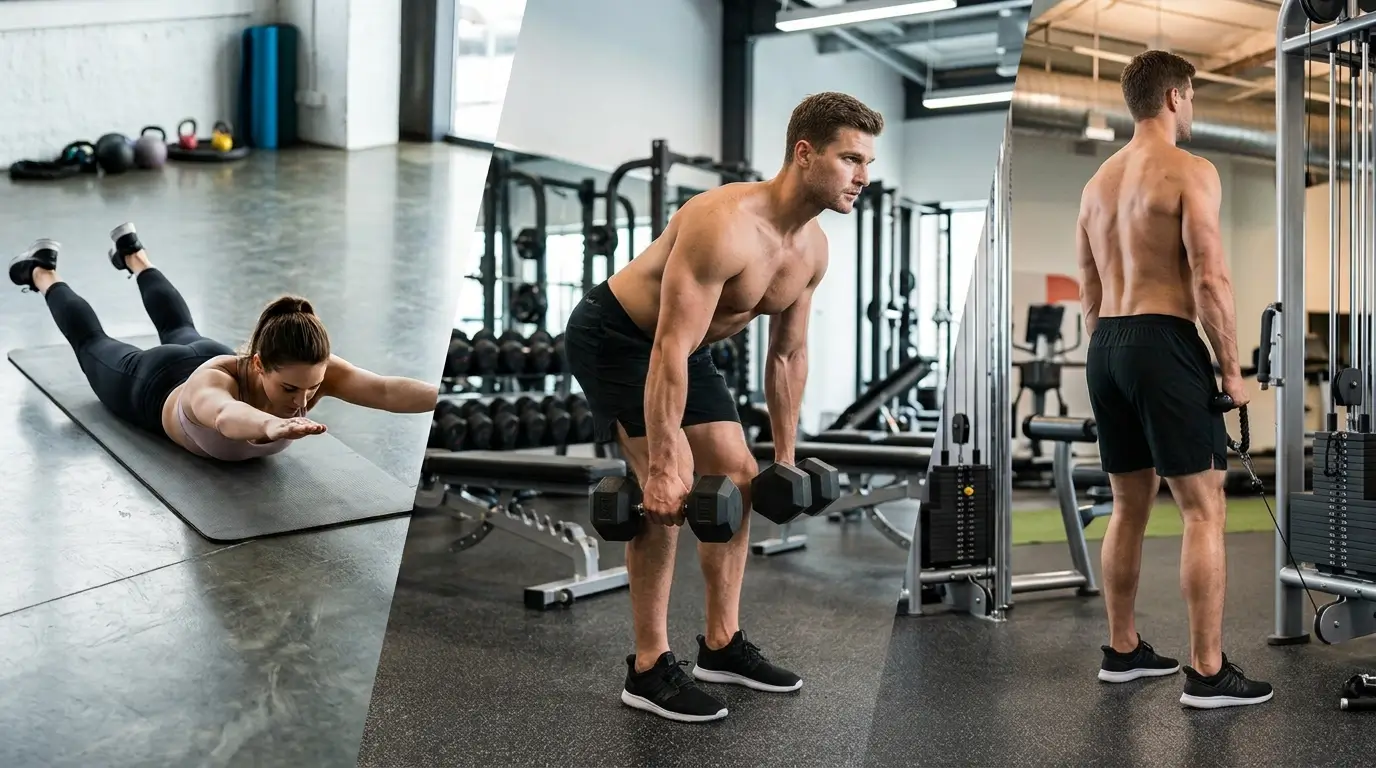
Not every gym has a hyperextension bench, and not every lower back likes one. The good news is that back extension alternatives can train the same muscles with a floor mat, a pair of dumbbells, or a cable stack. Many are easier to control, and some are friendlier to your spine.
This guide is for gym beginners and home gym owners who want a strong lower back without special gear. You will learn which muscles each move trains, how to do it with good form, and how to fit it into your week. If you are still building your home gym equipment list, you can start with nothing but a mat.
Quick Answer: The best back extension alternatives are the superman hold, bird dog, and glute bridge with no equipment; the dumbbell Romanian deadlift and goblet good morning with weights; and the cable pull-through on a pulley. They train your erector spinae, glutes, and hamstrings. Start with two to three sets of 8-15 slow reps.
Muscles Worked by Back Extension Alternatives
The main target is the erector spinae, the long muscles that run along both sides of your spine. Right beside them sits the multifidus, a deeper muscle that steadies each spinal joint. One small EMG study of 18 healthy adults found both muscles worked hard during isometric back holds, and they appeared to act as one unit, according to Ng and Richardson in the Australian Journal of Physiotherapy.
Good back extension alternatives also train the posterior chain, which means the glutes and hamstrings that extend your hips. A posterior muscle chain study on PubMed Central suggests that both trunk extension and leg extension drills fire the back muscles at a high level. Lumbar activity was somewhat higher when the trunk did the lifting.
Primary muscles:
- Erector spinae (spinal erectors)
- Multifidus
- Gluteus maximus
- Hamstrings
Secondary muscles:
- Quadratus lumborum (deep side-back muscle)
- Lats, rhomboids, and middle trapezius (upper back)
- Transverse abdominis and obliques (core stabilizers)
Your upper back helps too, especially in rowing-style moves. If you want to see how the lats and mid-back fit together, read our guide to pull-up muscles worked.
Benefits of Back Extension Alternatives
First, you get a stronger, more resilient lower back. Next, you learn the hip hinge, the pattern behind deadlifts, picking up groceries, and lifting a toddler. In addition, most of these moves need little or no equipment, so you can train at home.
Endurance matters, too. The PubMed Central paper above notes that low back muscle endurance has been linked to the chance of developing low back pain. That does not mean exercise prevents pain, but it does show why training these muscles is worth your time.
Finally, these moves help you meet basic guidelines. Adults should do muscle-strengthening activity that works all major muscle groups, including the back, on at least two days a week, according to the CDC adult activity guidelines.
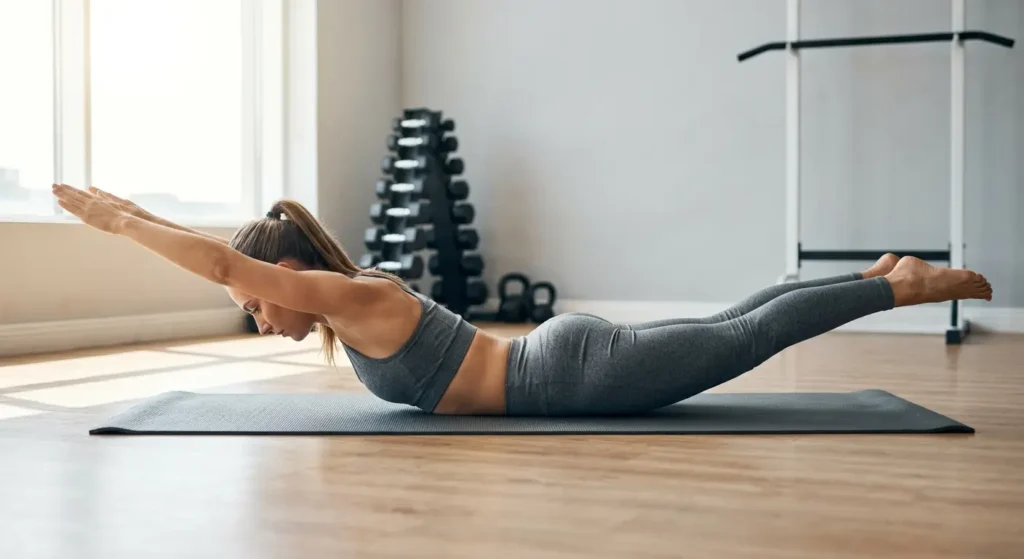
How to Do a Back Extension Alternative: Step-by-Step Superman Hold
The superman hold is the closest no-equipment match to a floor-level back extension. Use it to learn the feel before you add load.
- Set up. Lie face down on a mat with your arms straight overhead and your legs about hip-width apart, roughly 10-12 inches (25-30 cm).
- Look down. Place your forehead toward the floor so your neck stays long. Do not crane upward.
- Squeeze your glutes first. This protects your lower back and shares the work with your hips.
- Lift. Raise your arms, chest, and legs 2-4 inches (5-10 cm) off the floor. You only need a small lift.
- Hold. Breathe steadily for 2-3 seconds. You should feel a firm, working sensation along the spine and in the glutes, not a pinch.
- Lower slowly. Take 2-3 seconds to return to the mat. Rest one second, then repeat.
Coach’s Tip: Imagine you are being gently stretched from your fingertips to your toes. Thinking long, not high, keeps the lift small and the muscles in control.
A small lift is enough. A prone back extension study measured low demand on the back muscles in healthy men, and its authors concluded that these drills suit back muscle endurance work. That is why higher reps and controlled holds make sense here.
Sets, Reps, and Weight by Goal
These are general coaching starting points, not medical prescriptions. Keep one or two reps in reserve on every set at first.
| Goal | Best picks | Sets | Reps / time | Rest | Tempo | Starting load |
|---|---|---|---|---|---|---|
| Strength | Dumbbell RDL, cable pull-through | 3-4 | 6-8 | 90-120 sec | 3 sec down, 1 up | Dumbbells 25-35 lb (11-16 kg) each; cable 40-60 lb (18-27 kg) |
| Muscle size | Goblet good morning, weighted glute bridge | 3 | 8-12 | 60-90 sec | 2 down, 1 up | Dumbbell 20-30 lb (9-14 kg) |
| Endurance | Superman, bird dog, bridge | 2-3 | 10-15 reps or 20-30 sec holds | 30-45 sec | Slow, steady | Bodyweight |
If you are new, begin with the endurance row for two weeks. After that, add weight slowly, about 5 lb (2 kg) at a time.
Common Mistakes and How to Fix Them
Common Mistake: Lifting as high as possible. Over-arching the lower back crunches the spine and shifts work away from the muscles you want.
Fix: Keep the lift small and your ribs close to the floor. Think glutes and upper back, not a deep arch.
Mistake: Rounding the back on hip hinges. In dumbbell and cable moves, a rounded spine under load defeats the purpose. Push your hips back, soften your knees, and keep your chest proud.
Mistake: Rushing reps. Fast swinging lets momentum do the job. Count three seconds down every time.
Mistake: Holding your breath. Inhale on the way down, exhale as you rise. Brace lightly, as if you were about to be tapped in the stomach. Our guide on how to brace your abs explains the feeling.
Mistake: Training through sharp pain. Muscle burn is normal. Sharp, pinching, or radiating pain is a stop sign.
Variations: Easier to Harder
Use this ladder to match any move to your level. Easier first, then harder.
- Easier: Bridge with both feet on the floor, bird dog with arms only, or superman with arms at your sides.
- Standard: Superman hold, alternating bird dog, bodyweight good morning.
- Harder: Add pauses of 3-5 seconds, move to single-leg versions, then add dumbbells.
- Hardest: Heavier cable or dumbbell loads, tempo reps (4 seconds down), and single-leg Romanian deadlifts.
Add only one change at a time. For example, slow the tempo this week, then add 5 lb (2 kg) next week.
Best Back Extension Alternatives: No Equipment
These five moves need only a mat. They fit a small apartment, a hotel room, or a quick warm-up. If you like adding more bodyweight exercises to your routine, that list is a good companion.
1. Superman Hold
The form is in the step-by-step section above. Do 2-3 sets of 8-12 slow reps or 20-30 second holds.
Easier: Lift only your chest. Harder: Add a 3-second pause at the top and sweep your arms into a Y shape.
2. Bird Dog
Start on hands and knees, hands under shoulders, knees under hips. Reach your right arm forward and your left leg back until they are level with your torso. Hold two seconds, then switch.
This move trains the erector spinae and multifidus while your core keeps your spine still. Do 2-3 sets of 8-10 reps per side. A standing bird dog study in the journal Sports notes that ankle and wrist weights have raised multifidus and erector spinae activation in earlier bird dog research.
Easier: Lift only the arm or only the leg. Harder: Hold 5 seconds and draw a small box with your knee and elbow.
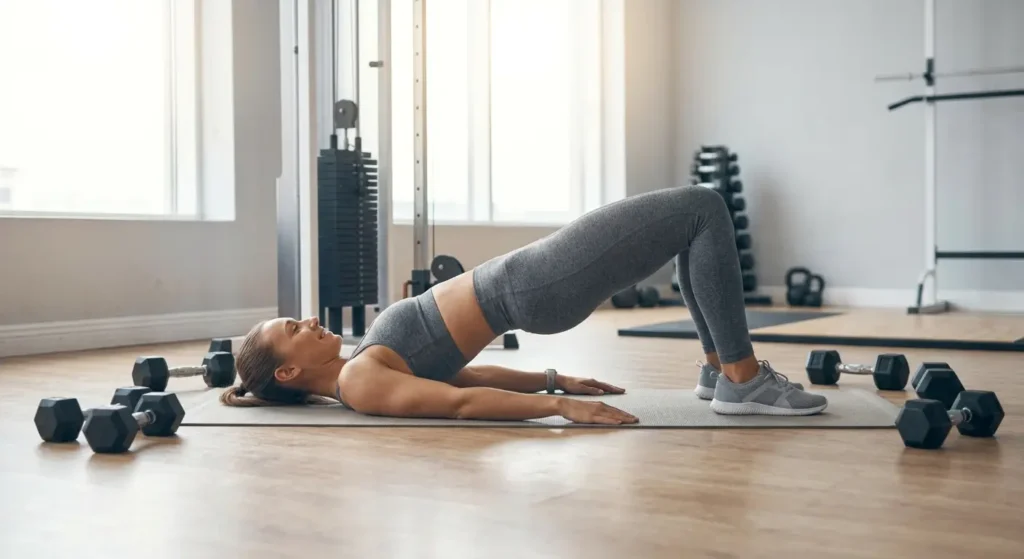
3. Glute Bridge
Lie on your back with knees bent and feet flat, about 12 inches (30 cm) from your hips. Press through your heels, lift your hips until your body forms a straight line from shoulders to knees, and squeeze for two seconds.
The bridge blends hip extension with back-extensor work. A PubMed Central comparison of back extension exercises described bridging as a way to combine hip extension with back extensor training. Do 3 sets of 12-15 reps.
Easier: Smaller range with a one-second hold. Harder: Single-leg bridge with feet on a bench.
4. Prone Cobra
Lie face down with your arms by your sides, palms down. Lift your chest a few inches while rotating your thumbs up and squeezing your shoulder blades together. Hold 3 seconds.
This variation shifts focus to the mid and upper back. Do 2-3 sets of 8-10 reps. It also pairs well with posture work for desk workers.
Easier: Keep your hands under your forehead. Harder: Lift arms and legs together.
5. Bodyweight Good Morning
Stand tall with feet shoulder-width apart, about 12-16 inches (30-41 cm). Place your hands behind your head. Push your hips back with soft knees until your torso is near parallel to the floor, then stand up by driving your hips forward.
This teaches the hip hinge you will need for every weighted version. Do 3 sets of 10-12 reps with a slow lower.
Easier: Hinge only halfway. Harder: Hold a 3-second pause at the bottom.
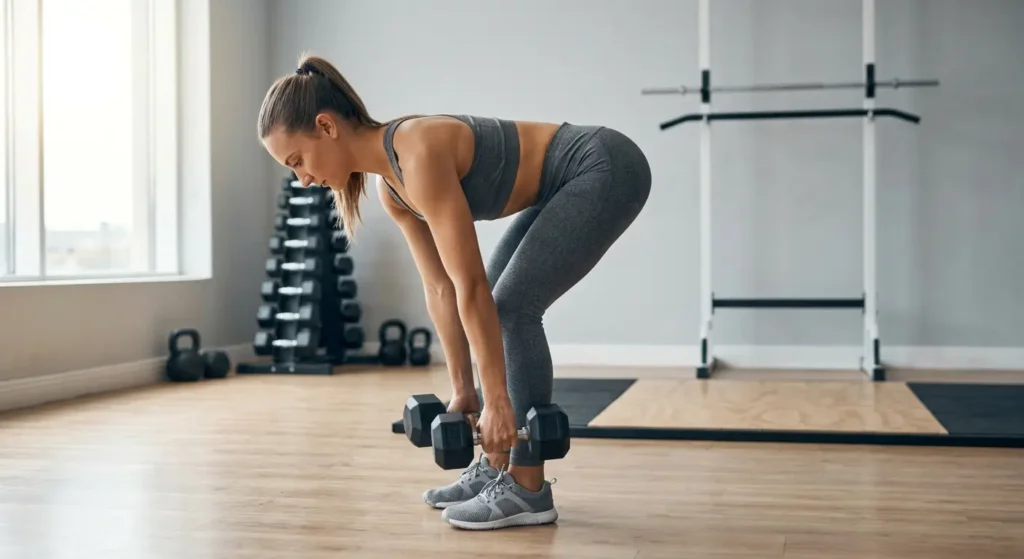
Dumbbell Back Extension Alternatives
Dumbbells add resistance without needing a bench or machine. Whether you prefer hex dumbbells or round ones, make sure they feel secure in your hands. Four moves cover almost everything.
6. Dumbbell Romanian Deadlift (RDL)
Hold a dumbbell in each hand in front of your thighs. Push your hips back, keeping the weights close to your legs, and lower until you feel a strong stretch in your hamstrings. Squeeze your glutes to stand.
Beginners can start with 10-20 lb (4.5-9 kg) in each hand. Do 3 sets of 8-10 reps with a 3-second lower. Your back should stay flat the whole time.
Easier: Use a broomstick and no weight. Harder: Add a pause at mid-shin or move to a single-leg version.
7. Goblet Good Morning
Hold one dumbbell against your chest with both hands. Hinge forward at the hips until your torso is near parallel, then return. The front load helps you keep your chest tall.
Use 15-35 lb (7-16 kg). Do 3 sets of 10-12 reps. Rest 60-90 seconds.
Easier: Hold a light plate. Harder: Slow the lowering to 4 seconds.
8. Dumbbell Hip Thrust or Weighted Glute Bridge
Sit with your upper back on a bench (about 16-18 inches, or 41-46 cm, high) or lie on the floor. Rest a dumbbell on your hips and drive them up until your torso is level. Pause for one second.
This is a strong glute move that eases demand on your lower back. Use 25-50 lb (11-23 kg). Do 3 sets of 8-12 reps.
Easier: Floor bridge with no weight. Harder: Single-leg thrust.
9. Single-Leg Dumbbell RDL
Hold a dumbbell in the hand opposite your standing leg. Hinge forward and extend the free leg behind you, keeping your hips level. Stand tall with a glute squeeze.
This builds balance and hip stability. Use 10-25 lb (4.5-11 kg). Do 2-3 sets of 6-8 reps per side.
Easier: Touch your free toe to the floor for balance. Harder: Hold the dumbbell on the same side as the standing leg for a different challenge.
Hinge patterns can also be trained with a kettlebell. Our article on kettlebell swings shows how the swing uses the same hinge.
Cable Back Extension Alternatives
Cables keep tension on the muscle through the whole rep, which feels smooth and easy to adjust. If you want to learn how cable tension differs from free weights, our cable versus barbell comparison explains the idea.
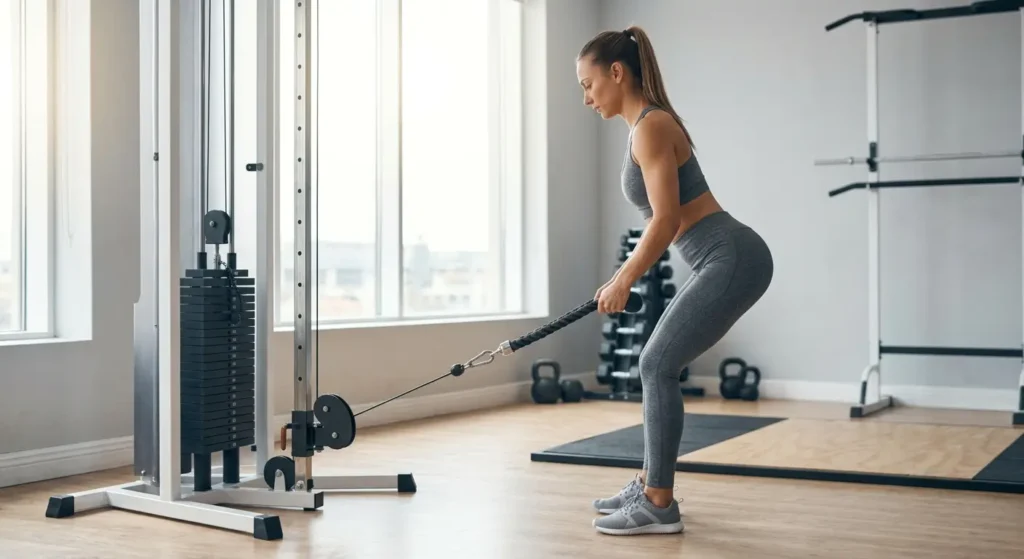
10. Cable Pull-Through
Set a rope to the lowest pulley. Face away from the stack, straddle the cable, and hold the rope between your legs. Hinge back, then drive your hips forward until you stand tall.
The cable pulls your hips back, so this move is easy to learn. Use 20-50 lb (9-23 kg) on the stack and do 3 sets of 10-15 reps.
Easier: Use a lighter stack and shorten the range. Harder: Add a 2-second squeeze at the top.
11. Cable Romanian Deadlift
Attach a straight bar to a low pulley. Stand facing the stack, hinge back with the bar sliding close to your legs, and return to stand. Use 30-60 lb (14-27 kg) and perform 3 sets of 8-12 reps.
Easier: Use a rope for a lighter feel. Harder: Slow the lowering to 4 seconds.
12. Seated Cable Row
Sit with your knees slightly bent and a tall chest. Pull the handle toward your lower ribs and squeeze your shoulder blades. Keep your torso still instead of rocking.
This builds mid-back endurance and helps you hold a neutral spine. Use 30-60 lb (14-27 kg) and do 3 sets of 10-12 reps.
Easier: Use a lighter stack. Harder: Hold the squeeze for 3 seconds.
Machine and Bench Options
If your gym has a 45-degree bench or reverse hyperextension machine, these remain strong options. Another route is a stability ball back extension, though the ball is less stable and needs more control. Roman chair alternatives like these work best when you keep your body in a straight line.
Who Should Be Careful
Check with a doctor or physical therapist first if you have back pain, a disc problem, osteoporosis, recent surgery, or pregnancy. Stop if you feel sharp pain, numbness, or tingling in your legs.
Mayo Clinic advises seeking emergency care if back pain follows trauma or comes with new bowel or bladder control problems, and calling your healthcare professional if pain spreads down a leg or does not improve, per Mayo Clinic’s guidance on when to see a doctor.
Older adults and anyone returning from a layoff should start with the easiest versions. Use light loads and fewer reps for the first two weeks.
Sample Workout Using Back Extension Alternatives
This 25-minute circuit needs a mat and a pair of dumbbells. Do it two or three days a week, with at least one rest day between sessions.
| Order | Exercise | Sets | Reps | Rest |
|---|---|---|---|---|
| 1 | Glute bridge (warm-up) | 2 | 12 | 30 sec |
| 2 | Bird dog | 2 | 8 per side | 30 sec |
| 3 | Dumbbell RDL | 3 | 8-10 | 75 sec |
| 4 | Goblet good morning | 3 | 10-12 | 60 sec |
| 5 | Superman hold | 3 | 20-30 sec | 45 sec |
| 6 | Prone cobra | 2 | 8-10 | 30 sec |
Progress by adding one rep per set each week. When you reach the top of the range on all sets, raise the load by 5 lb (2 kg).
FAQ
What can I do instead of back extensions?
Choose the superman hold, bird dog, or glute bridge if you have no equipment. Use the dumbbell Romanian deadlift or goblet good morning if you have weights. A cable pull-through works if you have a pulley. All of them train the erector spinae, glutes, and hamstrings with a controlled hip hinge or hold.
Are supermans as good as back extensions?
Supermans work the same muscles with lower loads, so they suit beginners and endurance goals. Back extensions on a bench let you add weight more easily, which can build more strength over time. Many lifters use both. Start with supermans, then add weighted hinges when the floor version feels easy.
Can I train my lower back with dumbbells only?
Yes. Dumbbell Romanian deadlifts, goblet good mornings, and weighted glute bridges all challenge the lower back and hips. Keep the weights close to your body and your spine flat. Start with 10-20 lb (4.5-9 kg) in each hand, then add 5 lb (2 kg) when all reps feel smooth.
How often should I train my lower back?
Two to three days a week works well for most people, with a rest day between harder sessions. This matches the CDC advice to do muscle-strengthening work on at least two days a week, according to the CDC guidelines. Beginners can start with two days and add a third later.
Are back extension alternatives safer for a sore back?
Some are gentler because you control the range and load, but safe depends on the cause of your pain. Talk with a doctor or physical therapist before training a sore back. They can tell you which moves to try, which to skip, and when to stop.
Do cable exercises work the lower back?
Yes. Cable pull-throughs and cable Romanian deadlifts train the glutes, hamstrings, and the muscles along your spine. The cable keeps steady tension, which helps you learn the hip hinge. Start light, focus on a flat back, and increase the stack slowly across several weeks.
Conclusion
You do not need a hyperextension bench to build a strong lower back. The right back extension alternatives, from supermans on a mat to dumbbell Romanian deadlifts and cable pull-throughs, can cover the same muscles with more control.
Start with the no-equipment moves, learn the hip hinge, and then add dumbbells or cables. Keep your reps slow, keep your spine neutral, and progress one small step at a time. Pick two or three back extension alternatives from this list, add them to your week, and build from there.
