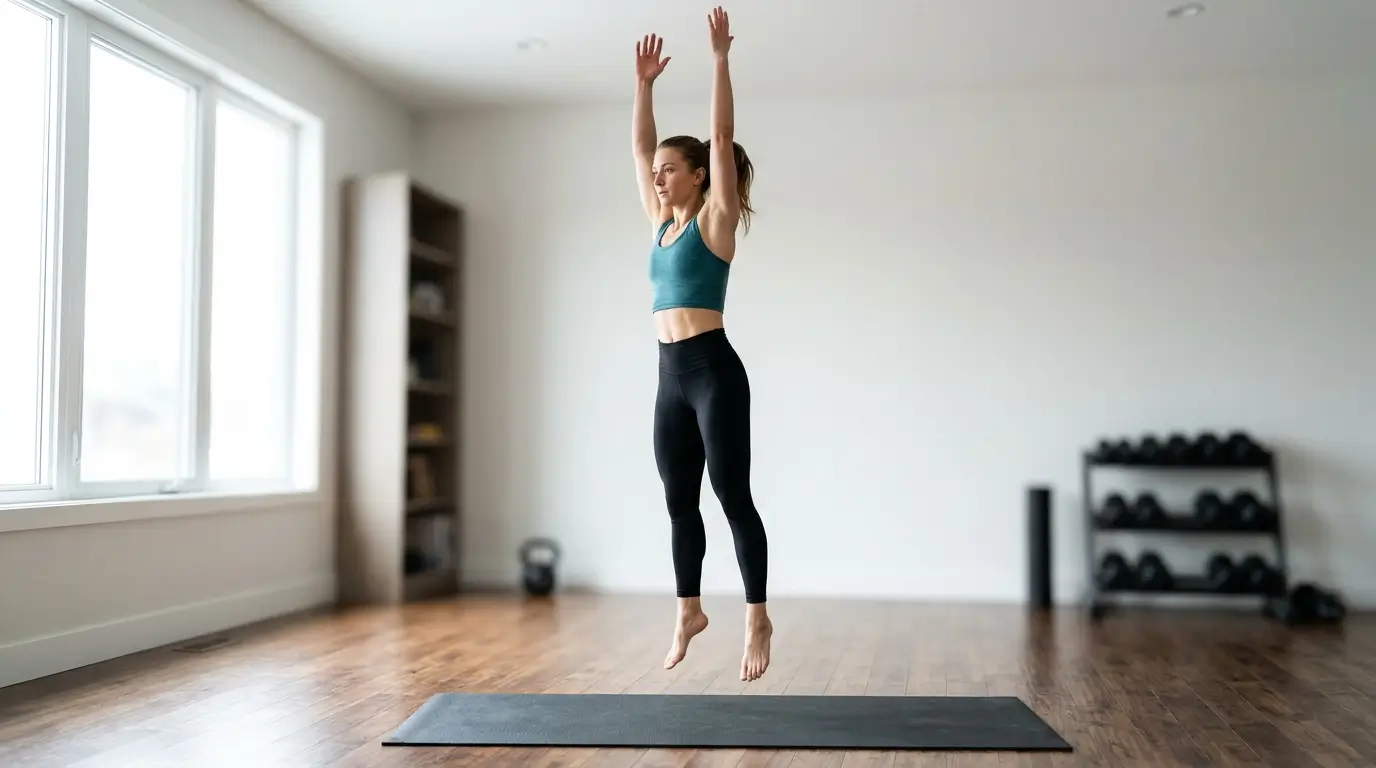
If you want a highly efficient, equipment-free exercise that torches energy and builds functional strength, the burpee is unmatched. Understanding the calories burned from 50 burpees can help you structure smarter, more effective workouts. This compound movement combines a squat, a plank, a push-up, and an explosive jump into one seamless sequence. Consequently, it demands energy from your entire body, elevating your heart rate faster than isolated exercises. Whether you are a gym beginner or a seasoned athlete, mastering this movement will transform your fitness routine.
This guide breaks down the exact science behind the calorie burn, step-by-step form cues, and practical programming to help you reach your goals safely.
Quick Answer
On average, performing 50 burpees burns between 15 and 30 calories, depending on your body weight, pace, and exercise intensity. For a 155 lb (70 kg) individual, completing this set at a vigorous pace typically takes 2 to 3 minutes, resulting in a highly efficient, full-body metabolic boost.
Calories Burned 50 Burpees: Muscles Worked
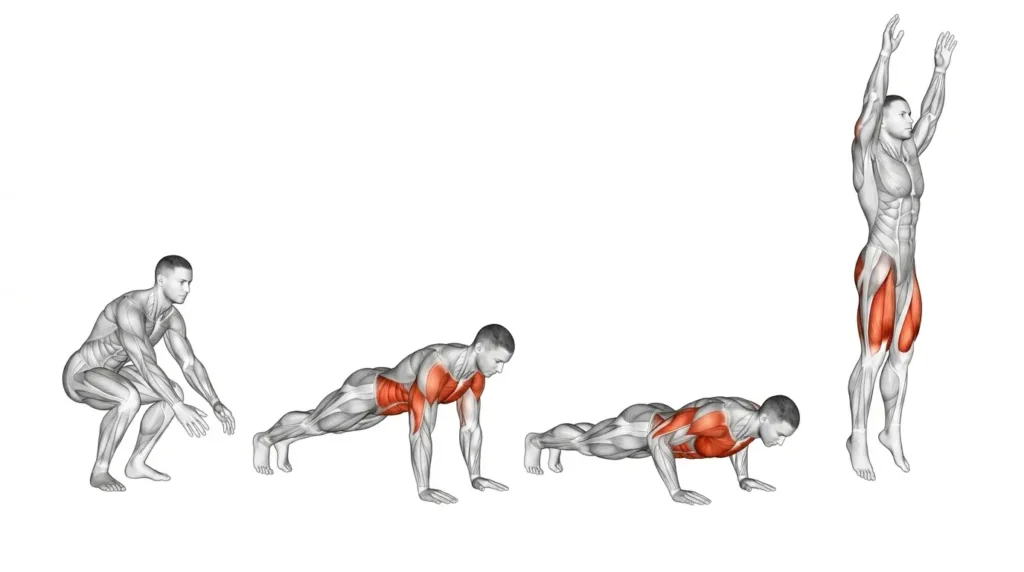
The burpee is a true full-body compound movement. It requires coordinated effort from multiple muscle groups, which is precisely why the calories burned from 50 burpees are higher than many traditional isolation exercises.
Primary Muscles:
- Quadriceps and Glutes: These muscles drive the initial squat and the final explosive jump.
- Pectorals (Chest) and Triceps: These upper-body pushing muscles are heavily engaged during the push-up phase at the bottom of the movement.
- Core (Rectus Abdominis and Obliques): Your core must remain rigid to stabilize your spine while your legs shoot back into a plank position.
Secondary Muscles:
- Deltoids (Shoulders): They assist in the push-up and help stabilize your arms during the jump.
- Hamstrings and Calves: These lower-body muscles assist in hip extension during the jump and absorb impact upon landing.
- Latissimus Dorsi: Your back muscles engage isometrically to keep your torso stable during the plank phase.
Why the Calories Burned 50 Burpees Matter for Fat Loss
Integrating this exercise into your weekly schedule offers profound physiological and practical advantages.
First, it maximizes metabolic efficiency. According to the American College of Sports Medicine (ACSM), vigorous calisthenics can reach a Metabolic Equivalent of Task (MET) value of 8.0 or higher. This means you burn calories at a high rate during the exercise. Furthermore, high-intensity efforts trigger Excess Post-exercise Oxygen Consumption (EPOC), commonly known as the “afterburn effect.” The American Council on Exercise (ACE) notes that EPOC can keep your metabolic rate elevated for hours after your workout concludes.
Second, burpees build functional, real-world strength. The movement pattern mimics getting up from the floor quickly, which is a vital marker of longevity and mobility.
Finally, they require zero equipment. You can perform them in a small living room, a hotel room, or an outdoor park. This makes them a staple in any bodyweight calisthenics exercise routine.
Step-by-Step Form to Maximize Calories Burned 50 Burpees
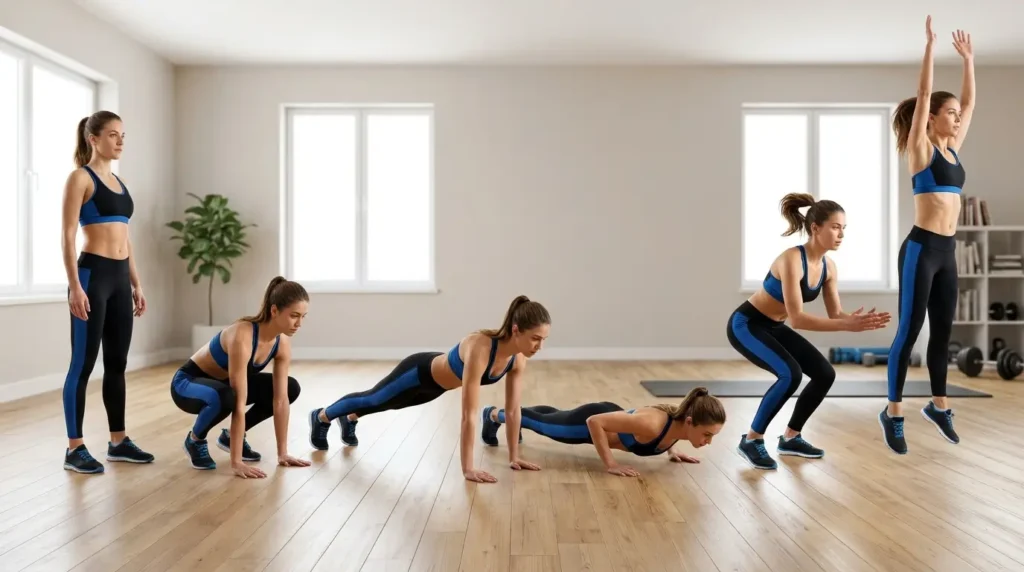
Proper technique is non-negotiable. Poor form not only reduces the calories burned from 50 burpees by making the movement inefficient, but it also invites injury. Follow these precise steps.
1. The Starting Stance
Stand with your feet shoulder-width apart (about 16 to 18 inches or 40 to 45 cm apart). Keep your chest up and your core braced.
2. The Squat and Hand Placement
Hinge at your hips and bend your knees to drop into a deep squat. Place your palms flat on the floor directly in front of your feet. Your hands should be slightly wider than shoulder-width.
3. The Plank Transition
Shift your weight onto your hands and explosively jump or step both feet back. Your body should form a straight, rigid line from your head to your heels. Do not let your hips sag or pike upward.
4. The Push-Up (Optional but Recommended)
Lower your chest until it is about 2 inches (5 cm) from the floor. Keep your elbows tucked at a 45-degree angle to your torso, not flared out. Push back up to the high plank position.
5. The Return Jump
Engage your core and jump both feet forward, landing them softly just outside your hands. You should return to the deep squat position.
6. The Explosive Finish
Drive through your heels, extend your hips and knees, and jump vertically. Reach your arms overhead. Land softly with bent knees to absorb the impact.
Sets, Reps, and Goals
How you program your burpees dictates your results. Use this table to align your volume with your specific fitness objective.
| Goal | Sets | Reps per Set | Rest Time | Tempo / Focus |
|---|---|---|---|---|
| Fat Loss / Conditioning | 4–6 | 10–15 | 30–45 seconds | Fast, continuous pace to keep heart rate elevated. |
| Muscular Endurance | 3–4 | 20–25 | 60 seconds | Controlled, steady rhythm. Focus on perfect form. |
| Explosive Power | 5 | 5–8 | 90–120 seconds | Maximum vertical jump height. Full recovery between sets. |
| Beginner Foundation | 3 | 5–8 | 60–90 seconds | Step back instead of jumping. Prioritize joint safety. |
Common Mistakes and Fixes
Even experienced athletes can develop bad habits when fatigue sets in. Avoid these pitfalls to protect your joints and maximize your effort.
Common Mistake: The Sagging Plank
When your core tires, your lower back often drops toward the floor. This places excessive shear force on your lumbar spine.
The Fix: Squeeze your glutes and pull your belly button toward your spine. If you cannot maintain a straight line, regress the movement by stepping your feet back one at a time instead of jumping.
Mistake 2: Half-Reps on the Push-Up
Dropping only a few inches defeats the purpose of the upper-body stimulus.
The Fix: Aim for your chest to hover just above the floor. If a full push-up is too difficult, perform the burpee from an elevated surface, like a sturdy bench or box.
Mistake 3: Heavy, Flat-Footed Landings
Loud, heavy landings indicate poor shock absorption, which can damage your knees and ankles over time.
The Fix: Focus on landing on the balls of your feet with your knees softly bent. The movement should be quiet and controlled.
Variations: Regression and Progression
A great coach meets you where you are. Here is how to scale the exercise.
Regression: The Step-Back Burpee
Remove the jump and the push-up. Squat down, place your hands on the floor, step one foot back, then the other into a plank. Step them forward again and stand up. This drastically reduces the cardiovascular demand and joint impact, making it ideal for beginners or those managing joint pain.
Progression: The Burpee Box Jump
Increase the explosive demand. After jumping your feet forward, immediately leap onto a sturdy plyometric box (12 to 24 inches or 30 to 60 cm high). Stand fully upright on the box, then step down carefully. This variation significantly increases lower-body power requirements.
Coach’s Tip: Focus on the quality of each rep over raw speed. A controlled, full-range burpee engages more muscle fibers and protects your joints far better than 50 rushed, sloppy reps. Quality always precedes quantity.
Alternatives to the Burpee
If burpees aggravate your wrists or lower back, several excellent alternatives provide a similar metabolic stimulus.
- No Equipment: Try mountain climbers or alternating jump squats. These maintain the high heart rate and lower-body focus without the wrist extension of a plank.
- Dumbbell Alternative: The Dumbbell Thruster. Hold two dumbbells at shoulder height, squat down, and explosively press them overhead as you stand. This mimics the full-body coordination of a burpee with added resistance.
- Machine Alternative: The Rowing Machine. A vigorous rowing session provides a massive full-body cardiovascular challenge. Research consistently shows that rowing machine vs. elliptical workouts favor the rower for total-body muscle recruitment and calorie expenditure.
Who Should Be Careful
While highly effective, this exercise is not for everyone. The repetitive wrist extension and spinal flexion can be problematic for certain individuals.
You should modify or avoid standard burpees if you have:
- Chronic wrist pain or carpal tunnel syndrome.
- Recent lower back injuries or herniated discs.
- Unmanaged high blood pressure or cardiovascular conditions.
- Pelvic floor dysfunction (the high-impact jumping can increase intra-abdominal pressure).
If you fall into any of these categories, consult a physical therapist or physician before attempting high-impact calisthenics. Opt for the step-back regression or low-impact alternatives like a stationary bike.
Sample Workout: 50 Burpees for Maximum Calorie Burn
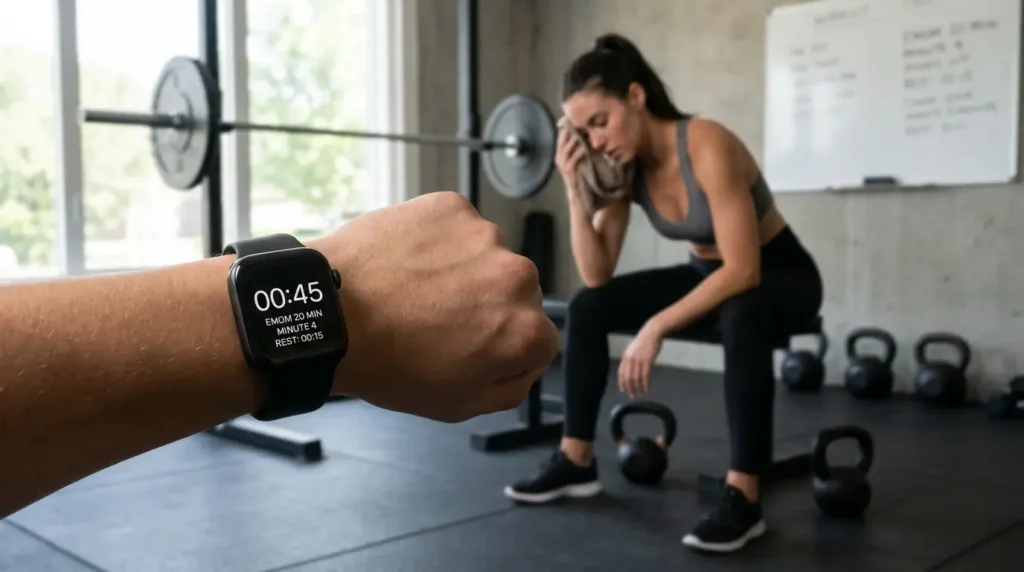
Do not just throw 50 burpees into your day randomly. Structure them for maximum benefit and minimal burnout. This 20-minute EMOM (Every Minute on the Minute) workout is designed to build endurance while managing fatigue.
Warm-Up (5 Minutes):
- Arm circles: 30 seconds forward, 30 seconds backward.
- Bodyweight squats: 15 reps.
- Inchworms: 5 reps (walk hands out to a plank, then walk feet to hands).
- High knees: 30 seconds.
The Workout (10 Minutes): Set a timer for 10 minutes. At the start of every minute, perform 5 burpees.
- If you finish in 30 seconds, you get 30 seconds of rest before the next minute begins.
- If you finish in 45 seconds, you get 15 seconds of rest.
- This guarantees exactly 50 burpees by the end of the 10 minutes, but the built-in rest prevents your form from breaking down.
Cool-Down (5 Minutes):
- Child’s pose stretch: 1 minute.
- Standing quad stretch: 30 seconds per leg.
- Chest doorway stretch: 30 seconds per arm.
- Deep, diaphragmatic breathing: 2 minutes to lower your heart rate.
For those looking to expand their routine, this EMOM format pairs perfectly with a broader 12-week calisthenics program to build progressive strength over time.
FAQ: Calories Burned 50 Burpees
How many calories do 50 burpees burn for a 200 lb person?
A 200 lb (90 kg) person will burn approximately 20 to 35 calories for 50 burpees. Heavier individuals expend more energy to move their body mass against gravity, resulting in a higher caloric burn compared to lighter individuals performing the same number of reps.
Do burpees burn belly fat?
Burpees contribute to a caloric deficit, which is required for overall fat loss. However, spot reduction is a myth. According to the CDC physical activity guidelines, you cannot target fat loss in one specific area. Burpees will help reduce total body fat, which includes belly fat, over time.
Is doing 50 burpees a day good for weight loss?
Yes, as part of a broader strategy. While 50 burpees alone only burn 15–30 calories, doing them daily builds cardiovascular habit and muscle endurance. For meaningful weight loss, combine this habit with a nutritious diet and other forms of activity, remembering that squats are good for weight loss when combined with a caloric deficit.
What is the calorie burn of burpees per minute?
Vigorous calisthenics, including burpees, typically burns between 10ando 15 calories per minute, depending on your weight and intensity. This is comparable to running at a 6-minute mile pace, making it one of the most efficient bodyweight exercises available.
Can beginners safely do 50 burpees?
Beginners should not attempt 50 consecutive burpees. Start with 3 sets of 5 to 8 reps, using the step-back regression. Focus entirely on mastering the plank and squat mechanics before adding speed or volume. Gradually increase your reps by 2 to 3 each week.
How does this compare to other cardio?
While running on a treadmill is effective, studies suggest that high-intensity bodyweight circuits can yield similar or superior EPOC benefits in less time. If you are comparing methods, understanding how different cardio equipment burns belly fat versus bodyweight HIIT can help you choose the best modality for your lifestyle.
Conclusion
Understanding the calories burned by 50 burpees reveals why this humble exercise remains a cornerstone of functional fitness. Burning roughly 15 to 30 calories in just a few minutes, it offers an unmatched return on investment for your time. By focusing on strict form, utilizing regressions when necessary, and programming them intelligently, you can safely harness their power to build endurance, strength, and metabolic health.
