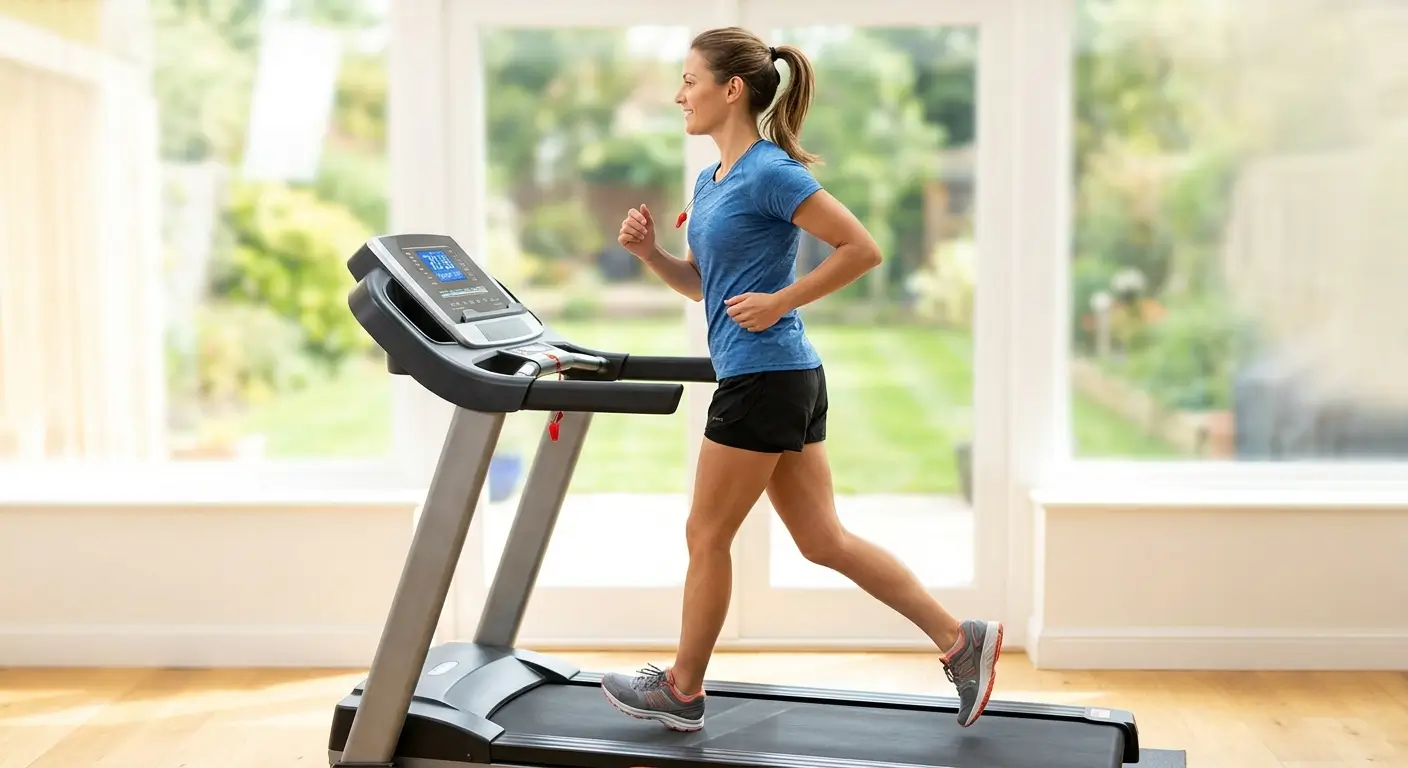
Does treadmill burn belly fat? Yes, a treadmill can help you lose belly fat as part of overall body-fat loss. Walking or running on a treadmill burns calories and supports weight management. However, you cannot choose where your body loses fat first. With regular exercise, balanced eating habits, and strength training, you can work toward a healthier body composition over time.
That difference changes how you should plan your workouts. In this guide, you’ll learn what the research says, how many calories to expect, and how to build a safe weekly treadmill plan. You’ll also see where the treadmill falls short and what to pair it with.
Check with a doctor before you start if you have a health condition, have been inactive for a long time, or are losing weight for medical reasons.
Quick Answer
Yes, a treadmill can help reduce belly fat, but only as part of overall fat loss. You can’t burn fat from your stomach alone. Regular walking or running, a modest calorie deficit, and two days of strength training can shrink your waistline over time. It’s a good, practical weight-loss method for most beginners.
What Does the Research Say About Whether a Treadmill Burns Belly Fat?
Short answer: a treadmill helps you lose body fat overall. Your body decides where that fat comes off. Here’s why that matters.
You Can’t Spot-Reduce Belly Fat
Many people believe that working one area burns fat from that area. Research doesn’t support this idea. A systematic review and meta-analysis on spot reduction found that localized muscle training had no effect on nearby fat stores, regardless of the group studied or the program used.
An abdominal study shows the same pattern. In a trial in the Journal of Strength and Conditioning Research, 24 healthy adults did seven abdominal exercises, five days a week, for six weeks while keeping their diets steady. Their ab endurance improved, but their abdominal circumference and body fat measures did not change significantly.
Leg training tells the same story. In a 12-week study using one-leg press training, fat mass dropped in the trunk and arms, but not in the trained leg. In other words, fat loss followed whole-body patterns, not the muscles being worked.
So when someone asks “does treadmill burn belly fat,” the useful answer is this: it lowers total body fat when you keep it up, and your midsection can shrink along with the rest of you.
Belly Fat Comes in Two Types
Belly fat isn’t one thing. Mayo Clinic explains that it includes subcutaneous fat, which sits under the skin, and visceral fat, which sits deeper in the abdomen. Mayo also notes that visceral fat responds to the same diet and exercise strategies that lower total body fat.
There’s good news for treadmill users here. A 2023 systematic review and meta-analysis published in the British Journal of Sports Medicine found that both exercise and calorie restriction reduced visceral fat in adults with higher body weight. Exercise also showed a dose-response relationship, meaning greater energy expenditure through exercise was associated with greater reductions in visceral fat. Only exercise showed a dose-dependent effect, meaning more exercise was linked to more visceral fat loss.
Waist size is a simple way to track progress. Mayo says a waist measurement above 35 inches (89 cm) in women signals excess belly fat and higher health risk. Measure the same way every time, once every two weeks, and watch the trend instead of single readings.
Calories Still Run the Show
Exercise helps, but food still sets the pace. Mayo notes that taking in more calories than you burn leads to extra weight, including belly fat, and that alcohol can add to it. A treadmill session creates part of your calorie gap, and your eating habits create the rest.
Think of it like a bank account. The treadmill makes withdrawals, and food makes deposits. If deposits are bigger, the balance never drops.
How Many Calories Does a Treadmill Burn?
Calories burned depend on your body weight, speed, and time. Harvard Health Publishing’s activity chart lists estimates for 30 minutes of exercise at three body weights. The table shows a few useful examples.
| Activity (30 minutes) | 125 lb (57 kg) | 155 lb (70 kg) | 185 lb (84 kg) |
|---|---|---|---|
| Weight lifting, general | 90 | 108 | 126 |
| Calisthenics, moderate | 135 | 162 | 189 |
| Walking, 3.5 mph (5.6 km/h) [VERIFY] | 107 | 133 | 159 |
| Running, 5 mph (8 km/h) | 240 | 288 | 336 |
These are estimates, not exact numbers. Treat the calorie readout on your treadmill display the same way: as a rough guide.
Here’s a quick example. A 155-lb (70-kg) person who runs at 5 mph (8 km/h) for 30 minutes burns about 288 calories. Four sessions a week would add up to roughly 1,150 calories. That’s useful, but a few extra snacks or drinks can erase it, which is why food habits matter.
Notice that general weight lifting burns fewer calories per half hour than running. Even so, Mayo notes there’s some evidence that strength training can help reduce belly fat, too. That’s why it earns a place in your plan.
Is the Treadmill a Good Method of Losing Weight?
For most people, yes. A treadmill removes weather, traffic, and uneven ground from the equation. Still, it has strengths and limits worth knowing.
Where the Treadmill Shines
- It’s easy to measure. You control speed, incline, and time, so you can progress in small steps.
- It fits many levels. Beginners can walk gently, while experienced runners can do intervals.
- It counts toward official guidelines. The CDC says adults need 150 minutes of moderate-intensity activity a week, plus two days of muscle-strengthening activity.
- It suits small spaces. If you’re building a compact setup, see our list of apartment workout equipment.
Where It Falls Short
- It does little for your chest, back, and arms.
- Boredom can lead to skipped sessions.
- Running adds impact that some knees, shins, and feet don’t tolerate well.
- It can’t fix a calorie surplus.
The takeaway: a treadmill is a good method of losing weight when you use it regularly, progress it slowly, and pair it with strength work and sensible eating. It isn’t a stand-alone fix.
Walking vs. Running on a Treadmill
| Factor | Brisk walking | Running or jogging |
|---|---|---|
| Calories in 30 min (155 lb / 70 kg) | About 133 at 3.5 mph (5.6 km/h) [VERIFY] | About 288 at 5 mph (8 km/h) |
| Joint impact | Usually gentler | Usually higher |
| Best for | Beginners, recovery days, longer sessions | Fitter users, shorter sessions |
| Easy to repeat daily? | Usually yes | Needs more recovery |
Both options work. Choose the one you can repeat without pain.
Does a Treadmill Burn Belly Fat Faster Than Other Cardio?
Does treadmill burn belly fat faster than other cardio? Not necessarily. Walking, running, cycling, rowing, and elliptical training can all support overall fat loss; the one you’ll do consistently while working hard enough to feel it. Walking, jogging, cycling, rowing, and elliptical training all raise your energy use.
If you want a lower-impact option, read our guide on whether the elliptical burns belly fat. If you’re unsure whether to walk fast or jog slowly, compare slow jogging vs. fast walking.
One practical rule applies: pick the machine that fits your joints, your schedule, and your space. A workout you enjoy beats a “perfect” workout you skip.
How to Use a Treadmill to Lose Belly Fat: Step-by-Step
To understand how a treadmill can help burn belly fat, focus on consistent workouts, manageable intensity, and gradual progression. Follow these steps to build a controlled session.
Follow these five steps for every session. They work whether you’re walking gently or running.
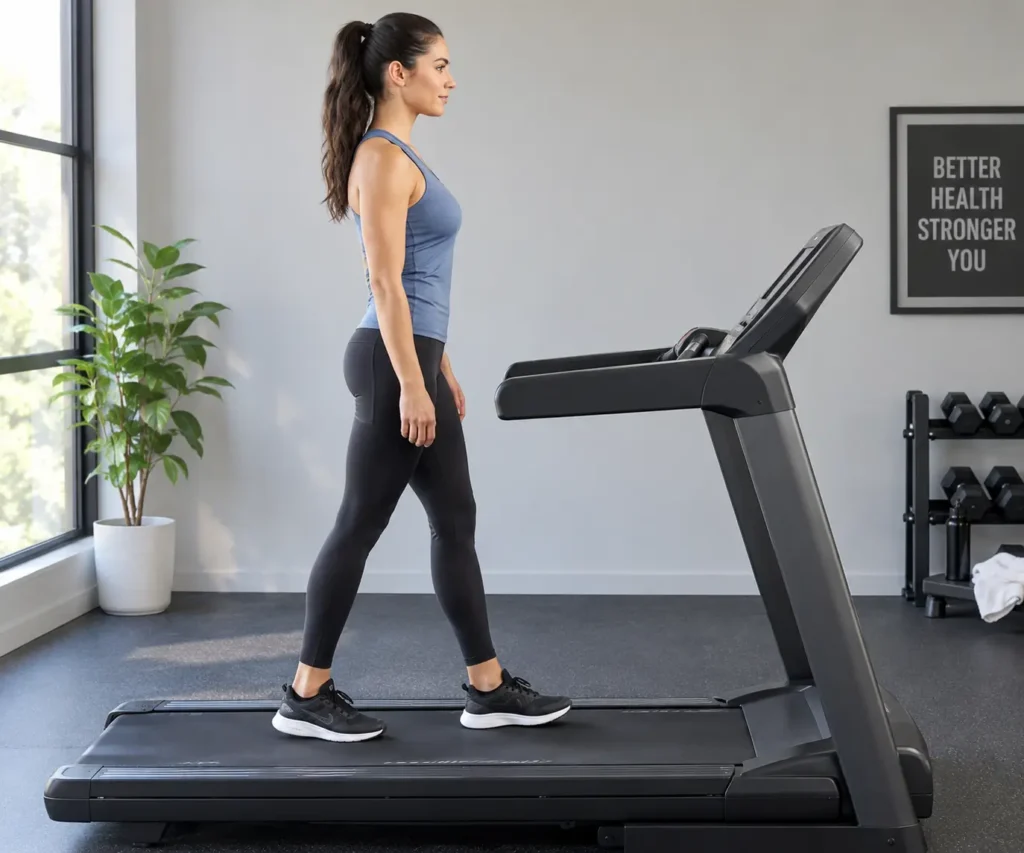
- Warm up for 5 minutes. Walk at an easy 2.0-2.5 mph (3.2-4.0 km/h) at 0% incline. Your breathing should rise slightly, and your calves and hips should feel looser.
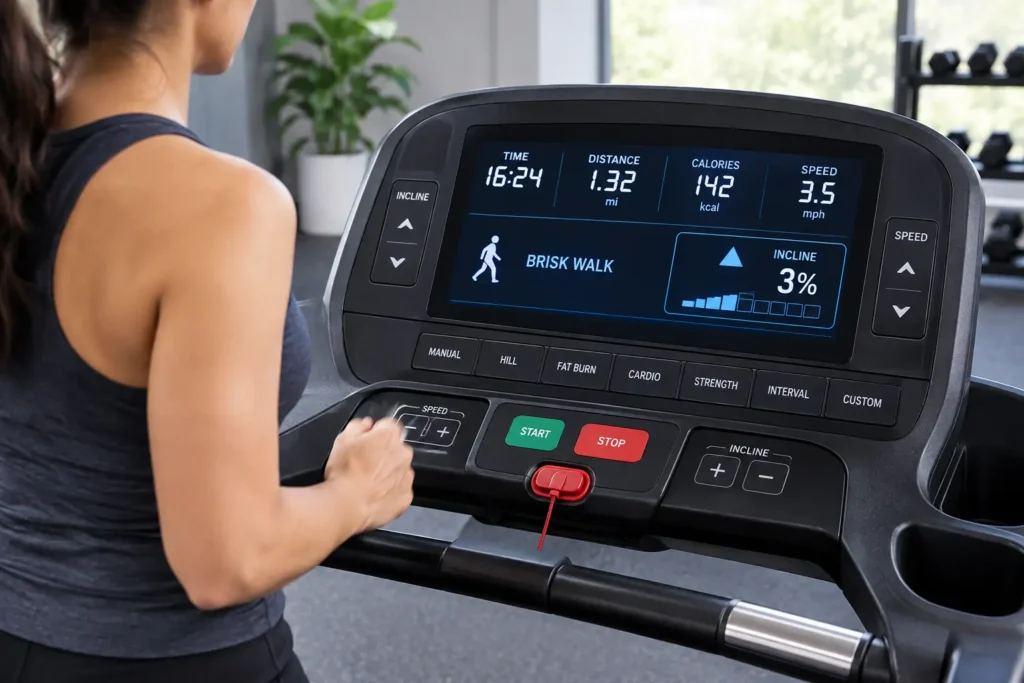
- Set your pace with the talk test. The CDC explains that at moderate intensity you can talk but not sing. For many beginners, that’s a brisk walk of about 3.0-3.8 mph (4.8-6.1 km/h).
- Stand tall and use good form. Keep your eyes forward, ribs stacked over your hips, and shoulders relaxed. Bend your elbows to about 90 degrees and swing your arms from the shoulder. Land with your foot under your hips, not far out in front.
- Add incline gradually. Raise the incline 1% at a time, up to 3-5% for most walkers. You should feel your glutes and hamstrings working, but your lower back shouldn’t ache.
- Cool down for 5 minutes. Slow to 2.0 mph (3.2 km/h) until your breathing settles. Then stretch your calves and hip flexors for 30 seconds per side.
Coach’s Tip: Let go of the handrails. Holding on can reduce the work your legs and core do, and it can pull your posture forward. If you feel unsteady, lower the speed instead of grabbing the bars. Think “quick, light steps” to keep your stride short and smooth.
Common Mistake: Jumping the speed up too fast, gripping the rails, and staring at your feet. This shortens your stride and strains your back and calves. Fix: Increase speed by 0.1-0.2 mph (0.2-0.3 km/h) at a time, keep your eyes on a point ahead, and let your arms swing naturally.
What It Should Feel Like
During a steady session, you should feel warm, breathe deeper, and be able to speak in short sentences. Your thighs, glutes, and calves should feel worked, not painful. Sharp pain in your knees, shins, or feet means it’s time to slow down or stop.
Interval Options (Easier to Harder)
| Level | Work interval | Recovery interval | Rounds | Total time |
|---|---|---|---|---|
| Easier (beginner) | 1 min brisk walk at 3.5 mph (5.6 km/h) | 2 min easy walk at 2.5 mph (4.0 km/h) | 5 | 15 min |
| Standard | 1 min fast walk or jog at 4.5-5.0 mph (7.2-8.0 km/h) | 90 sec easy walk | 6 | 15 min |
| Harder (advanced) | 1 min run at 6.0 mph (9.7 km/h) or more, 2-4% incline | 90 sec easy walk | 8 | 20 min |
Add your 5-minute warm-up and cool-down around each option. Do intervals once a week at first. Mayo notes there’s some evidence that HIIT can help reduce belly fat, but hard efforts also need more recovery.
During recovery, let your breathing settle until you can speak in short sentences. Then start the next round. Stop if you feel chest pain, dizziness, or sharp joint pain.
Sample Weekly Treadmill Schedule
Use this four-week plan as a starting point. Adjust it if you feel sore or run down.
| Week | Treadmill days | Session length | Intensity | Strength days |
|---|---|---|---|---|
| 1 | 3 | 20 min | Easy to moderate, 0-1% incline | 2 |
| 2 | 4 | 25 min | Moderate, 1-2% incline | 2 |
| 3 | 4 | 30 min | Moderate, plus one interval day | 2 |
| 4 | 5 | 30 min | Moderate, one interval day, one incline day (3-5%) | 2 |
By week four, you reach about 150 minutes a week, which matches the CDC’s moderate-intensity target. Take at least one full rest day each week.
Easier version: Repeat week 2 for an extra week or two. Harder version: Extend two sessions to 40-45 minutes, or raise your interval speed slightly.
Add Strength Training for a Stronger Midsection
A treadmill trains your legs and heart. It does little for your chest, back, and arms. Strength work fills that gap, and the CDC recommends muscle-strengthening activity on two or more days a week that works all major muscle groups.
Do this circuit on two non-consecutive days. Choose a weight where the last two reps feel hard but your form stays clean.
| Exercise | Sets × reps | Rest | Easier | Harder |
|---|---|---|---|---|
| Goblet squat (start with 10-20 lb / 4.5-9 kg) | 3 × 10 | 60-90 sec | Box squat, bodyweight | Heavier dumbbell, 3-second lowering |
| One-arm dumbbell row (start with 12-20 lb / 5.5-9 kg) | 3 × 10 each side | 60 sec | Lighter dumbbell | Pause 1 second at the top |
| Push-up | 3 × 8 | 60 sec | Hands on a bench | Feet on a step |
| Glute bridge | 3 × 12 | 45 sec | Smaller range | Single-leg |
| Plank | 3 × 20-40 sec | 45 sec | Knees down | 60 seconds, or add shoulder taps |
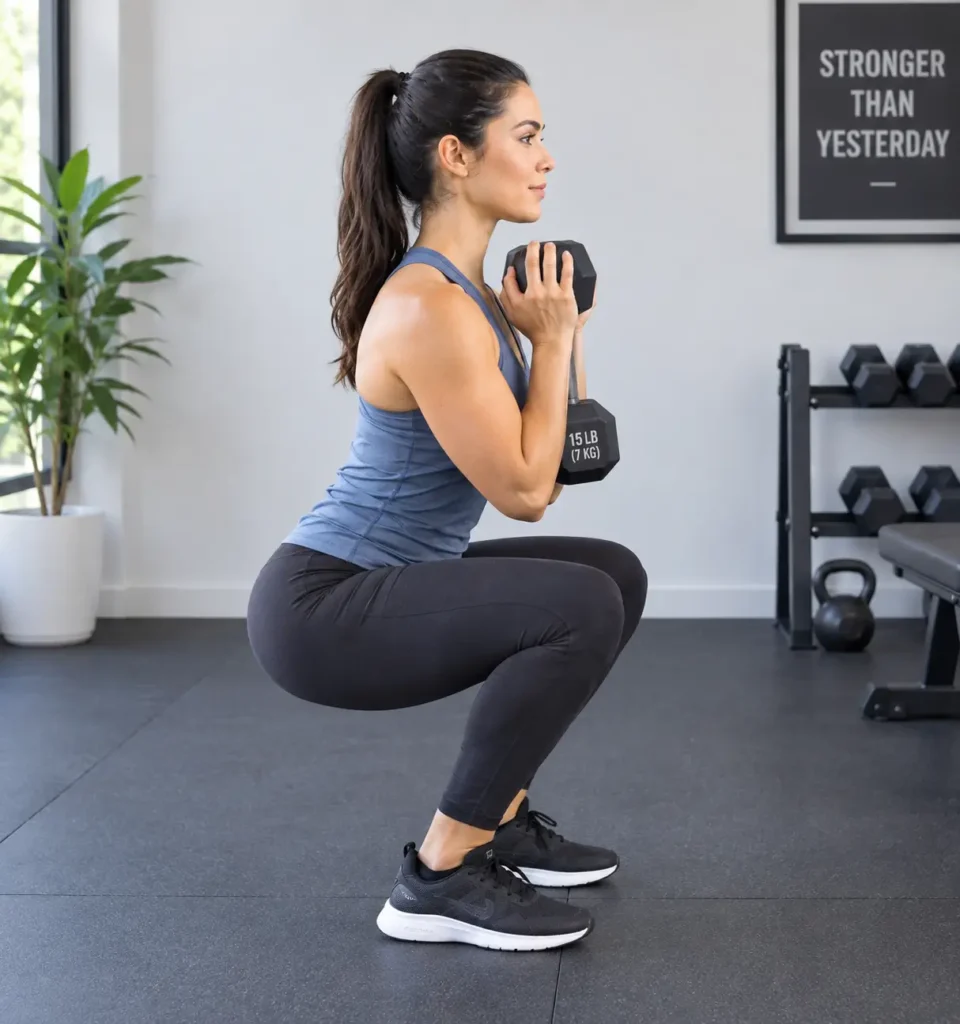
For the goblet squat, lower for about 2 seconds, pause briefly, then stand up in about 1 second. You should feel it in your thighs and glutes, not your knees or lower back. Keep your chest tall and your heels down.
For more ideas, see our guides on squats for weight loss and this calisthenics exercises list. If you want a pulling move, read about pull-ups and abs.
Food, Sleep, and Tracking Matter as Much as Miles
Treadmill miles work best when your habits support them. Start with small changes you can keep, such as smaller portions and fewer sugary drinks. Mayo notes that alcohol can add to belly fat, so cutting back may help. Before making big diet changes, talk with your doctor or a registered dietitian.
Recovery matters too. Aim for steady sleep and enough rest days, because tired legs lead to sloppy form and skipped workouts.
Track more than the scale. Use these simple checks:
- Waist measurement every two weeks
- Treadmill pace or incline at the same effort
- How you feel climbing stairs
- Weekly total minutes
If you like data, a wearable can show heart rate and sleep trends. Our comparison of Oura Ring vs. Fitbit can help you choose.
Safety Notes Before You Step on the Belt
- Check with a doctor first. If you’ve been inactive, have a disability, or have a higher body weight, consult your healthcare professional before starting vigorous exercise.
- Use the safety key. Clip it to your clothing every time.
- Wear supportive shoes. Replace them when the cushioning feels flat or worn.
- Respect pain. Sharp or lasting joint pain deserves a visit with a doctor or physical therapist.
- Plan around leg day. If your legs are sore from lifting, read our notes on running after leg day.
- Check your manual. Follow the manufacturer’s guidance on clearance, weight limits, and lubrication.
Be extra careful if you’re a senior, are pregnant or postpartum, have heart or joint conditions, or are managing diabetes. Get medical guidance first.
Related Tips: Skip Endless Crunches
Crunches build abdominal muscle endurance, as the six-week study above showed. They don’t remove the fat layer on top. As your body fat drops, your abs become easier to see.
To train your core well, learn how to flex your abs and add planks to your strength days. Keep your treadmill sessions focused on steady progress.
FAQ
Can you lose belly fat by walking on a treadmill?
Walking can help reduce belly fat as part of overall fat loss, but it can’t target your stomach alone. A meta-analysis found no spot reduction. Walking at a brisk pace for 150 minutes weekly, with a modest calorie deficit and strength training, gives the best chance of a smaller waist.
How long should I be on the treadmill to lose belly fat?
There’s no magic number. A good starting target is 30 minutes, five days a week, which matches the CDC’s 150-minute weekly goal. Beginners can start with 15-20 minutes and build up. Results depend mostly on your total weekly calorie balance, so food habits matter as much as time.
Is running or walking better for belly fat?
Running burns more calories per minute, but walking is easier to repeat, gentler on joints, and still counts toward the CDC’s moderate-intensity target. The best choice is the one you can do consistently without pain. Many beginners do well mixing both, using run-walk intervals before moving to steady jogging.
Does incline walking burn more belly fat?
Incline walking raises effort at the same speed, so it usually costs more energy than flat walking. It doesn’t burn fat from your stomach specifically. Start with a 2-5% incline, keep your torso tall, and avoid gripping the rails. If your knees, calves, or Achilles tendons complain, lower the grade.
Is HIIT on a treadmill better than steady cardio?
Mayo Clinic notes some evidence that high-intensity interval training can help reduce belly fat. Still, steady walking and jogging work well for beginners and are easier to recover from. If you try intervals, keep them short, rest fully between efforts, and limit hard sessions to one or two per week.
Is a treadmill better than an elliptical for weight loss?
Both can support weight loss when they help you create a calorie deficit. The treadmill is weight-bearing and tends to feel more like real walking or running, while the elliptical is lower impact. Choose the machine you’ll use most often, since consistency matters more than the equipment.
Conclusion: Does Treadmill Burn Belly Fat, and Is It Worth It?
So, does treadmill burn belly fat? It does when it helps you lose body fat overall, and that includes your midsection over time. It can’t target your stomach, but it can support the total fat loss that shrinks your waist.
Is it a good method of losing weight? For most beginners, yes. Start with 20 minutes, three days a week. Build toward 150 minutes, add two strength days, and keep your eating habits steady. Track your waist, pace, and energy instead of chasing quick fixes.
