Barry’s vs Orangetheory is the question every beginner asks when they want a coached, high-energy workout with treadmill intervals and strength work. Both studios mix running and lifting, so they look alike on paper. However, the classes feel very different once the music starts.
In this guide, you will see how each class works, how the heart-rate tracking differs, and what research says about calorie burn and the “afterburn” effect. You will also get a cost comparison, beginner starting points, and a clear recommendation at the end.
Quick Answer: In Barry’s vs Orangetheory, choose Orangetheory if you want heart-rate zones and built-in pacing as a beginner. Choose Barry’s if you want a 50-minute class with heavier floor work and treadmill intervals you control. Both can fit CDC activity goals, so pick the format you will repeat weekly.
Barry’s vs Orangetheory: Side-by-Side Comparison
| Feature | Barry’s | Orangetheory |
|---|---|---|
| Class length | 50 minutes | 60 minutes |
| Core format | Treadmill intervals plus floor strength; Double Floor option | Heart-rate-based intervals across treadmill, rower, and floor |
| Who sets intensity | You choose speeds and weights | Heart-rate zones guide effort |
| Tracking | No zone system built into class | OTBeat monitors with live screens |
| Strength focus | Heavy floor work, daily muscle focus | Endurance, strength, or power days |
| First-class arrival | 15 minutes early | 30 minutes early |
| Price model | Per class or class packs | Monthly membership tiers |
| Best for | Lifters and runners who like control | Beginners who want data and pacing |
Details come from each brand’s official pages. Formats vary by studio, so confirm your local schedule.
How Each Class Works
Inside a Barry’s Class
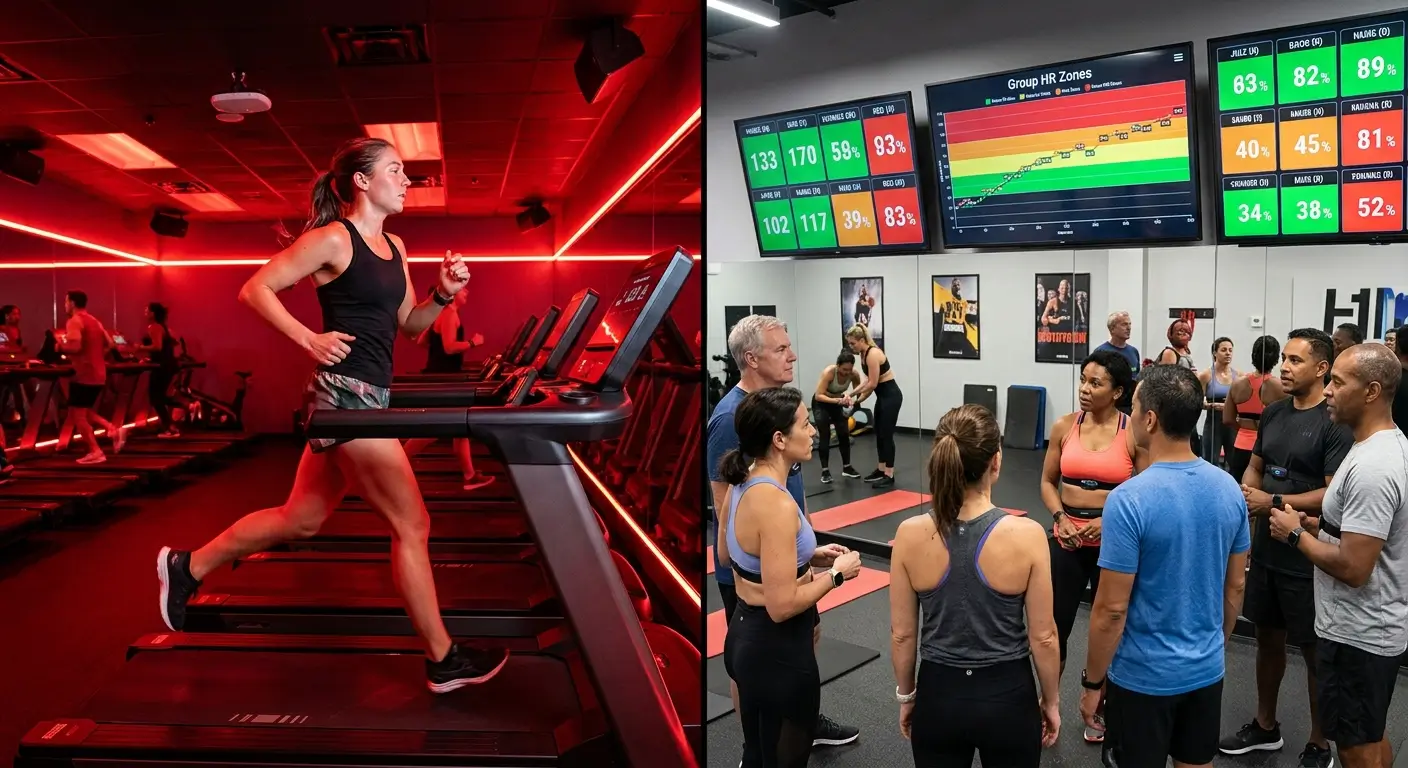
Barry’s runs a 50-minute class in the Red Room, which has low lights, loud music, and instructors who push the pace, according to the official Barry’s workout page. Your time splits between the treadmill and weights on the floor. On the treadmill, you follow guided intervals that may include walking, jogging, running, hills, or speed pushes.
Barry’s also offers a Double Floor format with back-to-back floor blocks and no treadmill. That option helps people who dislike running or want more lifting time. Meanwhile, the Barry’s homepage says the weekly schedule rotates through a daily muscle focus.

Inside an Orangetheory Class
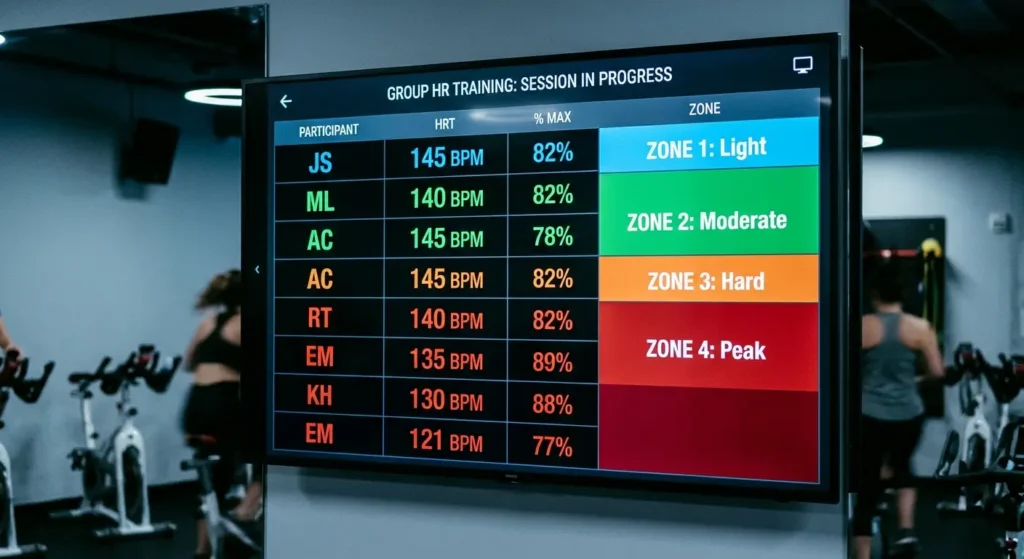
Orangetheory runs a one-hour, full-body class built around five heart-rate zones. The official Orangetheory FAQ says members focus on Zones 3, 4, and 5. The goal is 12 or more minutes in Zones 4 and 5 combined, which means 84% or more of your maximum heart rate.
You earn one “Splat Point” for each minute in the orange and red zones. Large screens show your live heart rate. First-timers should arrive 30 minutes early for setup and a coach introduction. Most classes rotate through a treadmill, a rower, and a weight floor.
Barry’s vs Orangetheory: Key Differences That Matter
Intensity: Who Controls the Effort?
The biggest Barry’s vs Orangetheory difference is who controls your effort. At Barry’s, you pick your own speeds and weights. The studio’s own wording says to walk, jog, run, or sprint, and “the class is yours.” Therefore, your effort depends on your honesty and your coach’s cues.
At Orangetheory, the zones guide your effort. For context, the CDC target heart rate page says vigorous activity falls at 77% to 93% of maximum heart rate. It estimates maximum heart rate as 220 minus your age. For a 35-year-old, that gives about 185 beats per minute (bpm), so the orange zone (84%+) starts near 155 bpm. Remember that this formula is only an estimate.
Heart-Rate Tracking and Tech
Orangetheory builds its class around live heart-rate data. As a result, beginners can see right away if they are pushing too little or too much. Barry’s does not center the class on zones, so you rely more on feel.
You can use the CDC’s talk test to check yourself. At vigorous intensity, you cannot say more than a few words without pausing for breath. However, wrist trackers are less reliable for calories. A Stanford-led study found wrist devices measured heart rate fairly well but estimated energy use poorly. If you are choosing a tracker, see our Oura Ring vs Fitbit comparison.
Strength Training
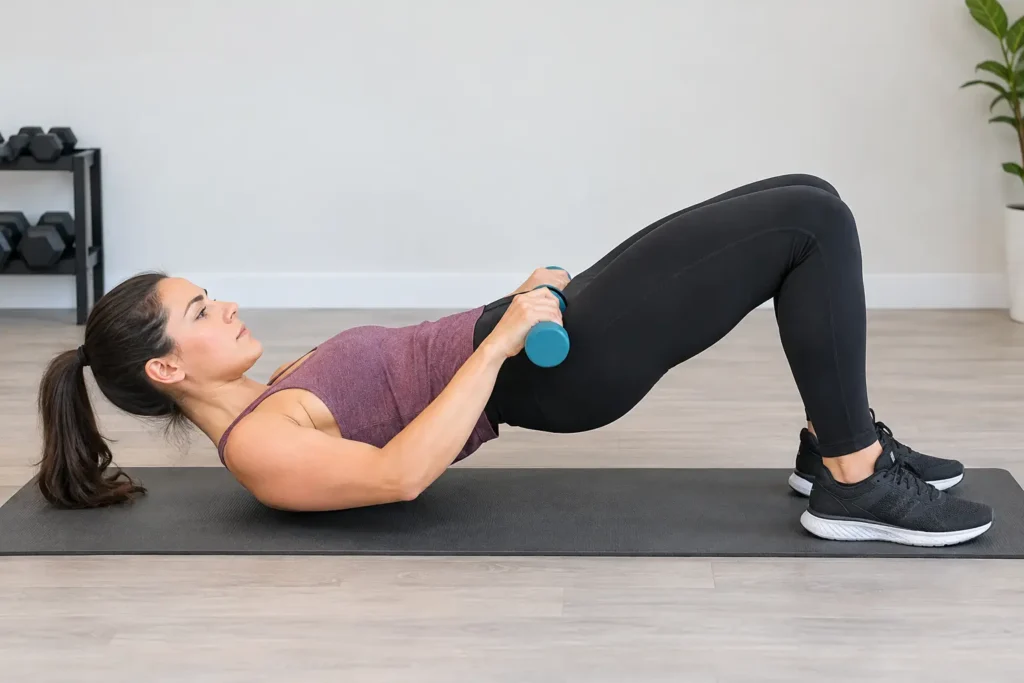
Barry’s studio pages describe “heavy floor strength training,” and Double Floor adds more of it. Orangetheory says its class trains endurance, strength, and/or power, depending on the day. In both cases, the floor blocks are where you build muscle.
The CDC adult guidelines recommend muscle-strengthening on two or more days a week for all major muscle groups. Either studio can cover that if you attend two or three times a week. Your weight choice matters most, so lift heavy enough that the last two reps feel hard.
Cardio and Running
Both studios lean on the treadmill. If you plan to run often, protect your legs. Our guide to running after leg day explains how to schedule hard sessions. New runners can also read slow jogging vs. fast walking for pacing ideas.
Orangetheory adds rowing blocks. If rowing is new to you, our breakdown of the water rower vs. Concept2 shows what to expect from different machines. Barry’s keeps the cardio focus on the treadmill.
Calorie Burn and the Afterburn Effect
Orangetheory says its design produces an afterburn through a theory called excess post-exercise oxygen consumption (EPOC). Research supports a real but modest effect. One systematic review of 22 studies found average long-duration EPOC of about 289 kilojoules after high-intensity intervals versus 159 after moderate exercise. By my conversion, that is roughly 69 versus 38 calories.
Another review in the Scandinavian Journal of Medicine & Science in Sports found small differences in the first hour, but greater values over 24 hours. In short, afterburn exists, but it will not erase a meal. Harvard Health also notes that exercise alone is not the fast track to weight loss.
In a Barry’s vs Orangetheory matchup, neither studio’s calorie claims are lab-tested for you, so treat on-screen totals as estimates. are lab-tested for you, so treat on-screen totals as estimates. If weight loss is your goal, check with your doctor first. Also, our guide to squats for weight loss can help you plan strength work.
Coaching and Atmosphere
Barry’s leans on mood: red lights, loud music, and instructors who know when to push. Orangetheory leans on feedback: screens, colors, and numbers. Therefore, pick the style that motivates you instead of the one that sounds cooler.
Beginner Starting Points: Easier to Harder
Both studios say new members should tell the coach they are new. Barry’s says instructors will help you choose speeds, weights, and modifications. Likewise, Orangetheory’s first-visit setup is built around your goals. The ACE advises beginners to start simple and keep effort moderate, around 4 to 6 on a 0 to 10 scale.
Use these as starting points, not rules:
| Level | Treadmill | Floor weights | Floor tempo and rest |
|---|---|---|---|
| Beginner (easier) | Walk or jog 3.5–5.0 mph (5.6–8.0 km/h), 1–2% incline | 5–10 lb (2.3–4.5 kg) upper body; 15–20 lb (6.8–9.1 kg) lower | 2 sec down, 1 sec up; 8–12 reps; 30–60 sec rest |
| Intermediate | Jog or run 5.0–7.0 mph (8.0–11.3 km/h) | 10–15 lb (4.5–6.8 kg) upper; 20–30 lb (9.1–13.6 kg) lower | Same tempo; 10–15 reps; 20–45 sec rest |
| Advanced (harder) | Run 7.0+ mph (11.3+ km/h), hills, and sprints | Heavier loads that make the last 2 reps hard | Add pauses; 8–12 reps; 15–30 sec rest |
If running feels too hard, take the easier route at either studio. Barry’s offers Double Floor, and Orangetheory classes include non-running options. To progress, add speed or incline before you add both.
Coach’s Tip: Use the talk test on your base intervals. If you can speak a full sentence, nudge the speed up by 0.2 mph (0.3 km/h). If you can only gasp a word, back off.
Common Mistake: Sprinting the first five minutes. You burn out and then cut the weights short. Fix: Start at a pace you could hold for 20 minutes, then build.
When to Choose Barry’s
Choose Barry’s if you like to control your own speeds and want heavier, muscle-focused floor work. It suits you if you like a shorter 50-minute class and a loud, dark, high-energy room. Runners who want guided treadmill work will likely feel at home. Additionally, Double Floor suits lifters who want to skip the treadmill.
Skip Barry’s if you want heart-rate data to guide your pace. Also, keep in mind that Barry’s uses a “pick your own effort” model. Beginners who tend to push too hard or too little may need extra coaching.
When to Choose Orangetheory
Choose Orangetheory if you want structure, live numbers, and a coach who keeps the class on a plan. Beginners often like the zone colors because they show effort without guessing. Furthermore, the first-visit setup gives you a chance to talk about goals.
Skip Orangetheory if wearing a monitor or watching screens bothers you. It may also feel less like a “party” if you love Barry’s mood lighting. Finally, check station details at your local studio.
Barry’s vs Orangetheory Cost Comparison
Pricing varies by city and changes often, so use these ranges only as a starting point:
| Item | Barry’s | Orangetheory |
|---|---|---|
| Typical model | Per class or class packs | Monthly tiers by classes per month |
| Rough range | ~$25–$45 per class | ~$60–$200 per month |
| 12 classes a month | ~$300–$540 | Depends on tier |
| Extras | Shop, shakes, shoes | Heart-rate monitor purchase |
For heavy users, a monthly tier usually lowers the per-class cost. For light users, a pack or trial may fit better. Therefore, test one class at each studio before you commit. Also ask about free first classes, which both brands list.
Safety Notes: Who Should Be Careful
High-intensity classes are not right for everyone. Check with a doctor or physical therapist first if you have heart or blood-pressure issues, joint pain, or an injury. The same goes for anyone who is pregnant or postpartum, and for older adults with health conditions. Moreover, stop if you feel chest pain, dizziness, or sharp pain.
Treadmill impact matters too. If you have forefoot pain, look at our running shoes for metatarsalgia guide. For at-home alternatives, see apartment workout equipment.
Can You Do Both? A Simple Week
Many people rotate studios. Here is a beginner-friendly week:
- Monday: Barry’s or Orangetheory class (hard day).
- Tuesday: Easy walk or rest.
- Wednesday: Strength-focused class (Double Floor if possible).
- Thursday: Rest or light mobility.
- Saturday: Second studio class.
Space hard days apart, and add a third class only when you recover well. According to CDC guidelines, adults need 150 minutes of moderate or 75 minutes of vigorous activity weekly, plus strength work. Two or three classes plus walking can get you there.
FAQ
Is Barry’s harder than Orangetheory?
It depends on how you set your effort. At Barry’s, you choose speeds and weights, so the class is as hard as you make it. Orangetheory uses heart-rate zones to guide effort. Both classes can feel very hard, so compare a trial class at each.
Which burns more calories, Barry’s or Orangetheory?
Neither studio offers lab-tested numbers for individuals. Your weight, effort, and fitness level matter most. Research shows an afterburn effect after interval training, but the extra amount is modest, as in this systematic review. Wrist trackers also estimate calories poorly.
Is Orangetheory good for beginners?
Often yes. The first visit includes a 30-minute setup, and zones show effort in real time. Beginners should still start at moderate effort and tell the coach they are new. ACE suggests starting simple, so build intensity over several weeks instead of one class.
Do I have to run at Barry’s?
No. Barry’s lets you walk, jog, run, or sprint on the treadmill. It also offers a Double Floor format with no treadmill, which gives you more time lifting. Tell your instructor if you are new, returning, or working around an injury.
Do I need a heart-rate monitor at Orangetheory?
The class is built around heart-rate zones, so a monitor is a core part of the experience. Orangetheory’s monitoring system is OTBeat. Ask your local studio what monitors you can use and what they cost.
Which is better for building muscle?
Barry’s describes heavy floor strength work and a daily muscle focus, while Orangetheory includes strength days. Either can help if you lift heavy enough to challenge the last reps. For the most muscle focus, choose Double Floor at Barry’s.
Final Verdict: Barry’s vs Orangetheory
For most beginners, Orangetheory is the safer first pick. The zones show how hard you are working, and the setup process helps you start at the right level. If you already lift and like to set your own pace, Barry’s is the better fit, especially with Double Floor classes.
In the Barry’s vs Orangetheory debate, the real winner is the studio you will attend two or three times a week. Take a trial class at each, compare how you feel afterward, and then decide. Also, start at moderate effort and build slowly.
If you have pain, an injury, a medical condition, or a weight-loss goal, check with a doctor or physical therapist before you start.
