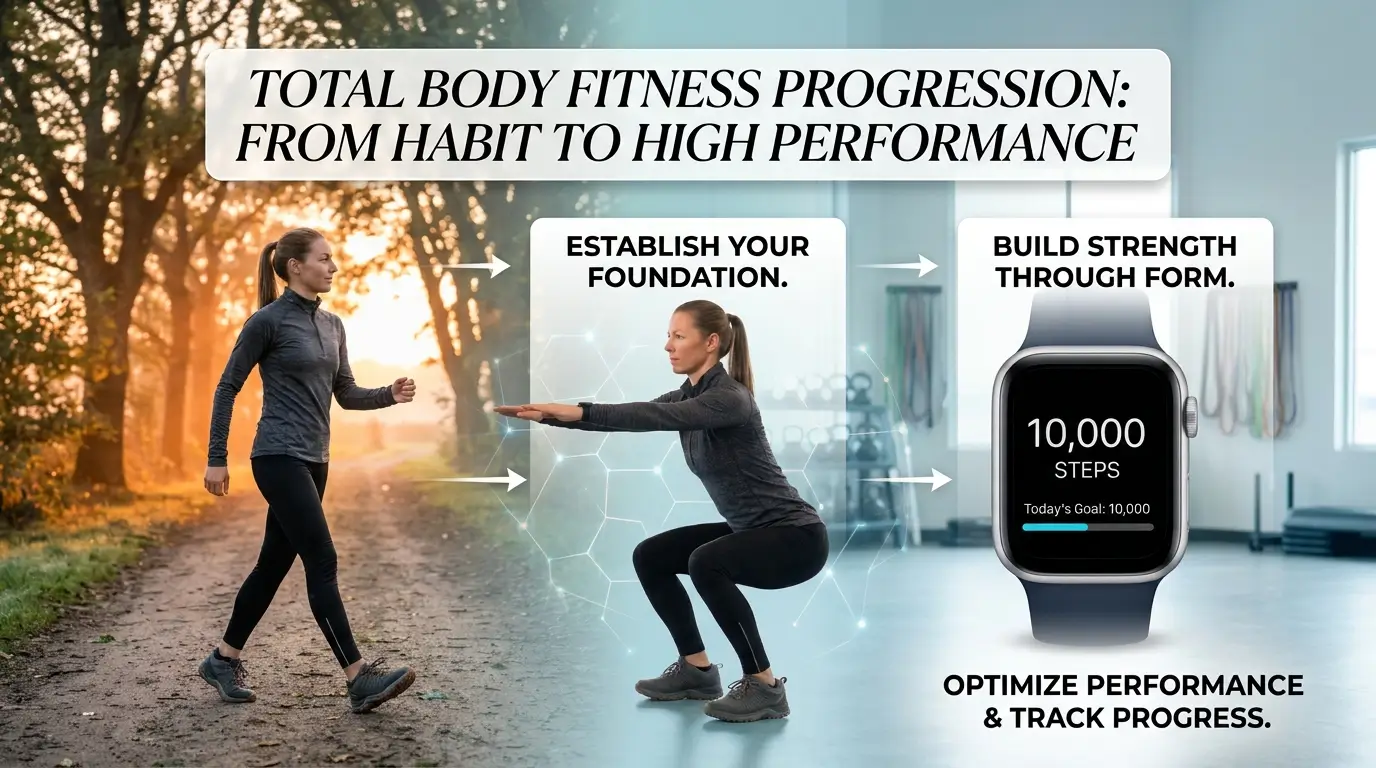
The 10000 steps benefits sound impressive: a stronger heart, a brighter mood, and a longer life. You have probably heard that 10,000 steps a day is the gold standard for health. But where did that number come from, and does your body really need that many steps?
The short version is encouraging. The research shows real, measurable gains well before you reach 10,000. Still, the full goal has a place, especially if you are already active. This guide explains what the studies show, how far 10,000 steps really is, and how to build up safely, step by step.
Quick Answer: Are the 10000 Steps Benefits Worth It?
Quick Answer: The 10000 steps benefits are real. Walking more is linked to lower risk of early death, heart disease, type 2 diabetes, and depression. However, research suggests most of the gain arrives between about 5,000 and 7,000 steps. Aim for 7,000 if you are starting out, and treat 10,000 as a strong next target.
What Does 10,000 Steps Look Like?
Before we dig into the 10000 steps benefits, let’s put the number in real-world terms. For most adults, 10,000 steps equals roughly 4 to 5 miles (6.4 to 8 km). Your exact distance depends on your height and stride length. Taller people cover more ground per step, so they finish sooner.
Time matters too. At a steady, brisk pace, you will take about 100 steps per minute, so 10,000 steps takes around 100 minutes in total. However, you never need to do it all at once. Your steps are spread across errands, chores, work breaks, and planned walks.
10000 steps benefits: person checking a step count on a smartwatch during a neighborhood walk
How Many Steps Are in a Mile?
Most people take about 2,000 to 2,500 steps per mile (1.6 km). Therefore, a 30-minute brisk walk often adds 3,000 to 4,000 steps. Your own number may differ, so it helps to measure it once. Walk a known distance, such as one lap of a 0.25-mile (0.4 km) track, and count your steps.
| Daily steps | Approx. distance | Approx. walking time at a brisk pace |
|---|---|---|
| 4,000 | 1.6-2 miles (2.6-3.2 km) | About 40 minutes |
| 7,000 | 2.8-3.5 miles (4.5-5.6 km) | About 70 minutes |
| 10,000 | 4-5 miles (6.4-8 km) | About 100 minutes |
| 12,000 | 4.8-6 miles (7.7-9.7 km) | About 120 minutes |
Times assume about 100 steps per minute and add up all walking across the day.
Where the 10,000 Steps Goal Came From
Here is a surprise. The number 10,000 did not start with a major clinical trial. A large meta-analysis in The Lancet Public Health notes that the 10,000-step target is widely promoted even though little evidence originally supported it. In other words, the figure became popular first, and researchers tested it later.
That is not bad news. Scientists have now studied step counts in large groups of adults using wearable devices. As a result, we finally have solid answers about what daily steps can do for you.
The 10000 Steps Benefits: What the Research Shows
Let’s walk through the main 10000 steps benefits. Keep in mind that most of these studies are observational. They show strong links, but they cannot prove that steps alone caused every result. Active people may also eat better, sleep better, or have fewer health problems to begin with.
1. A Lower Risk of Early Death
This is the best-studied benefit. A 2025 systematic review and dose-response meta-analysis in Lancet Public Health pooled prospective studies that used device-measured steps. Compared with 2,000 steps a day, 7,000 steps were linked to about a 47% lower risk of death from any cause. The benefit did not rise in a straight line, because the curve bent noticeably between about 5,000 and 7,000 steps.
Older adults show a similar pattern. In a JAMA Internal Medicine study of older women, women averaging about 4,400 steps a day had lower death rates than women averaging about 2,700. The risk kept falling until roughly 7,500 steps, then leveled off.
2. Key 10000 Steps Benefits for Your Heart
The same 2025 analysis linked 7,000 daily steps to about 25% lower odds of developing cardiovascular disease, and about 47% lower cardiovascular mortality, compared with 2,000 steps. Walking raises your heart rate gently, and it may help support healthy blood pressure and circulation. Regular movement also breaks up long sitting periods, which is good for your arteries.
Notably, the heart benefits also appeared at lower step counts. For this reason, you should not wait until you can reach 10,000 to start.
3. Lower Type 2 Diabetes Risk
The 2025 review found that 7,000 steps were linked to roughly 14% lower type 2 diabetes incidence compared with 2,000 steps. Your muscles use blood sugar for fuel while you walk. Over time, regular walking may improve how your body handles glucose.
If you already have diabetes or prediabetes, talk with your doctor before you change your routine. Walking after meals is a popular strategy, but your care team can tailor it to you.
4. Cancer Mortality and Brain Health
The research reaches beyond the heart. The same meta-analysis linked 7,000 steps to about 37% lower cancer mortality and about 38% lower dementia risk, compared with 2,000 steps. These numbers come from observational data, so they show an association, not a guarantee.
Still, the pattern is consistent. People who move more tend to stay sharper and healthier for longer.
5. The 10000 Steps Benefits for Mood
Walking is also good for your mind. The 2025 review found that 7,000 steps was linked to about 22% lower depressive symptoms. Fresh air, daylight, and rhythmic movement can all lift your mood, so it helps to walk outside when you can.
Coach’s Tip: Stack your walk with something you enjoy, such as a podcast, a call with a friend, or a favorite playlist. Habits stick better when they feel good.
6. Fewer Falls and Better Function
Strong legs and good balance protect you as you age. The review also linked 7,000 steps to about 28% lower fall risk. Daily walking trains your calves, quadriceps, hamstrings, and glutes, which keeps your gait steady.
Walking alone will not build much muscle, however. For that reason, you should pair it with strength work, which we cover below.
7. Weight Management Support
Many readers ask whether the 10000 steps benefits include weight loss. Walking burns energy, and more steps generally raise your daily calorie use. However, results vary a lot by body size, diet, sleep, and consistency, so no single step count guarantees weight loss. If you wonder about belly fat in particular, our article on whether a treadmill burns belly fat explains why you cannot spot-reduce fat.
10000 steps benefits for the heart: older couple walking briskly on a park trail
Do You Need the Full 10,000 to Get the 10000 Steps Benefits?
Not exactly. The evidence suggests the benefits climb quickly at first and then flatten. After that point, extra steps still help, but each new step adds less.
7,000 Steps May Be the Sweet Spot
The authors of the 2025 meta-analysis concluded that 10,000 steps remains a viable target for people who are already active. However, they suggested 7,000 steps may be a more realistic and achievable goal for many adults. The jump from 7,000 to 10,000 added only modest gains for several outcomes, so the 10000 steps benefits are largest for people who start from a low baseline.
Age Changes the Picture
The earlier 15-cohort meta-analysis found that the benefits plateau, and that the plateau depends on age. Adults 60 and older seemed to level off around 6,000 to 8,000 steps, while younger adults leveled off around 8,000 to 10,000. So a 70-year-old who hits 7,000 steps is doing excellent work.
Speed Matters Less Than Volume, at Least in Older Women
In the older women’s study, the number of daily steps predicted lower mortality, while stepping intensity did not add clear value once total steps were counted. In plain terms, taking more steps mattered more than taking them quickly. That said, a brisker pace helps you meet the CDC’s weekly activity targets, which we cover next.
| Daily step range | What research suggests | Best for |
|---|---|---|
| Under 4,000 | Higher risk zone; any increase helps | Sedentary beginners |
| 4,000-6,000 | Clear gains versus very low activity | Beginners, older adults, desk workers |
| 7,000-8,000 | Large share of the benefit in many studies | Most adults |
| 10,000+ | Possible small extra gains for some outcomes | Active adults, fitness-minded walkers |
How Walking Fits the CDC Activity Guidelines
Steps are a handy tool, but your overall activity also counts. The CDC physical activity guidelines for adults recommend at least 150 minutes of moderate-intensity activity each week, plus muscle-strengthening activity on at least two days. Brisk walking counts as moderate-intensity exercise.
How brisk is brisk? A narrative review on walking cadence found that roughly 100 steps per minute or more is a consistent marker of moderate intensity in adults. Older adults may need a slightly higher cadence to reach the same effort. You can check your own pace by counting steps for one minute while you walk.
You can also use the talk test. At a moderate pace, you can talk but not sing.
How to Unlock the 10000 Steps Benefits Safely
Now let’s turn the research into a plan. As a coach, I recommend a gradual build instead of a sudden jump. Sudden increases are a common cause of sore feet, shins, and knees.
Step 1: Find Your Baseline
First, wear your tracker for one normal week without changing anything. Then average your daily steps. If you want help choosing a device, see our comparison of the Oura Ring vs Fitbit for step and sleep tracking.
Step 2: Add 500 to 1,000 Steps Per Week
Next, raise your daily average by about 500 to 1,000 steps each week. For example, if you average 4,000, aim for 4,500 to 5,000 the next week. This slow climb gives your feet, ankles, and calves time to adapt.
Step 3: Use “Step Snacks” Throughout the Day
You do not need one giant walk. Small bursts add up quickly, and they fit busy schedules.
- Walk for 5 to 10 minutes after each meal.
- Take a phone call on your feet.
- Park farther from the entrance.
- Choose the stairs when your health allows.
- Set a timer to stand and move every 45 to 60 minutes.
Common Mistake: Doing nothing all day, then trying to cram 10,000 steps into one late-night marathon. This approach raises injury risk and tends to burn people out. Spread your steps across the day instead.

Step 4: Add One Planned Walk
Then schedule one deliberate walk of 20 to 40 minutes. Keep the pace brisk enough that you breathe harder but can still talk. Many people find that a morning or lunchtime slot is easiest to protect.
Brisk walk on a paved path showing the 10000 steps benefits of good posture and relaxed arm swing
Step 5: Pick Good Footwear
Your shoes matter more as your step count climbs. Choose a pair with good cushioning and a roomy toe box. If you have forefoot pain, our guide to the best running shoes for metatarsalgia covers features worth looking for, and the best rocker bottom shoes can reduce pressure while you walk. Replace worn shoes as soon as the cushioning feels flat.
Good Walking Form
Good form makes every mile feel easier. Use these cues:
- Stand tall, with your eyes looking 10 to 20 feet (3 to 6 m) ahead.
- Keep your shoulders relaxed and your chest open.
- Swing your arms naturally, with elbows bent at about 90 degrees.
- Land softly on your heel and roll through to your toes.
- Take quick, comfortable steps rather than overstriding.
Your walk should feel smooth and rhythmic. If your shins burn or your hips pinch, shorten your stride and slow down.

Easier and Harder Ways to Walk
Every walker is different. Use these versions to match your fitness level.
Easier version (regression):
- Walk at an easy pace and break your steps into 5-minute sessions.
- Start with a target of 4,000 to 5,000 steps a day.
- Use a treadmill with handrails, or a mall, for a controlled environment.
Harder version (progression):
- Add 1 to 2 minutes of faster walking every 10 minutes.
- Walk on hills or at a treadmill incline.
- Try a light weighted vest, starting at 5 lb (2.3 kg), only if your joints and doctor are on board.
- Alternate walking with slow jogging, which our article on slow jogging vs fast walking compares in detail.
A 4-Week Plan to Build Toward the 10000 Steps Benefits
This sample plan assumes a starting average of about 4,000 steps. Adjust the numbers to your own baseline. If a week feels too hard, simply repeat it.
| Week | Daily step goal | Planned walk | Extra tips |
|---|---|---|---|
| 1 | 4,500-5,000 | 15 minutes, easy pace | Add two 5-minute walks after meals |
| 2 | 5,500-6,500 | 20 minutes, brisk pace | Stand and move every hour |
| 3 | 7,000-8,000 | 30 minutes, brisk pace | Take one longer weekend walk |
| 4 | 8,500-10,000 | 30-40 minutes, brisk pace | Add a hill, incline, or faster intervals |
Rest days are fine. Many people hit their goal five or six days a week, which still brings strong benefits.
Walking Without Leaving the House
Bad weather, safety concerns, or busy schedules can block outdoor walks. Fortunately, you have indoor choices. A treadmill is the most direct, and you can also march in place during TV shows or walk laps in your home.
If you work at a desk, consider low-impact equipment. Our roundups of the best under-desk ellipticals and the best pedal exercisers cover options for adding movement while you work. Note that pedaling may not register as steps on some trackers, so judge your progress by minutes of movement, too. For small spaces, see our list of apartment-friendly workout equipment.
Don’t Skip Strength Training
Walking is wonderful, yet it does not replace lifting. The CDC recommends muscle-strengthening on at least two days a week, covering all major muscle groups. Strong muscles support your joints, protect your bones, and help you stay independent as you age. In short, strength work makes the 10000 steps benefits last.
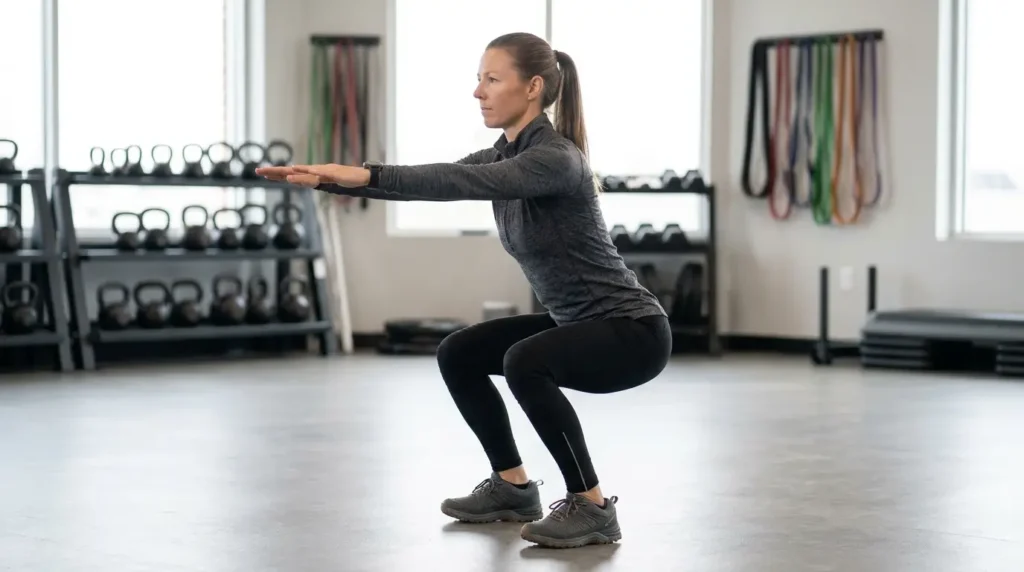
You do not need a gym. Bodyweight moves such as squats, lunges, push-ups, and planks work well, and our calisthenics exercises list gives you plenty of choices. For a different approach, try the isometric leg exercises, which are gentle on sore joints.
A simple starter routine takes about 20 minutes:
- Bodyweight squats: 2 sets of 10 to 12 reps, 60 seconds rest
- Incline push-ups: 2 sets of 8 to 10 reps, 60 seconds rest
- Glute bridges: 2 sets of 12 reps, 45 seconds rest
- Plank: 2 holds of 20 to 30 seconds, 45 seconds rest
Bodyweight squat demonstration to pair with the 10000 steps benefits of daily walking
Safety Notes: Who Should Be Careful
Walking is low-risk for most people. Nevertheless, a few groups should take extra care when chasing the 10000 steps benefits. Check with a doctor or physical therapist before starting if you have heart disease, uncontrolled blood pressure, diabetes, joint pain, balance problems, or a recent injury, or if you are pregnant or recovering from surgery.
Stop and seek medical advice if you feel chest pain, dizziness, severe shortness of breath, or sharp joint pain. In addition, watch for these overuse warning signs:
- Pain that gets worse as you walk, not better
- Shin pain along the front of the lower leg
- Heel pain that is worst with your first morning steps
- Swelling or numbness in your feet
Rest days and gradual increases keep most problems at bay. If you walk outdoors, use sidewalks, bright clothing, and well-lit routes. Finally, drink water on warm days.
Related Tips to Stay Consistent
Even the best plan fails without a habit. Here are a few coaching tricks that work for many people:
- Set a floor, not just a ceiling. For example, decide that 5,000 steps is a “good enough” day. Then treat 10,000 as a bonus.
- Track trends, not single days. A weekly average tells you more than one low-step Tuesday.
- Walk with a partner. Accountability makes it harder to skip.
- Prepare for off days. On busy days, a 10-minute walk still counts.
- Don’t let a tracker mislead you. Wrist devices can over- or under-count steps, especially when you push a stroller or carry items.
Remember that your step count is a tool, not a test. Your sleep, nutrition, strength work, and stress levels all shape your health as well.
FAQ: 10000 Steps Benefits
What are the main 10000 steps benefits?
Research links higher daily steps to lower risk of early death, heart disease, type 2 diabetes, dementia, and depressive symptoms. Most gains appear between about 5,000 and 7,000 steps, with smaller extra gains near 10,000. These are associations from observational studies, not guarantees, so results vary by person.
Is 10,000 steps a day too much?
For most healthy adults, no. Many people walk that far safely. However, going from 3,000 to 10,000 overnight can cause sore feet and joints. Build up gradually by adding 500 to 1,000 steps each week, and speak with a doctor if you have health concerns.
How many miles is 10,000 steps?
Ten thousand steps equals roughly 4 to 5 miles (6.4 to 8 km) for most adults. The distance depends on your height and stride length. Taller people cover more ground per step. To find your own number, count the steps it takes to walk one measured mile.
Is 7,000 steps enough for health benefits?
Research suggests yes, for many adults. A 2025 meta-analysis linked 7,000 daily steps to meaningful reductions in mortality and several chronic conditions compared with 2,000 steps. Extra steps up to 10,000 may add smaller gains. Therefore, 7,000 is a very sound target.
How many steps should older adults take?
Studies of older adults show benefits at lower counts. In one study of women with an average age of 72, mortality rates fell progressively up to about 7,500 steps a day. So adults 65 and older can aim for roughly 5,000 to 7,500 steps. Please check with your doctor first if you have health conditions.
Do slow steps count toward my daily total?
Yes, every step counts toward your total, and in older women, total steps predicted outcomes better than speed. Even so, brisk walking helps you meet CDC moderate-intensity targets. A mix works best: use easy steps throughout the day, plus one or two faster walks.
Conclusion: Are the 10000 Steps Benefits Worth Chasing?
The 10000 steps benefits are real, but the research shows you do not need the full number to see big gains. Most of the improvement in longevity, heart health, mood, and fall risk appears between about 5,000 and 7,000 steps. Therefore, start where you are, add a little each week, and treat 10,000 as a goal you grow into.
Pair your walking with two days of strength training, wear comfortable shoes, and stay patient. Small, steady steps beat big, short-lived efforts every time. Now lace up and take your first extra 500 steps today.
