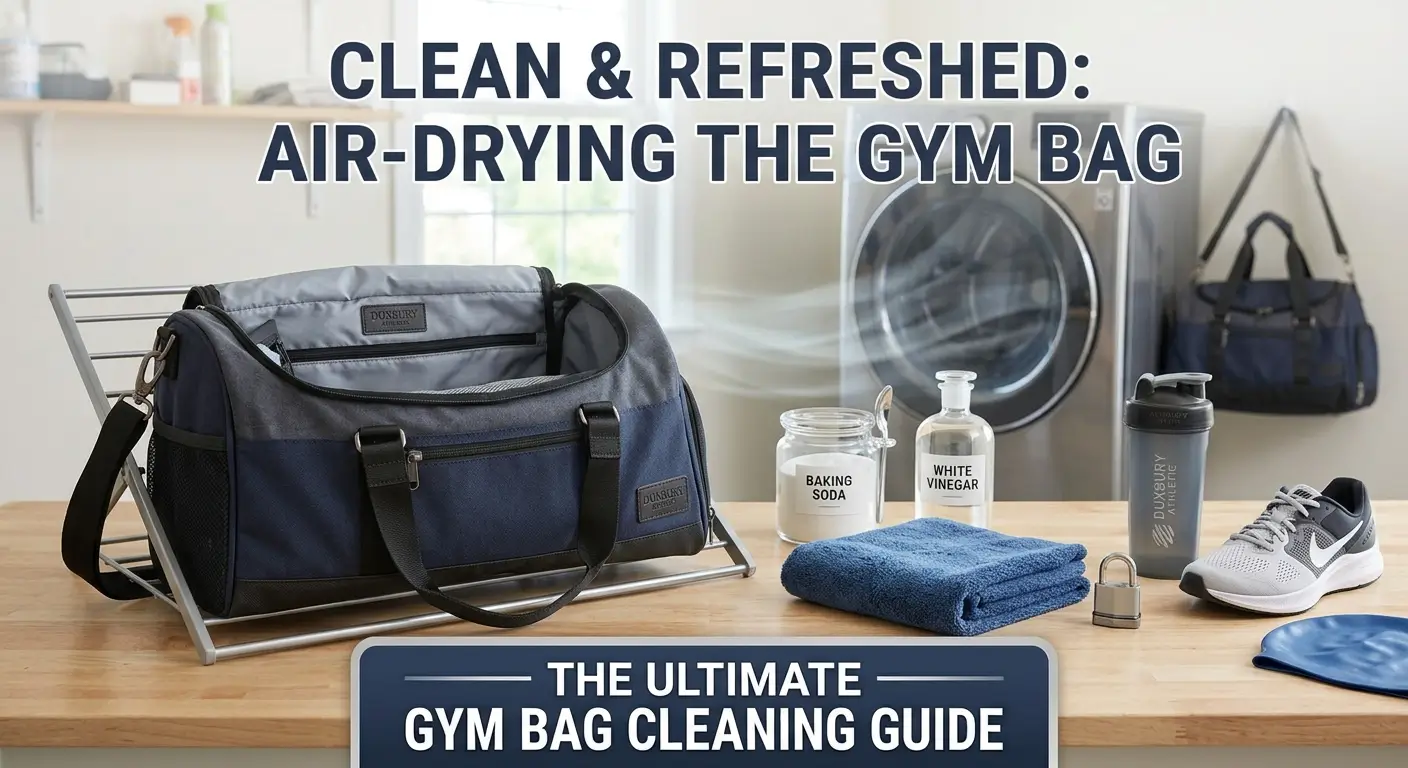
Knowing how to wash a gym bag is one of the easiest ways to keep your gear fresh and your skin healthy. Your bag goes everywhere you train. It sits on locker room floors, holds sweaty shirts, and carries damp shoes home.
Over time, that mix of moisture, warmth, and darkness turns a clean bag into a smelly one. This guide covers machine washing, hand washing, odor removal, drying, and a simple routine that keeps your bag fresh. Follow it, and your gym bag cleaning will take less time, and your bag will last longer too.
Quick Answer: How Do You Wash a Gym Bag?
Empty the bag, check the care label, and spot-treat stains. Then wash it on a gentle cycle in cold or warm water with mild detergent, or hand wash it in a tub. Air dry it fully, open and inside out, before storing it. Never zip a damp bag shut.
Why a Gym Bag Gets So Dirty
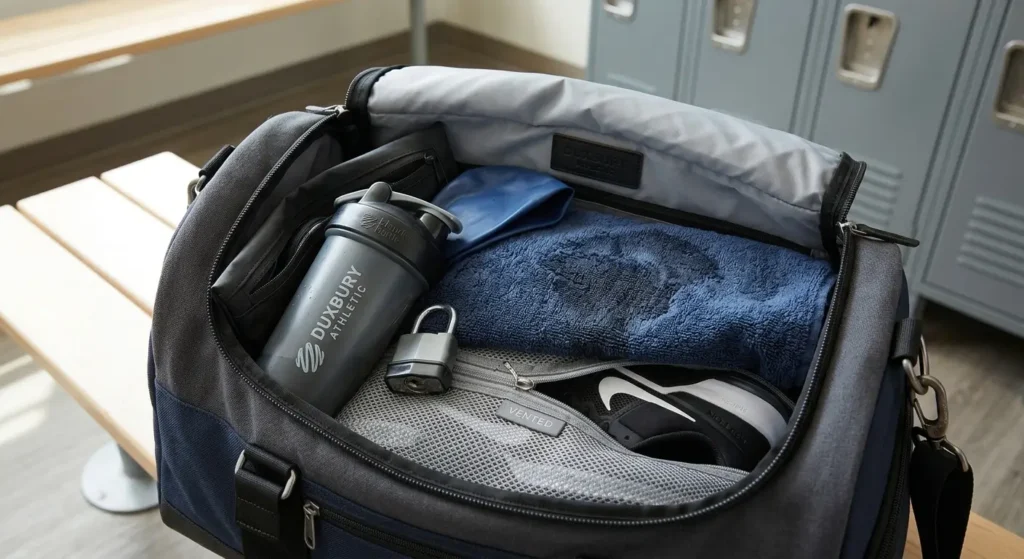
A gym bag is a closed container. It holds sweat, skin cells, moisture, and often shoes, all in one place. As a result, bacteria and fungi find a perfect home.
Staph bacteria are common on human skin. According to a University of North Texas risk management page, roughly 30% of people carry Staphylococcus aureus on the skin or in the nose. It is usually harmless. However, it can cause infections when it enters a cut or scrape.
Bags, Shared Items, and Skin Infections
The CDC’s guidance on MRSA prevention for athletes notes that skin infections can spread through close contact and shared personal items. The CDC also recommends washing your uniform, towels, and clothing after each use and drying them completely in a dryer. Your bag isn’t clothing, but it touches all of those items every day.
Fungus is a second concern. MedlinePlus, from the National Library of Medicine, explains that athlete’s foot fungus thrives in warm, moist areas. It also advises changing socks and shoes as often as needed to keep feet dry. A damp shoe pocket is exactly that kind of environment.
The CDC’s ringworm prevention page [VERIFY URL] specifically lists a gym bag among the athletic accessories to keep clean and not share. That makes bag hygiene a real health habit, not just a smell issue.
What Actually Builds Up Inside Your Bag
Here is what typically collects in a workout bag:
- Sweat and body oils soak into fabric seams and linings.
- Moisture from towels, water bottles, and shoes.
- Dirt and chalk from gym floors and lifting platforms.
- Food residue from protein bars, shaker bottles, and snacks.
- Mold and mildew when damp items stay zipped inside overnight.
Because these build up slowly, many lifters don’t notice until the smell gets strong. By then, the fabric has absorbed it deeply. Washing early is much easier than rescuing a bag later.
Check Your Bag Material First
Before you wash anything, find the care label. It is usually sewn inside a seam or under the main flap. The manufacturer’s instructions always beat general advice, including mine.
If there’s no label, use this quick material guide.
| Bag Material | Machine Wash? | Best Method | Dryer? |
|---|---|---|---|
| Nylon / polyester | Usually yes | Gentle cycle, cold or warm water | Air dry only |
| Canvas / cotton | Often yes | Gentle cycle, cold water | Air dry (shrinks in heat) |
| Mesh pockets | Yes, in a laundry bag | Gentle cycle | Air dry |
| Leather or faux leather | No | Damp cloth and leather cleaner | Never |
| Bags with foam padding or rigid frames | Usually no | Hand wash or surface clean | Air dry |
| Waterproof / TPU-coated | Check label | Hand wash with a soft cloth | Air dry |
Coach’s Tip: Take a photo of the care label on any new bag. Labels fade and tags get cut off. That photo saves you from guessing a year from now.
What You Need Before You Start
Gather your supplies first. You don’t need anything fancy, and most items are already in your home.
- Mild liquid detergent. Choose a fragrance-free or sport-specific one if your skin is sensitive.
- White vinegar. It helps break down odors and mineral residue.
- Baking soda. It absorbs smells without adding scent.
- Soft brush or old toothbrush for seams and zippers.
- Microfiber cloths for wiping and spot cleaning.
- A large mesh laundry bag or pillowcase to protect straps and zippers in the machine.
- A bathtub or large sink for hand washing.
- Disinfecting wipes or a disinfectant spray that is safe for your bag’s material.
Also, never mix vinegar with bleach. The combination creates harmful fumes. Use one or the other, never both.
How to Wash a Gym Bag in the Washing Machine
For fabric bags, machine washing is the fastest answer to how to wash a gym bag. Even so, it only works if the care label allows it. Here is the full process, step by step.
Step 1: Empty Every Pocket
Take out everything, including receipts, gum wrappers, hair ties, and loose change. Then turn the bag upside down and shake it over a trash can. Next, run a vacuum hose or a lint roller through the lining to catch crumbs.
Step 2: Remove Detachable Parts
Unclip shoulder straps, name tags, and any padded inserts. Many bags have a removable shoe pouch or wet pocket, so take those out too. Wash small removable parts separately. Otherwise, they can snag on the main bag in the drum.
Step 3: Pre-Treat Stains and Odor Spots
Mix one tablespoon of mild detergent with a cup of warm water. Dab it on visible stains with a soft brush, then let it sit for 10 minutes. For heavy sweat odor, lightly sprinkle baking soda on the lining and leave it for 30 minutes before washing.
Step 4: Zip, Turn, and Bag It
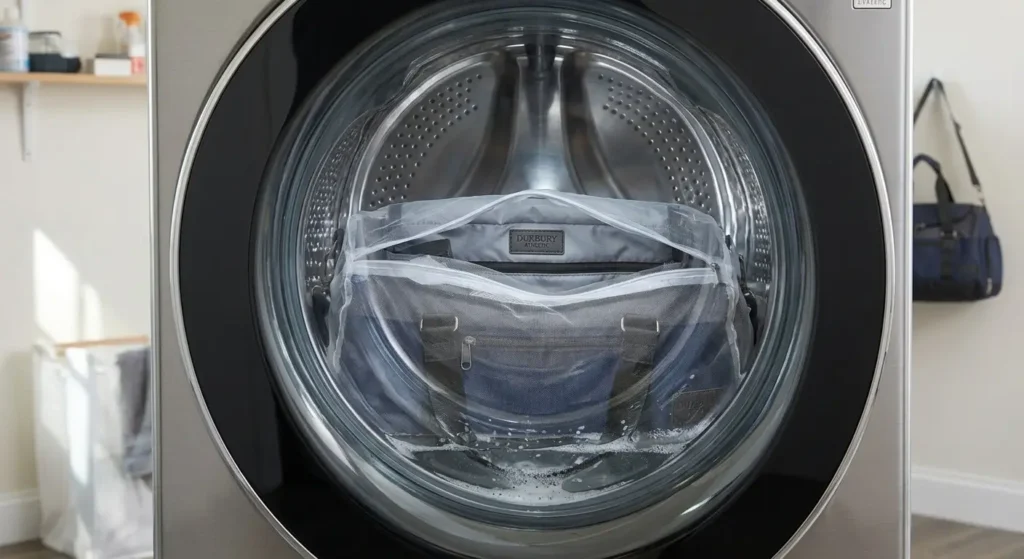
Close all zippers and fasten every buckle. This protects the teeth and keeps the load balanced. Then turn the bag inside out and place it in a large mesh laundry bag or a zipped pillowcase.
Common Mistake: Washing a bag with the zippers open. Open zipper teeth catch on fabric and can tear the lining or jam the pull tab. Zip everything closed first.
Step 5: Set the Machine
Use the gentle or delicate cycle with cold or warm water. Add a small amount of mild detergent, roughly half of what you’d use for a normal load. Too much soap leaves residue, and residue holds odors.
Also, keep the load light. A typical gym duffel weighs about 1 to 3 lb (0.5 to 1.4 kg) empty, and it soaks up water fast. Wash it with a few towels at most, so the drum stays balanced. Skip heavy items like jeans.
Step 6: Add Vinegar for Odor
Pour half a cup (120 ml) of white vinegar into the fabric softener compartment. During the rinse, it helps break down leftover odor compounds. Don’t use fabric softener itself, because it can coat fabric and trap smell.
Step 7: Check and Rinse Again If Needed
When the cycle ends, open the bag and sniff the lining. If you still smell sweat, run a second rinse cycle with just vinegar and cold water. Keep going until the bag smells neutral.
A Note on Water Temperature
The CDC and several university health pages recommend hot water and a hot dryer for athletic laundry such as towels and uniforms. Those items are usually cotton or sturdy synthetics. A bag is different, because heat can shrink canvas, warp foam, and melt coatings or glue. Therefore, follow the bag’s label, and treat a warm wash as the practical upper limit unless the manufacturer says otherwise.
How to Wash a Gym Bag by Hand
If you’re wondering how to wash a gym bag that can’t go in the machine, hand washing is the safest choice for leather trim, padded bags, and any bag with a “do not machine wash” label. It also gives you more control over trouble spots. Plan on about 30 to 45 minutes of active work.
Step-by-Step Hand Washing
- Fill a tub. Use enough lukewarm water to submerge the bag’s fabric parts. Add one to two tablespoons of mild detergent and swish it around.
- Soak. Place the bag in the water and press it down. Let it soak for 15 to 20 minutes.
- Scrub. Use a soft brush on seams, corners, and the bottom panel. Work in small circles, because hard scrubbing can damage waterproof coatings.
- Clean the lining. Turn the bag inside out and scrub the interior. Pay extra attention to pockets and corners where sweat collects.
- Rinse well. Drain the tub and rinse the bag with clean water until no suds appear. Soap residue attracts dirt and holds smell.
- Squeeze, don’t wring. Press out extra water gently. Wringing can warp frames and tear seams.
- Dry properly. Follow the drying section below.
Cleaning Leather or Faux Leather Trim
Never soak leather. Instead, wipe it with a barely damp microfiber cloth and a drop of mild soap. Then dry it right away with a clean towel. Finally, apply a small amount of leather conditioner so the material doesn’t crack.
Coach’s Tip: Test any cleaner on a hidden spot first, such as the underside of a flap. Wait until it dries completely, and check for color change before you clean the whole bag.
How to Clean the Inside, Pockets, and Hardware
The main compartment is only part of the job. Pockets, zippers, and straps collect their own grime. Fortunately, each one is easy to handle.
The Shoe Compartment
Shoes bring in dirt, moisture, and bacteria. Therefore, the shoe pocket is often the smelliest part of the bag. Wipe it with a cloth dampened with a vinegar and water mix, one part vinegar to one part water. Then let it air out completely with the pocket open.
Better yet, avoid the problem. Let your shoes dry before you pack them, and keep them in a separate breathable pouch. If you play a sport that uses cleats, such as baseball, a ventilated shoe pocket helps a lot. Our guide to youth baseball cleats covers shoe options if you’re shopping for gear that dries faster.
The Wet Pocket and Water Bottle Sleeve
Wet pockets trap sweat and condensation by design. Turn them inside out and wash them with warm water and soap. Next, wipe the seams with a toothbrush, and let the pocket dry completely before you use it again.
Water bottle sleeves also collect drips and stale liquid. Wipe them out after every few sessions, and wash any bottle you carry on the same schedule.
Zippers and Buckles
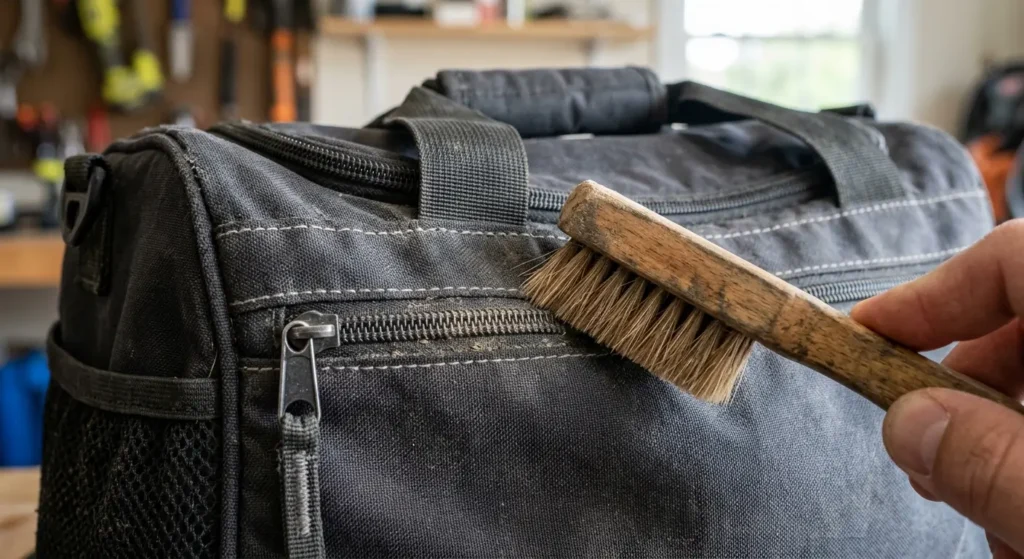
Zippers collect lint, chalk, and body oil. Brush the teeth with an old toothbrush dipped in soapy water. Then wipe them dry. If a zipper sticks, rub a small amount of candle wax or zipper lubricant along the teeth.
Straps and Handles
Straps touch your hands and shoulders, so they pick up sweat and oil. Wipe them with a soapy cloth, then rinse with a clean damp one. For padded straps, do not soak them. Surface cleaning is enough.
How to Get the Smell Out of a Gym Bag
Sometimes a regular wash isn’t enough. Odors can stay in the fabric even after you finish. Fortunately, several simple methods work, and you can combine them.
Baking Soda Method
Baking soda absorbs odor instead of covering it up. Sprinkle two to three tablespoons into the empty, dry bag. Zip it shut and leave it overnight. The next day, shake out the powder and vacuum the lining.
White Vinegar Spray
Mix equal parts white vinegar and water in a spray bottle. Lightly mist the lining, pockets, and bottom panel. Let the bag sit open for about an hour, and then air dry it in a ventilated spot. The vinegar smell fades as it dries.
Sunlight and Fresh Air
Sunlight and airflow help freshen a bag, especially one that spent days zipped up. Hang your bag open in a shaded, breezy spot for a few hours. Avoid long direct sun on dark nylon, though, since it can fade color.
Charcoal or Odor-Absorbing Inserts
Activated charcoal pouches or cedar blocks absorb moisture and smells between washes. They’re inexpensive, and they work best in a clean, dry bag. Replace them according to the product’s directions.
When the Smell Won’t Go Away
If a strong odor stays after two full cleanings, the cause is usually trapped moisture or mildew. In that case, repeat the vinegar rinse and let the bag dry for a full 24 hours. If it still smells musty, the lining may be past saving, and replacing the bag is the practical choice. Our CrossFit gym bag reviews can help you pick a replacement with better ventilation and washable materials.
Common Mistake: Spraying air freshener or perfume inside a smelly bag. It covers the odor for a few hours, but the bacteria and moisture stay. Clean first, then deodorize.
How to Dry a Gym Bag the Right Way
Drying matters as much as washing. A bag that stays damp can grow mildew in as little as one or two days. Likewise, a wet bag stored in a closet can smell worse than before you washed it.
Air Drying Steps
- Press out water. Roll the bag in a clean towel and press gently. Don’t twist it.
- Open everything. Unzip all compartments and pockets. Turn the bag inside out if the lining is thick.
- Prop it open. Stuff a clean, dry towel inside to hold the shape and soak up moisture.
- Choose the right spot. Hang it in a well-ventilated area, or lay it on a drying rack. A fan speeds things up.
- Wait. Most bags need 12 to 24 hours. Padded or canvas bags can take longer.
- Check before storing. Feel the seams and corners. Any damp spot means you need more time.
Should You Use a Dryer?
Usually, no. Heat can shrink canvas, warp foam, and melt glue and coatings. Although the CDC advises drying athletic clothing completely in a dryer, a bag’s materials are more fragile than a cotton t-shirt. When in doubt, air dry.
If the care label does allow tumble drying, use the lowest heat setting. Also, remove the bag while it is still slightly damp, and finish drying it in the open air.
Drying Small-Space Tip
Limited room makes drying harder. If you train at home and have little space, plan around it. Our list of apartment workout equipment includes ideas for storing gear neatly, and a simple over-the-door hook can double as a bag-drying spot.
Quick Refresh vs. Deep Clean
Not every cleaning needs a full wash. Instead, match the effort to the situation. Here is how the two levels compare.
| Quick Refresh (Easier) | Deep Clean (Harder) | |
|---|---|---|
| When | Weekly, or after each hard session | Every 4 to 8 weeks, or after spills and mildew |
| Time | 5 to 10 minutes | 1 to 2 hours plus drying |
| Steps | Empty bag, wipe inside, air out overnight | Full machine or hand wash, vinegar rinse, 24-hour dry |
| Tools | Microfiber cloth, disinfecting wipe | Detergent, vinegar, brush, laundry bag |
| Best for | Preventing buildup | Removing odor, bacteria, and stains |
A good rule of thumb is simple. Do a quick refresh often and a deep clean on a schedule. Because small habits stop buildup, deep cleans become much easier.
How Often Should You Wash a Gym Bag?
Most people should do a full wash every four to eight weeks. However, your own routine changes that number. A bag that carries wet towels and shoes daily needs more frequent care than one that only holds a water bottle and a notebook.
Use this guide to set your own schedule.
| Your Routine | Quick Refresh | Deep Clean |
|---|---|---|
| 1–2 workouts per week | Every 2 weeks | Every 8 weeks |
| 3–4 workouts per week | Weekly | Every 4–6 weeks |
| 5+ workouts per week, or sweaty sports | After heavy sessions | Every 3–4 weeks |
| Carries wet or muddy gear | After every use | Every 2–3 weeks |
Also, wash the bag right away after any spill, visible mold, or a protein shake leak. Don’t wait for the next scheduled cleaning.
Daily Habits That Keep Your Gym Bag Fresh
Prevention beats cleanup, and it makes how to wash a gym bag a much shorter job. A few small habits make washing far less frequent and far less unpleasant.
- Unpack immediately. Don’t leave sweaty clothes in the bag overnight. Hang them or put them in the laundry basket as soon as you get home.
- Use a separate wet bag. Carry sweaty clothes in a waterproof pouch inside your main bag.
- Let shoes breathe. Store shoes in a ventilated pouch or carry them in a separate shoe bag.
- Pack a clean towel. Don’t reuse yesterday’s damp towel. Fresh towels also help you avoid sharing, which the CDC discourages for towels and other items that touch bare skin.
- Leave the bag open. After unpacking, leave all zippers open so air can circulate.
- Keep snacks sealed. Use airtight containers for food and clean your shaker bottle after every use.
- Wipe the base. The bottom touches locker room floors, so wipe it with a disinfecting wipe weekly.
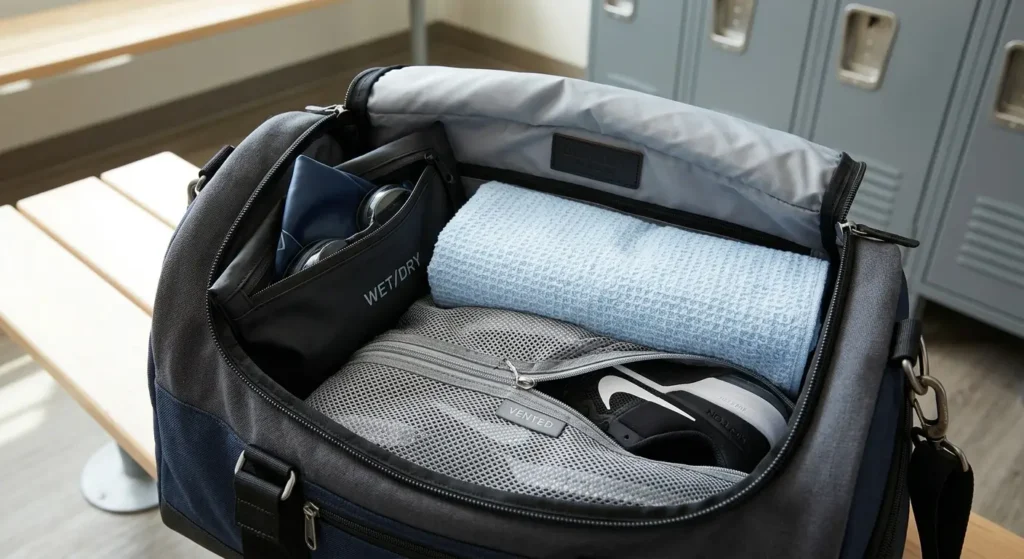
Don’t Forget the Gear Inside Your Bag
A clean bag won’t stay clean if dirty gear goes back in. Therefore, wash the items you carry on a regular schedule too.
Wash these items after every use or as often as the label says:
- Towels, shirts, shorts, and socks. Follow the CDC advice to wash athletic clothing after each use.
- Elbow and knee sleeves. Hand wash them in cool water. Our guides to elbow sleeves and compression sleeves cover materials and care in more detail.
- Water bottles and shaker bottles. Wash with hot soapy water and let them dry open.
- Lifting straps and gloves. Hand wash and air dry.
- Gym equipment you carry. If you bring accessories to a home setup, learn how to clean rubber dumbbells and other gear the same way.
If you play racquet sports, bag care matters even more because racquets, grips, and shoes all go in together. Choosing a tennis bag with a ventilated compartment also helps moisture escape.
Common Mistakes When Washing a Gym Bag
Even careful people make avoidable errors when learning how to wash a gym bag. Watch for these.
- Ignoring the care label. Some bags can’t take water at all. Always check first.
- Using too much detergent. Extra soap leaves residue that holds odor and dirt.
- Using fabric softener. It coats fibers and can trap smells.
- Overloading the machine. A crowded drum doesn’t rinse well and can stress seams.
- Putting the bag in a hot dryer. Heat can shrink fabric and warp foam.
- Storing it damp. Even a slightly damp bag grows mildew quickly.
- Skipping the shoe pocket. It is usually the dirtiest section, so treat it first.
- Washing only the outside. The lining holds most of the sweat and odor.
Safety Notes and When to See a Professional
Clean gear helps reduce risk, but it can’t replace good hygiene. Shower after training, dry your skin completely, and cover cuts with clean bandages. Moreover, avoid sharing towels, razors, and other personal items, as the CDC’s advice for athletes recommends.
If you notice a red, swollen, painful, or draining skin spot, or an itchy, scaly rash between your toes that doesn’t improve, check with a doctor or other health care provider. Don’t try to treat a suspected infection on your own. Athlete’s foot often responds to self-care, according to MedlinePlus, but symptoms that last beyond two to four weeks need medical attention.
Also, wear gloves when you use strong disinfectants. Keep the room ventilated, and never mix cleaning chemicals.
Frequently Asked Questions
Can you put a gym bag in the washing machine?
Many fabric gym bags can go in the washing machine, but check the care label first. Use a gentle cycle with cold or warm water and mild detergent. Place the bag in a mesh laundry bag, and air dry it afterward. Leather, padded, and rigid bags need hand cleaning instead.
How often should you wash your gym bag?
Most people should deep clean their gym bag every four to eight weeks. Wipe the inside weekly, and air it out after each workout. If you carry wet towels, shoes, or muddy gear often, wash it more frequently, roughly every two to four weeks.
How do you get the smell out of a gym bag?
Sprinkle baking soda inside the empty bag and leave it overnight. Then vacuum it out and mist the lining with equal parts white vinegar and water. Let it air dry completely. For stubborn smells, wash the bag and run a second vinegar rinse.
Is it safe to put a gym bag in the dryer?
Usually, it’s safer to air dry. Heat can shrink canvas, warp foam padding, and damage coatings or glue. If the care label approves tumble drying, use the lowest heat setting. Remove the bag while it’s slightly damp, and finish drying it in open air.
What kills bacteria in a gym bag?
Washing with detergent removes most dirt and germs. Disinfecting wipes or sprays made for your bag’s material can help on hard surfaces and linings. Complete drying matters too, because bacteria and fungi grow in moisture. Always follow the product label and test a hidden spot first.
Why does my gym bag still smell after washing?
Lingering smell usually means moisture or soap residue stayed in the fabric. Rinse again with vinegar and cold water, then dry the bag for a full 24 hours with all pockets open. If the smell persists after two attempts, mildew may be deep in the lining.
Conclusion
Learning how to wash a gym bag takes about an hour every month or two, and it pays off in cleaner gear and fewer odors. Start with the care label, wash gently, rinse well, and dry completely. After that, quick weekly refreshes and a few smart habits keep the bag fresh between deep cleans.
Remember the basics. Unpack right after training, keep shoes and wet items separate, and never zip up a damp bag. Follow this gym bag cleaning guide, and your bag will smell better, last longer, and stay a healthier place for the gear you use every day.
