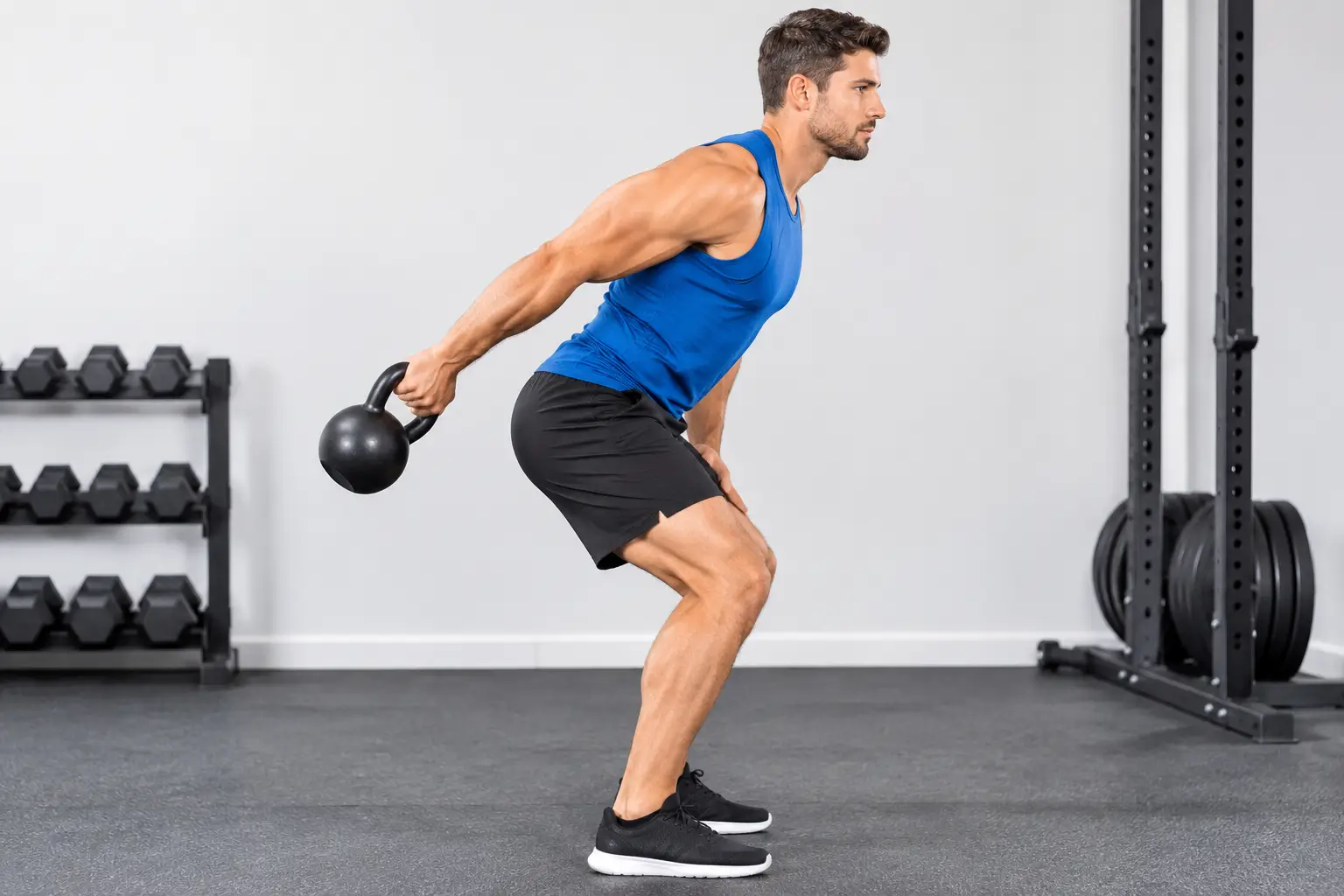
The kettlebell around the world is a simple move with a lot of hidden demand. You circle a kettlebell around your waist, passing it from hand to hand, without letting your hips or shoulders twist along for the ride. That last part is what makes it hard.
Many people treat this drill as a warm-up or a “light day” filler. In truth, kettlebell around the world teaches your core to resist rotation while your hands, shoulders, and grip stay busy. As a result, it is a smart skill for beginners and a useful finisher for experienced lifters.
This guide shows you exactly how to do the kettlebell around the world, which muscles it works, what weight to pick, and how to progress it. You will also get a sample workout you can run at home.
Quick Answer
To do a kettlebell around the world, stand tall holding a kettlebell at your thighs. Circle it around your waist, passing it hand to hand behind your back and in front. Keep your hips square, your ribs down, and the bell close. Start with 10-18 lb (4.5-8 kg) and 5 circles each direction.
Muscles Worked by the Kettlebell Around the World
This exercise looks like an arm drill, but it is mostly a core and grip drill. The bell tries to pull your torso off line, and your trunk muscles stop it. That is why it earns a place in many coaches’ toolkits.
Primary muscles
- Obliques and transverse abdominis: These muscles resist twisting as the weight travels around you. Think of them as the seatbelt for your spine.
- Forearm flexors and grip muscles: Your hands must hold, release, and re-catch the handle every half-circle. Grip endurance builds quickly here.
- Rear deltoids and upper back: The bell passes behind you, so your shoulders have to control it without shrugging.
Secondary muscles
- Glutes and hamstrings: They stabilize your hips and keep you from leaning.
- Erector spinae: These muscles keep your spine long while the load moves.
- Biceps and triceps: They help guide the handle, although they are not the main drivers.
For a deeper look at how core muscles respond to kettlebell work, see our guide on whether kettlebell swings work your abs.
Benefits of the Kettlebell Around the World
Because the movement is slow and controlled, it fits almost any fitness level. Here is what it may offer when done well.
- Better core control. The drill trains your trunk to stay still while your arms move. That quality, often called anti-rotation strength, carries over to lifting, carrying, and sport.
- Stronger grip. Each hand-off is a mini grip test. Over several weeks, many lifters notice the bell feels lighter.
- Smoother shoulder movement. Reaching behind your back at a controlled pace can feel like a gentle shoulder mobility drill. Still, stop if you feel pinching.
- Improved coordination. Learning to pass a weight without looking builds hand-eye timing.
- Low equipment needs. You need one kettlebell and about 72 inches (183 cm) of open floor.
It also helps to know what the research can and cannot say. Harvard Health Publishing lists around-the-world passes among lesser-known kettlebell moves that can build a full-body workout. However, studies on this exact pass are limited.
Broader kettlebell research is more available. A 2024 review in Cureus looked at kettlebell training in athletes and examined its effects on strength, power, and endurance. In addition, a 2019 scoping review found that confidence in the reported effects was low to very low. Treat kettlebell benefits as promising, not guaranteed.
Strength work also supports general health. Adults should do muscle-strengthening activity that works all major muscle groups on at least two days a week, according to the CDC physical activity guidelines. Kettlebell Around the World can be one small piece of that routine.
How to Do the Kettlebell Around the World: Step-by-Step Form
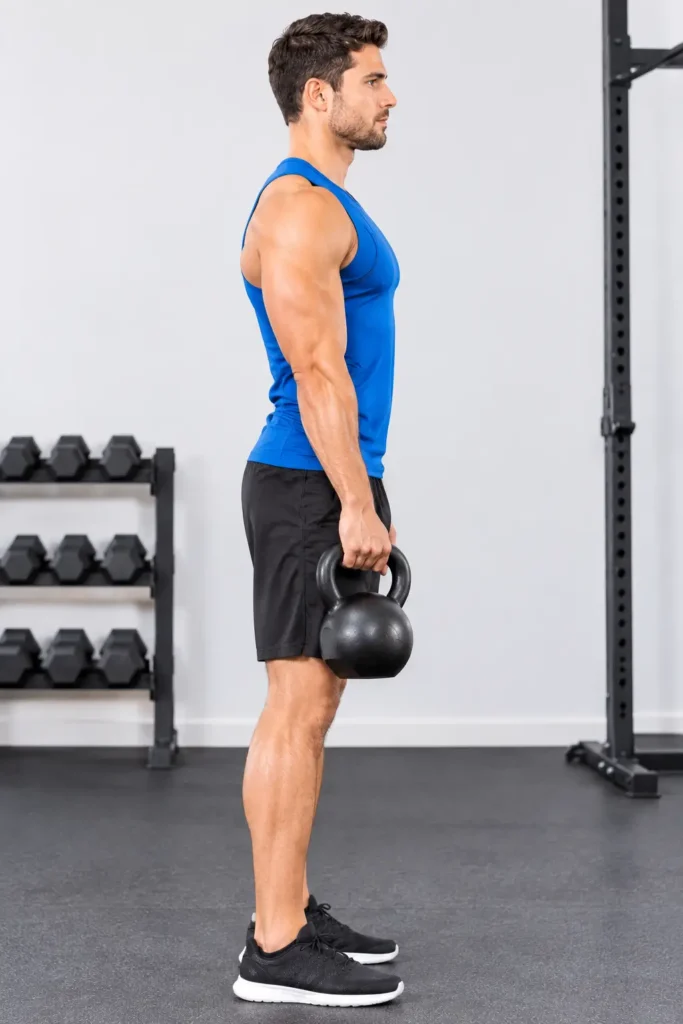
Master the pattern with a light bell first. The goal is a smooth circle, not speed. Follow these steps.
- Set your stance. Stand with your feet about shoulder-width apart and your toes pointing forward. Soften your knees slightly.
- Pick up the bell. Hold the kettlebell by the handle in your right hand, in front of your thighs. Let your arm hang straight.
- Brace your trunk. Take a breath, tighten your abs as if bracing for a light poke, and squeeze your glutes gently. Keep your ribs stacked over your hips.
- Start the circle. Move the bell around your right hip toward your back. Keep it within a few inches (about 5-10 cm) of your body.
- Make the hand-off behind you. Reach your left hand behind your lower back with your palm facing back. Take the handle from your right hand without leaning or twisting.
- Continue forward. Carry the bell around your left hip toward the front. Meet it with your right hand and take the handle again. That is one full circle.
- Repeat, then reverse. Complete your reps in one direction. Then switch directions so both sides get equal work.
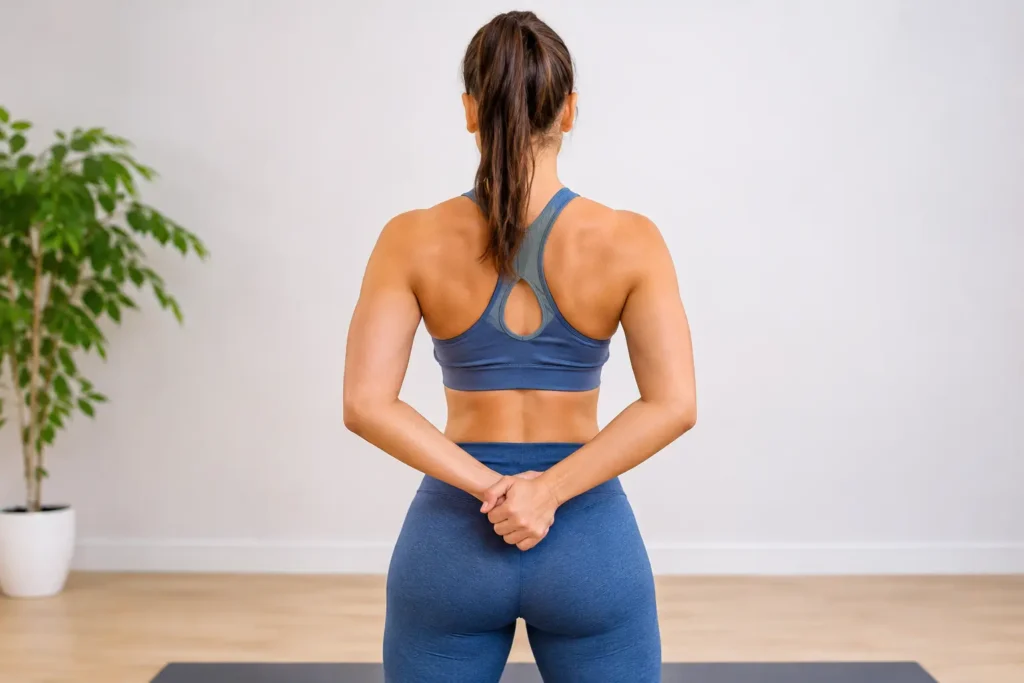
What it should feel like: You should feel your abs and glutes working to keep you still. Your forearms will warm up, and your shoulders should feel controlled, not pinched. If your lower back aches, the weight is too heavy, or your ribs are flaring.
Coach’s Tip
Use a mirror or film yourself from behind for your first few sessions. Watch your belt buckle and shoulders. If either one shifts side to side, shorten the circle or use a lighter bell until they stay quiet.
Tempo guide: Aim for about two seconds per half-circle. That is roughly four seconds per full lap. Slower is harder, and slower is usually better when you are learning.
Sets, Reps, and Weight by Goal
Count one rep as one full circle. Do equal circles in both directions. Because this move is a skill and stability drill, it works best with moderate weights.
| Goal | Kettlebell Weight | Sets | Reps (each direction) | Rest |
|---|---|---|---|---|
| Learn the movement / warm-up | 10-18 lb (4.5-8 kg) | 2 | 5-8 | 30-45 sec |
| Core and grip strength | 18-26 lb (8-12 kg) | 3-4 | 5-6 | 60-90 sec |
| Muscle endurance | 10-18 lb (4.5-8 kg) | 2-3 | 10-12 | 30-45 sec |
| Conditioning finisher | 18-26 lb (8-12 kg) | 3 | 8-10 | 45-60 sec |
These are practical coaching ranges, not strict rules. Start lighter than you think you need. If your form drifts, drop the weight by 4-5 lb (about 2 kg).
For most beginners, a bell between 10 and 18 lb (4.5-8 kg) is a safe starting range. Stronger lifters can go heavier. If you plan to buy equipment, our guide to apartment-friendly workout equipment can help you plan a small setup.
Common Mistakes and How to Fix Them
Most problems with kettlebells around the world come from rushing or going too heavy. Fortunately, each one is easy to correct.
Common Mistake: Twisting your torso
Letting your hips and shoulders turn with the bell turns this core drill into a sloppy arm swing. Fix it by narrowing your circle slightly, slowing down, and keeping your belt buckle pointing straight ahead.
- Mistake: Leaning back as the bell passes behind you. This stresses your lower back. Fix it by squeezing your glutes and keeping your ribs down.
- Mistake: Letting the bell drift away from your body. A wide circle adds leverage and makes the weight feel heavier. Keep the bell close to your clothing.
- Mistake: Shrugging your shoulders. This tightens your neck and reduces control. Instead, keep your shoulders low and relaxed.
- Mistake: Gripping too hard and holding your breath. Tension climbs, and control drops. Breathe steadily, and loosen your grip between hand-offs.
- Mistake: Dropping the bell on a hand-off. This usually means you are going too fast. Slow down, or practice the hand-off with a lighter weight over a mat.
- Mistake: Doing only one direction. Doing so creates uneven work. Always match both directions.
A quick safety habit also helps. Clear the floor around you, wear closed shoes, and keep pets and kids away. A dropped bell lands fast.
Variations: From Easier to Harder
Every lifter can find a version that fits. Use the regressions to build confidence and the progressions to keep challenging yourself.
Easier versions (regressions)
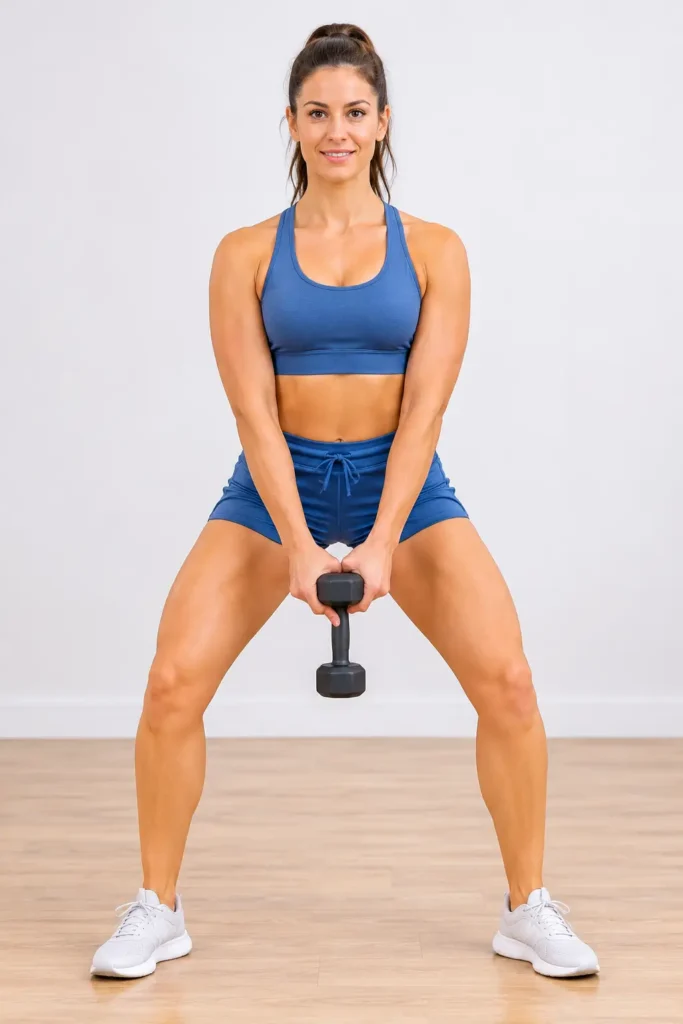
- Lighter bell or dumbbell: Hold a dumbbell upright at one end and pass it the same way. Many people find this easier on the wrists.
- Smaller circle: Pass the weight around the front of your thighs only, without reaching behind your back. Then gradually extend the circle.
- Wider stance: A stance slightly wider than shoulder-width adds stability. Narrow it as you improve.
- Slow and tall: Use a very light bell and stop at each hand-off for one second. This builds the pattern safely.
Harder versions (progressions)
- Heavier bell: Increase by 4-5 lb (about 2 kg) only after you can finish every rep without twisting.
- Faster tempo: Once form is solid, speed up gradually while keeping your hips square.
- Single-leg stance: Stand on one foot and circle the bell. Your core, hips, and ankle all work harder.
- Add a squat: Perform a bodyweight squat between laps. Keep your chest tall and your knees tracking over your toes.
- Figure-8 pattern: Pass the kettlebell between your legs in a figure-8. This is a related drill that challenges coordination further.
- Pause behind your back: Hold the bell at the hand-off for two seconds. This adds time under tension for your grip and core.
If you want to build core strength to support these progressions, our guide on how to flex your abs explains how to brace properly.
Alternatives to Kettlebell Around the World
No kettlebell? You can still train the same qualities: trunk stability, grip, and hand-to-hand control. Here are practical options.
No equipment
- Bodyweight standing rotations with a backpack: Hold a light backpack and rotate slowly side to side. Keep your hips square.
- Dead bug: This floor exercise trains your abs to stay stable while your limbs move.
- Plank with shoulder taps: It challenges anti-rotation strength without any weights.
Dumbbell
- Dumbbell around the world: Hold one end of a dumbbell upright and follow the same steps. It feels slightly different, but the pattern is similar. If you are choosing equipment, see our comparison of adjustable vs fixed dumbbells.
- Weight plate pass: Hold a plate at its edges and pass it around your waist. Many people find it easier on the grip.
Cable
- Pallof press: This trains anti-rotation strength directly. Stand sideways to a cable, press the handle out, and resist the pull.
- Cable woodchop: It adds controlled rotation under load.
Machine
- Rotary torso machine: It targets the obliques with guided movement. Use light weight, since the spine can be sensitive to rotation under load.
Who Should Be Careful
Kettlebell around the world is low-impact and usually well tolerated. Even so, a few groups should take extra care. Check with a doctor or physical therapist first if you have any of the following.
- Current low back pain or a recent back injury. Reaching and trunk control can aggravate symptoms if done poorly.
- Shoulder pain or limited shoulder mobility. Reaching behind your back can irritate sore shoulders.
- Wrist or elbow issues. Holding and re-gripping the handle adds load to these joints.
- Pregnancy or postpartum recovery. Ask your provider which core exercises fit your stage.
- Balance problems or osteoporosis. A dropped bell or a loss of balance carries more risk.
Kettlebells do carry some risk. A Harvard Health blog post on kettlebells notes that kettlebell swings challenge your balance, and it also covers risks to be aware of. A 2025 mini review on kettlebell rehabilitation suggests kettlebell training may help strength, pain, and mobility, though it works best with supervision for people with injuries.
Stop immediately if you feel sharp pain, numbness, or tingling. Stay within a pain-free range, and ask a professional if symptoms continue.
Sample Workout Using the Kettlebell Around the World
This 25-minute full-body session uses one kettlebell. It fits a home gym or a corner of your living room. Do it two or three days a week, with at least one rest day between sessions.
![Home setup with one kettlebell, a mat, and open space for a workout]](https://www.xbodyshape.org/wp-content/uploads/2026/11/Home-setup-with-one-kettlebell-a-mat-and-open-space-for-a-workout-1024x572.webp)
Warm-up (5 minutes)
- 30 seconds of marching in place
- 8 hip hinges with no weight
- 8 arm circles in each direction
- 5 slow around-the-world circles each direction with a very light bell
Main circuit (3 rounds, rest 60 seconds between rounds)
| Exercise | Reps | Notes |
|---|---|---|
| Kettlebell around the world | 6-8 per direction | Slow, hips square |
| Kettlebell goblet squat | 10 | Chest tall, elbows inside knees |
| Kettlebell deadlift | 10 | Flat back, push the floor away |
| Kettlebell halo | 6 per direction | Ribs down, bell close to head |
| Farmer carry (one bell) | 30-40 seconds per side | Walk tall, no leaning |
Cool-down (3 minutes)
- Child’s pose for 30 seconds
- Standing chest stretch for 20 seconds per side
- Easy breathing for 60 seconds
If you play rotational sports, you can pair this routine with our baseball core workout for extra trunk work. In addition, if you like body-weight flow work, animal flow benefits show how mobility and strength can pair together.
Progression plan: Add one rep per direction each week. After four weeks, add 4-5 lb (about 2 kg) and drop back to the lower rep range. Meanwhile, keep notes on how your form feels, not only the numbers.
Grip also matters here. Our guide on how to get bigger hands covers grip and forearm training that can support your hand-offs. Likewise, balanced shoulder training, such as the seated bent-over rear delt raise, helps your upper back control the bell behind you.
Frequently Asked Questions
What muscles does kettlebell work around the world?
It mainly works your obliques, transverse abdominis, and grip muscles. Your glutes, upper back, and rear shoulders also help control the movement. Because the bell pulls you off center, your core works hard to keep your torso still, which is why it feels harder than it looks.
How heavy should a kettlebell be for around the world?
Most beginners do well with 10-18 lb (4.5-8 kg). Stronger lifters might use 18-26 lb (8-12 kg). Pick a weight that lets you keep your hips square and your ribs down through every rep. If you twist or lean, go lighter.
Is kettlebell around the world good for abs?
It can help train your abs, especially the obliques and deep core muscles, by making them resist rotation. However, it is not a complete ab workout. Pair it with planks, carries, and hinging moves for balanced core training.
How many reps of around the world should I do?
Start with 2-3 sets of 5-8 circles in each direction. Rest 30-60 seconds between sets. As your form improves, add a rep each week or a small amount of weight. Quality matters more than speed, so stop a set when your hips begin to twist.
Is around the world kettlebell safe for your back?
It is generally low-impact when done with a light bell and good bracing. Still, leaning back or twisting can stress the lower back. If you have back pain or a past injury, check with a doctor or physical therapist before trying it.
Can beginners do kettlebell around the world?
Yes, with a light weight and a slow pace. Begin with a smaller circle in front of your thighs, then extend behind your back as you gain control. Practicing over a soft mat also lowers the stress of dropping the bell.
Conclusion
The kettlebell around the world is a small movement with real coaching value. It trains your core to stay steady, builds grip endurance, and teaches smooth hand-to-hand control. Because it is simple to learn, it fits warm-ups, finishers, and home workouts.
To get the most from kettlebell around the world, keep the bell light, the circle tight, and the hips square. Then progress slowly with more reps, a heavier bell, or a harder stance. Remember the key point of this guide: how to do kettlebell around the world well is mostly about control, not speed.
Aim to pair it with other strength work across the week to meet general activity guidelines. If you have pain or an injury, check in with a professional first.
