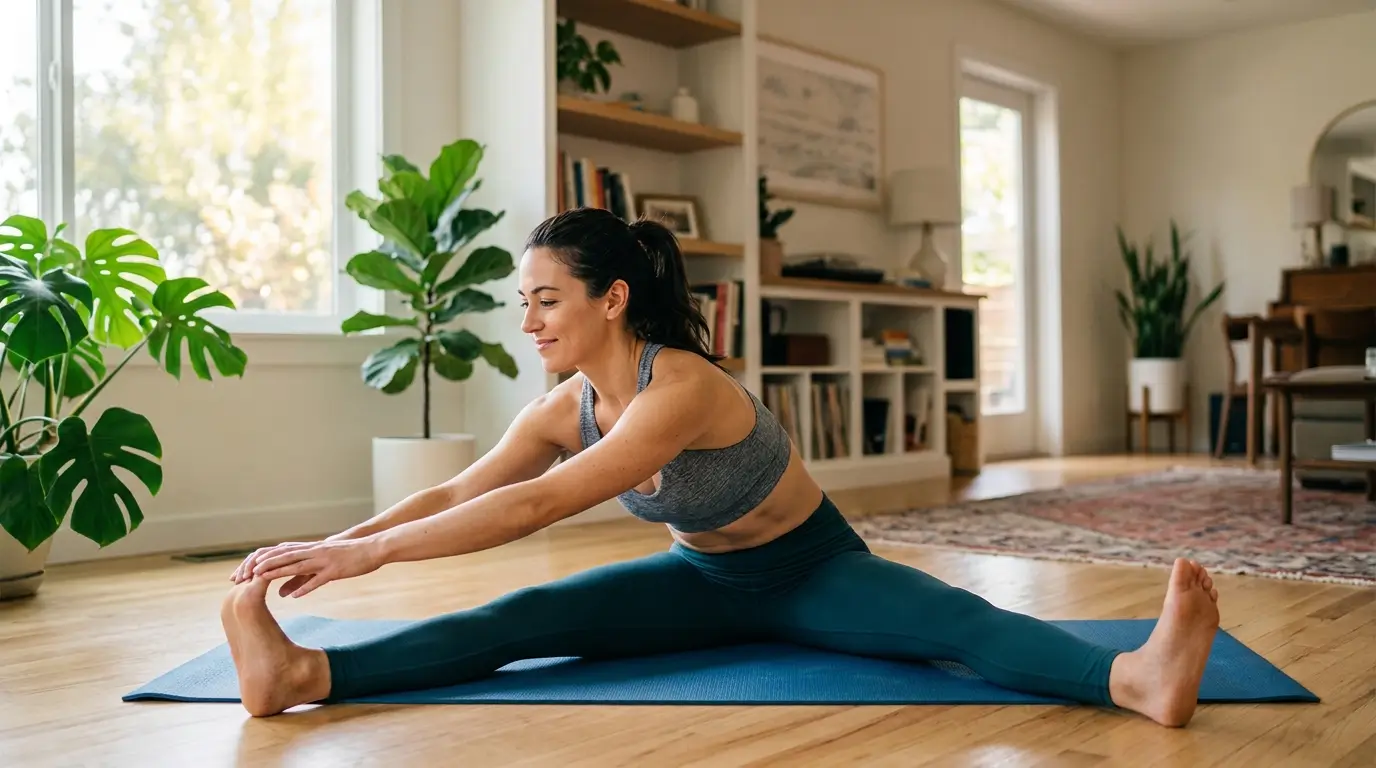
Tight inner thighs limit more movements than most people realize. Squats feel shallow, lunges feel pinchy, and sitting cross-legged becomes a chore. The right inner thigh stretches for mobility can change that in about 15 minutes, a few days a week.
This guide gives you ten coach-style moves, each with an easier and a harder version. You will also get a warm-up, a sample routine, a weekly progression plan, and clear safety rules. It works whether you lift, run, play sports, or sit at a desk all day.
Quick Answer: The best inner thigh stretches for mobility are the butterfly, frog, Cossack squat, kneeling adductor rock, and straddle fold. Warm up first, hold each static stretch about 30 seconds (up to 60 for tight spots), stay at mild tension without pain, and repeat three days a week. Consistency beats depth.
Why Inner Thigh Stretches for Mobility Matter
Muscles Worked by Inner Thigh Stretches for Mobility
Your inner thigh is home to the adductor group. Cleveland Clinic describes the adductor muscles as six muscles in your hips and thighs. They pull your legs toward the midline and help steady your pelvis when you walk, run, or change direction.
These stretches reach several muscles at once:
- Primary: adductor longus, adductor brevis, adductor magnus, gracilis, and pectineus
- Secondary: hamstrings, glutes, hip flexors, and the deep hip rotators
- Supporting: your core and lower back, which keep the pelvis steady while you hold each position
Flexibility and mobility are related, but they are not identical. Flexibility is how far a muscle can lengthen. Mobility is how well your joint moves through that range with control, which is why this routine mixes holds with active drills.
Benefits of Inner Thigh Stretches for Mobility
Stretching has a well-supported link to movement range. Mayo Clinic notes that stretching can improve flexibility and, as a result, the range of motion in your joints. Better flexibility may also improve performance and lower injury risk.
Consistency is the key ingredient. A 2024 meta-analysis of 77 studies found that stretch training done frequently for at least two weeks can increase joint range of motion. Static and PNF-style stretching also produced larger gains than dynamic or ballistic stretching.
Here is what regular inner thigh stretches for mobility can mean in real life:
- Deeper squats and lunges: more hip range often means less pinching at the bottom.
- Better side-to-side balance: Mayo Clinic suggests aiming for equal flexibility on both sides rather than chasing extreme range.
- More comfortable sport movement: wide stances, cutting, and kicking all load the inner thigh, and groin strains are among the most common athletic injuries.
- Easier sitting: crossing your legs or sitting on the floor feels less like work.
So how does stretching work? A 2025 meta-analysis in Sports Medicine found that static stretching lowers overall stiffness and, after several sessions, increases stretch tolerance. Both were linked to better range of motion. In plain words, your nervous system may simply learn to allow more range.
Strength still matters. The CDC recommends that adults do muscle-strengthening activity on at least two days a week, so pair your mobility work with leg training. If you squat often, our guide on squatting every day explains how to balance volume and recovery.
Before Your Inner Thigh Stretches for Mobility: Warm-Up and Ground Rules
Never stretch cold muscles hard. Harvard Health advises stretching after your muscles have warmed up, either after your warm-up or at the end of your workout. Stretching itself is not the warm-up.
The 5-Minute Warm-Up
Do this circuit once before your stretches:
- Walk briskly or march in place for 3 minutes (about 0.25 miles or 0.4 km).
- Side-to-side leg swings: 10 per leg, holding a wall.
- Fire-hydrant hip circles on all fours: 8 each direction per leg.
- Slow bodyweight side lunges: 8 per side.
- Cat-cow: 8 slow reps.
Harvard Health describes dynamic stretching as moving a joint through its available range repeatedly without holding a position. Steps 2 through 4 do exactly that.
Ground Rules for Every Stretch
- Aim for mild tension. Think 3 to 5 on a 10-point scale. Harvard Health says you should feel tension during a stretch, but not pain.
- Hold long enough. Mayo Clinic suggests about 30 seconds per stretch, and up to 60 seconds in problem areas.
- Never bounce. Slow, steady holds are safer and just as effective.
- Breathe slowly. Inhale for 4 counts and exhale for 6 counts. Longer exhales help you relax into the position.
- Stretch both sides. Start with your tighter side, then match the time on the other.
- Keep intensity moderate before heavy lifting. A 2023 systematic review found that every included study saw range-of-motion gains from static stretching, and some found bigger gains at higher intensities. However, it remains unclear whether harder stretching reduces strength more, so save your deepest holds for after training.
Coach’s Tip: Use the talk test. If you cannot say a full sentence calmly while holding a stretch, you are pushing too hard. Back off one notch and let time do the work.
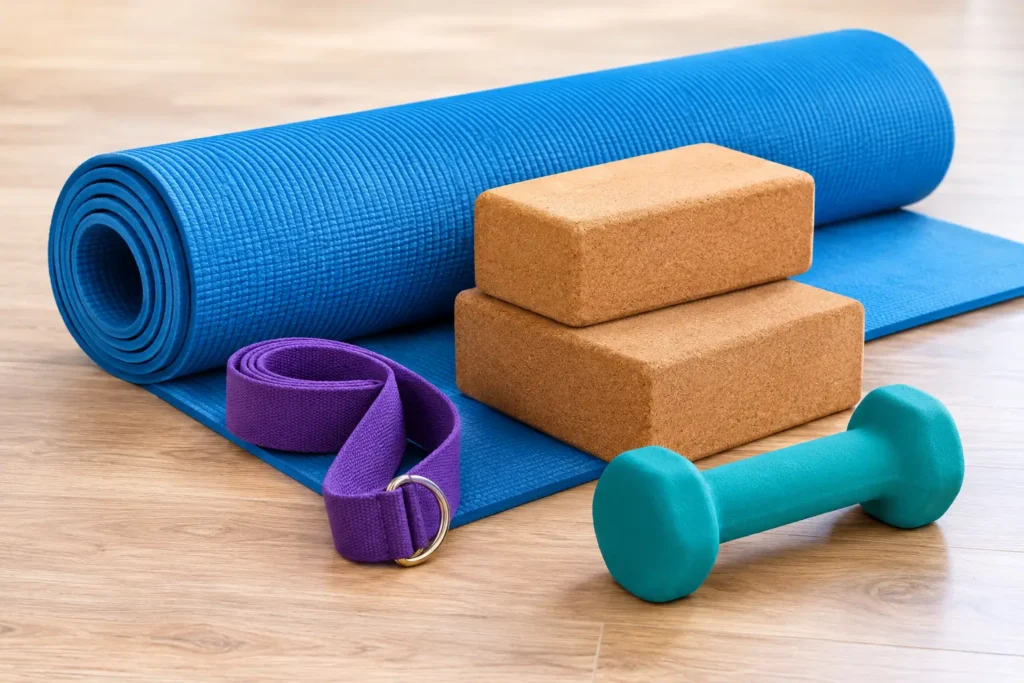
What you need: a yoga mat, two yoga blocks about 4 inches (10 cm) tall (or sturdy books), a strap or towel, and a light dumbbell, 10 to 15 lb (4.5 to 7 kg), for the harder Cossack squat.
The 10 Best Inner Thigh Stretches for Mobility
Each move lists the dose, what it should feel like, an easier option, and a harder option. Work through them in this order, since the active moves come first and the long holds come last.
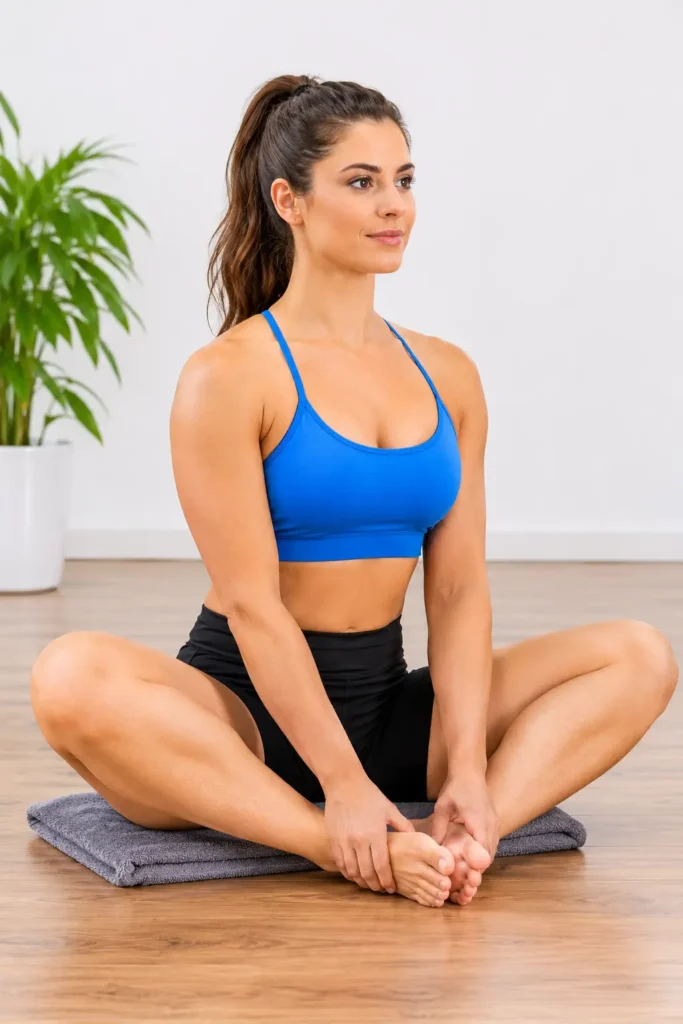
1. Butterfly Stretch
The butterfly is the classic starting point because you control the depth completely. It targets the adductor group and gently opens the hips.
- Sit tall on a mat and bring the soles of your feet together.
- Slide your heels about 12 inches (30 cm) away from your groin.
- Hold your ankles, lift your chest, and let your knees fall open.
- Hinge forward from the hips, keeping your spine long, until you feel mild tension.
Dose: 2 rounds of 30 to 45 seconds. It should feel like a steady pull along the inside of both thighs, never a pinch in the knees.
Easier: sit on a folded towel 2 to 4 inches (5 to 10 cm) high, or place a block under each knee. Harder: walk your hands forward, fold lower, and hold for 60 seconds.
Common Mistake: Bouncing the knees like wings. Harvard Health lists bouncing as something to avoid while stretching. Exhale slowly instead and let gravity lower your knees.
2. Frog Stretch
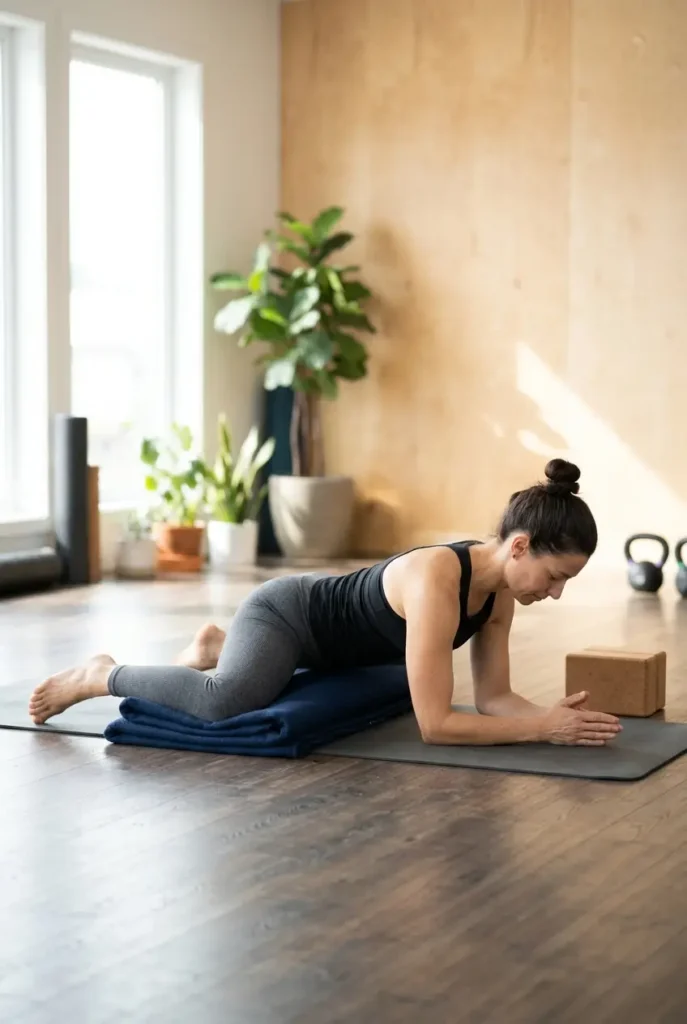
The frog gives the adductors a deeper, wider stretch than most seated options. Go slowly, because it can feel intense quickly.
- Start on all fours on a padded mat.
- Slide your knees apart, about 24 to 36 inches (61 to 91 cm), keeping each ankle in line with its knee.
- Turn your feet out so the inside edges rest on the floor.
- Lower onto your forearms and press your hips gently back toward your heels.
Dose: 2 rounds of 30 to 60 seconds. It should feel like a deep pull in the inner thighs and groin, not in the knees.
Easier: fold a blanket under your knees, narrow the stance, and keep your hands on blocks. Harder: widen your stance by about 2 inches (5 cm) at a time, then rock your hips back and forth in slow 5-second waves instead of quick pulses.
3. Seated Straddle Forward Fold
The straddle stretches the inner thighs and hamstrings together. That makes it a smart finisher after leg day.
- Sit tall and open your legs as wide as feels comfortable, toes pointing up.
- Sit on a folded blanket if your lower back rounds.
- Hinge forward from the hips, not the shoulders, and walk your hands out in front of you.
- Keep your kneecaps pointing at the ceiling.
Dose: 2 rounds of 30 to 45 seconds. It should feel like tension on the inner thighs and the backs of the legs.
Easier: bend your knees slightly and sit on a cushion. Harder: widen the legs by a few inches, lower to your forearms, or reach toward one foot at a time for 30 seconds per side.
4. Cossack Squat
This is the active move in the list, so it builds mobility and strength together. It stretches the inner thigh of the straight leg while the bent leg works through a deep squat.
- Stand with your feet about 36 inches (91 cm) apart, toes turned out slightly.
- Shift your weight onto your right leg and bend the right knee, sitting back and down.
- Keep your left leg straight with the toes pointing up and the heel on the floor.
- Push through the right foot to rise, then switch sides.
Dose: 2 sets of 6 reps per side, using a 2-second lowering phase, a 1-second pause, and a 2-second rise. Rest 30 seconds between sets. It should feel like a stretch along the straight leg’s inner thigh and effort in the bent-leg glute and quad.
Easier: hold a door frame or pole, shorten the depth, or place a 1-inch (2.5 cm) plate under the heel if it lifts. Harder: hold a 10 to 15 lb (4.5 to 7 kg) dumbbell at your chest and add a 3-second pause at the bottom. Cossack squats appear in many bodyweight programs, so our calisthenics exercises list is a good place to find more.
5. Kneeling Adductor Rock
Rocks are a bridge between stretching and movement, because they use gentle repetition instead of long holds.
- Start on all fours with your knees under your hips.
- Extend your right leg straight out to the side, foot flat, toes pointing forward.
- Keep your spine long and slowly rock your hips back toward your left heel.
- Pause for one second, then glide forward again.
Dose: 2 sets of 8 slow rocks per side, then a 20-second hold at the farthest point. It should feel like a pull along the inside of the extended leg.
Easier: shorten the rock and keep the extended leg slightly bent. Harder: place the extended foot on a towel or slider so it glides out wider, then add a longer hold.
6. Lizard Lunge with Inner Thigh Drop
The lizard opens the inner thigh of the front leg and the hip flexors of the back leg at the same time.
- From all fours, step your right foot outside your right hand.
- Lower your back knee onto the mat, with a pad underneath if needed.
- Sink your hips forward and down while keeping your chest lifted.
- Let your right knee drift slightly outward, keeping your ankle under your knee and your whole foot on the floor.
Dose: 1 to 2 rounds of 30 seconds per side. It should feel like a stretch along the front-leg inner thigh and the back-leg hip.
Easier: place your hands on blocks about 4 inches (10 cm) high and keep your hips higher. Harder: lower to your forearms, or lift the back knee off the floor. Once your hips open up, loaded single-leg work such as the dumbbell Bulgarian split squat can help you use that new range with control.
7. Happy Baby
This floor stretch is relaxing and easy to adjust, so it works well near the end of a session.
- Lie on your back and bring your knees toward your armpits.
- Hold the outsides of your feet or your shins.
- Open your knees wider than your torso, with your ankles above your knees.
- Keep your tailbone heavy and your head on the floor.
Dose: 1 round of 45 to 60 seconds. It should feel like: gentle opening along the inner thighs and groin.
Easier: hold behind your thighs, or loop a strap around each foot. Harder: pull your knees closer to the floor beside your ribs and rock side to side slowly for 5 breaths.
8. Wall Straddle (Legs-Up-the-Wall V)
Gravity does the work here, which makes this a low-effort stretch for stiff hips and tired legs.
- Sit sideways next to a wall, then lie back and swing your legs up.
- Scoot your hips about 6 inches (15 cm) from the wall.
- Let your legs slide apart slowly into a V, with your knees soft.
- Relax your arms and breathe low into your belly.
Dose: 1 to 3 minutes. It should feel like a light, spreading pull that deepens gradually.
Easier: keep the V narrow and bend your knees, or slide a folded towel under your hips. Harder: widen the V a few degrees and extend the hold to 3 minutes. After several pain-free weeks, you can add 1 to 2 lb (0.5 to 1 kg) ankle weights; our guide to ankle weight benefits covers safe use. If you feel sharp pain, bring your legs together and stop.
9. 90/90 Hip Switch
The 90/90 trains hip rotation, which works together with your inner thigh muscles to give you a full hip range.
- Sit with your right knee bent in front of you and your left knee bent to the side, both at about 90 degrees.
- Sit tall and lean slightly over the front shin for 30 seconds.
- Lift your knees, rotate, and switch sides with control.
- Complete 5 switches, then hold 30 seconds on each side.
It should feel like a deep stretch around the hips and glutes. Inner thigh tension may show up on the back leg.
Easier: sit on a cushion and place your hands behind you for support. Harder: do the switches without using your hands. If your pelvis tips forward when you try to sit tall, our anterior pelvic tilt exercises may help.
10. Contract-Relax Butterfly (PNF-Style)
PNF-style stretching mixes a light muscle contraction with a relaxed stretch. In the 2024 meta-analysis mentioned earlier, PNF and static stretching produced greater range-of-motion gains than dynamic or ballistic stretching. Use this version only after your hips are warm and the other stretches feel comfortable.
- Set up in the butterfly with your hands on your knees.
- Press your knees upward into your hands at about 20 percent effort for 5 seconds.
- Relax completely, exhale, and sink a little deeper for 20 seconds.
- Repeat for 3 rounds.
It should feel like: a mild push, then a soft release. Easier: use 10 percent effort and do 2 rounds. Harder: use 8-second pushes followed by a 30-second relaxed hold. Stop right away if you feel pain.
Build Your Routine of Inner Thigh Stretches for Mobility
Sample 15-Minute Routine
Complete the 5-minute warm-up first. Then follow this order for your inner thigh stretches for mobility:
| Order | Exercise | Sets | Hold / Reps | Rest |
|---|---|---|---|---|
| 1 | Cossack squat | 2 | 6 reps per side | 30 sec |
| 2 | Kneeling adductor rock | 2 | 8 rocks per side | 20 sec |
| 3 | Frog stretch | 2 | 40 sec | 20 sec |
| 4 | Lizard lunge | 1 | 30 sec per side | 15 sec |
| 5 | Butterfly | 2 | 40 sec | 20 sec |
| 6 | Seated straddle fold | 2 | 40 sec | 20 sec |
| 7 | Happy baby | 1 | 60 sec | None |
The whole circuit takes about 12 to 15 minutes. Swap in the wall straddle on days when you feel tired, and add the contract-relax butterfly once a week after you have practiced for a month.
Weekly Schedule and Progression
Three short sessions of inner thigh stretches for mobility each week is a practical target for most beginners. Try Monday, Wednesday, and Friday, or tie your stretches to leg days so your hips are already warm.
| Weeks | Days per week | Holds and reps | What to change |
|---|---|---|---|
| 1–2 | 3 | 1 set, 30-sec holds, 5 Cossack reps per side | Learn the shapes and stay at mild tension |
| 3–4 | 3 | 2 sets, 40-sec holds | Add the kneeling rock hold |
| 5–6 | 3–4 | 45–60 sec holds | Add a 10 lb (4.5 kg) goblet hold to the Cossack squat |
| 7+ | 3 | Maintain | Add contract-relax butterfly once a week |
After a run or a hard leg session, finish with the butterfly, straddle, and happy baby as a cool-down. Our article on running after leg day explains how to balance training and recovery. Harvard Health’s mobility guide suggests holding static stretches for 10 to 30 seconds and repeating them two to four times, which fits easily into a cool-down.
Common Mistakes With Inner Thigh Stretches for Mobility
- Forcing depth. Pain is not progress. Return to the 3 to 5 tension scale and hold longer instead.
- Rounding the lower back. Sit on a cushion and hinge from the hips so the stretch stays in the inner thighs.
- Holding your breath. Count a slow exhale. Your muscles let go more easily when you breathe out.
- Stretching cold. Do the 5-minute warm-up, even when you feel pressed for time.
- Favoring your flexible side. Start with the tighter side and match the time on both.
- Skipping strength. Mobility without control can feel unstable. Add squats, lunges, and side-lying leg work on your strength days.
Safety Tips: Who Should Be Careful
Most healthy adults can try these stretches at a gentle intensity. However, several groups should check with a doctor or physical therapist first:
- Anyone with groin pain, a recent strain, or swelling. Groin pain has many possible causes, so Cleveland Clinic explains that it is worth getting it checked rather than stretching through it.
- People who are pregnant or postpartum. Your provider can tell you which positions are right for you.
- People with hip replacements, recent hip surgery, or known hip joint problems. Some positions may be off limits.
- Older adults or anyone with balance concerns. Keep a wall or sturdy chair within reach, and prefer the seated and lying options.
- People who are very flexible or hypermobile. Focus on control and strength rather than pushing range.
Also, stop any stretch that causes sharp, pinching, or knee-area pain. Harvard Health advises that pain may mean an injury, so stop stretching that muscle and talk to your doctor.
Tips for Better Results
- Measure progress. Every two weeks, measure the distance from your knees to the floor in the butterfly, in inches (cm). Small gains show you the plan works.
- Train the new range. Add slow, controlled strength work at the end of your range. Our guide to isometric leg exercises shows simple holds you can use.
- Break up sitting. Two or three minutes of standing hip circles and leg swings can keep your hips from stiffening during long desk days.
- Try flowing practice. If you like floor-based movement, the animal flow benefits guide shows how crawling patterns build hip control.
- Be patient. Range of motion changes build over weeks, not days, so keep sessions short and regular.
FAQ: Inner Thigh Stretches for Mobility
How long should you hold inner thigh stretches for mobility?
Hold most static inner thigh stretches for about 30 seconds, and up to 60 seconds in tight areas, according to Mayo Clinic. Breathe slowly and stay at mild tension, not pain. If 30 seconds feels too long at first, start with 15 to 20 seconds and build up over two weeks.
Why are my inner thighs so tight?
Tight inner thighs often come from long periods of sitting, limited hip rotation, or rarely moving your legs wide. Sometimes they also tighten after an old strain. Because many different conditions can cause groin pain, see a provider if tightness comes with pain or swelling.
Can you do inner thigh stretches for mobility every day?
Gentle, pain-free sessions most days are generally fine for healthy adults, but three or four deeper sessions a week are usually enough. On other days, use short mobility drills such as leg swings and kneeling rocks. If your inner thighs feel sore or sharp, take a rest day and reduce depth.
Should I stretch before or after a workout?
Use dynamic moves before training and static holds afterward. Harvard Health recommends stretching once muscles are warmed up, either after your warm-up or at the end of a workout. Before lifting, keep static holds short and mild, then save longer holds for your cool-down.
How long until inner thigh stretches for mobility show results?
Progress varies from person to person, so be patient. A 2024 meta-analysis found that stretch training lasting at least two weeks can increase range of motion. Track your progress by measuring knee-to-floor distance in the butterfly every two weeks, and keep sessions consistent.
Is it normal to feel pain during inner thigh stretches?
Mild tension is normal, but pain is a stop sign. Harvard Health notes that pain during a stretch may signal injury or tissue damage, so stop and talk to your doctor. Sharp, pinching, or knee-area pain also means you should back off, change positions, or ask a physical therapist to check your form.
Conclusion: Make Inner Thigh Stretches for Mobility a Habit
Inner thigh stretches for mobility work best when you treat them like any other training skill. Warm up, stay at mild tension, breathe slowly, and repeat the routine three times a week. Pair it with leg strength so your new range feels stable, not just loose.
Start with the 15-minute routine, use the easier options until each position feels calm, and move to the harder versions only when your body asks for more. Measure your butterfly every two weeks, and let the numbers guide your progress. A few focused minutes now can make squats, lunges, and daily movement feel noticeably smoother.
