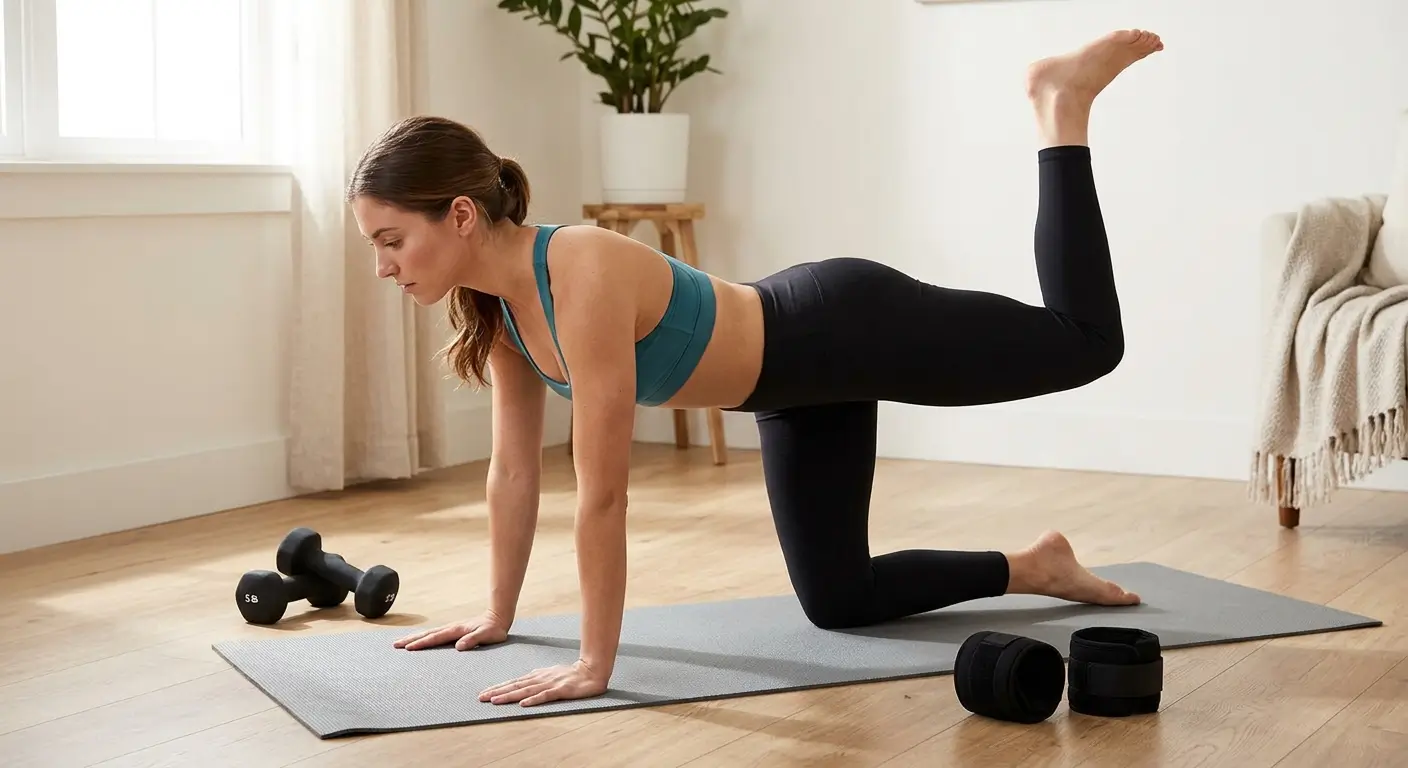
The cable kickback is a popular glute move because it lets you squeeze one glute at a time against steady tension. However, it needs a cable station and an ankle cuff, and those are often busy or missing at home. The good news is that cable kickback alternatives can train the same hip extension movement with no equipment, a pair of dumbbells, or a different cable setup.
In this guide, I’ll explain what the cable kickback does and what a good substitute must copy. Then I’ll walk you through the exercises, with form cues, sets, reps, rest times, and easier and harder versions. Finally, you’ll get a sample workout you can start this week.
Quick Answer
Quick Answer: The best cable kickback alternatives are quadruped donkey kicks with no equipment, dumbbell donkey kicks, single-leg Romanian deadlifts, and step-ups. Cable pull-throughs and back extension machines also work when a kickback station is busy. Each trains your glutes through hip extension. Choose one for your gear, then add reps, load, or pauses.
What the Cable Kickback Does and What Cable Kickback Alternatives Must Copy
In a cable kickback, you strap a cuff to your ankle and attach it to a low pulley. Then you push your leg straight back against the cable. The movement is called hip extension, and your gluteus maximus is the main muscle doing it.
So, a good substitute should do three things:
- Move your hip into extension (your leg goes behind your body).
- Let you squeeze your glute hard at the end of each rep.
- Allow you to add resistance or difficulty over time.
Here is the encouraging part. A systematic review of loaded exercises found that many movements can produce very high glute activation, including step-ups, hip thrusts, deadlifts, lunges, and split squats. In other words, you have plenty of options besides cables.
Muscles Worked by Cable Kickback Alternatives
Most cable kickback alternatives share the same main target. The exact mix changes a little with each exercise, though.
Primary muscles
- Gluteus maximus: Your largest glute muscle drives your leg back and straightens your hip. It is the star of every option in this guide.
- Hamstrings: They help extend the hip, especially in hinge moves like Romanian deadlifts.
Secondary muscles
- Gluteus medius: It keeps your pelvis level in single-leg exercises such as step-ups.
- Core and erector spinae: They stop your lower back from arching during kickbacks and hinges.
- Quadriceps and calves: They work in step-ups, lunges, and split squats.
A study commissioned by ACE compared eight glute exercises with muscle sensors. It highlighted quadruped hip extensions, lunges, step-ups, and four-way hip extensions as viable options to squats. The study was small, so treat it as a useful guide and not a final answer.
Benefits of Cable Kickback Alternatives
You don’t need a cable station to train your glutes well. Here is what these swaps can offer:
- Home-friendly training. Most options need little space and little money. If you’re setting up a small space, see our list of the best apartment workout equipment.
- Better progression. Some alternatives, like step-ups and hip thrusts, let you use heavier loads than a cable kickback allows.
- Variety for plateaus. Changing the movement can keep training fresh and help you keep progressing.
- Muscle growth across rep ranges. A meta-analysis of 21 studies found that muscle size gains were similar with light and heavy loads when sets went close to failure. Heavy loads did better for max strength.
- Meets guidelines. The CDC recommends at least two days of muscle-strengthening activity each week, and glute work counts.
- Less equipment waiting. You can train even when the cable station is busy.
These are general findings, and individual results vary with effort, consistency, and recovery.
How to Do a Cable Kickback Before Trying Alternatives
Before you swap exercises, it helps to see the original done well. Here is the clean version, so you know what each alternative should feel like.
- Set the cable. Attach an ankle cuff to a low pulley. Start light, with 5-10 lb (2-5 kg).
- Position yourself. Face the machine, about 12-18 inches (30-46 cm) away. Hold the frame with both hands.
- Hinge slightly. Lean forward from the hips with a soft bend in your standing knee.
- Brace. Tighten your abs and keep your ribs down.
- Kick back. Push your working leg straight back with a slight knee bend. Lead with your heel.
- Squeeze. Stop when your hip is fully extended. Hold for one second.
- Lower slowly. Take two to three seconds to return.
What it should feel like: A strong squeeze in the glute of the working leg. You should not feel a pinch in your lower back.
Coach’s Tip: Think about pushing your heel to the wall behind you, not lifting your foot to the ceiling. This cue keeps the work in your glute and helps stop you from arching your back.
Sets, Reps, and Weight for Cable Kickback Alternatives
Use these common coaching ranges, and adjust them to how you feel. Always train each side.
| Goal | Sets | Reps | Rest | Weight guidance |
|---|---|---|---|---|
| Strength | 3-5 | 6-8 | 2 min | Heavier loads on hinges and step-ups; last reps hard but clean |
| Muscle size | 3-4 | 10-15 | 60-90 sec | Moderate load; stop 1-2 reps before failure |
| Endurance | 2-3 | 15-25 | 30-60 sec | Light load or bodyweight; slow tempo |
Start with two glute sessions per week, with at least one rest day between. Then add a rep or a small amount of weight each week. This is called progressive overload.
Common Mistakes With Cable Kickback Alternatives and How to Fix Them
Common Mistake: Swinging the leg and arching the lower back to get the weight up. This shifts the work to your spine and away from your glutes. Fix: Use less weight, brace your abs, and stop when your hip is fully extended.
Also watch for these errors:
- Rushing the reps. Fast kicks use momentum. Count two seconds up, one second squeeze, and three seconds down.
- Twisting the hips open. Keep your hips square to the floor or wall.
- Going too heavy. Heavy loads often cause sloppy form. Pick a load you can control on every rep.
- Skipping the squeeze. Without a pause, you miss the point of the exercise.
- Tight hip flexors. If you feel pulling in the front of your hip, add a gentle stretch. Our guide to anterior pelvic tilt exercises can help you keep your pelvis neutral.
Cable Kickback Alternatives From Easier to Harder
Easier (regressions)
- Shorter range: Kick back only halfway and build up over a few weeks.
- Supported kickback: Hold a wall or a post for balance.
- Bodyweight only: Use no cable or weight until your form feels solid.
Harder (progressions)
- Add load: Increase by 2-5 lb (1-2 kg) once you hit the top of your rep range on all sets.
- Pause at the top: Hold for 2-3 seconds each rep.
- Slow lowering: Take five seconds to come down.
- Add ankle weights: Learn more about ankle weights before you pick a pair.
Best Cable Kickback Alternatives With No Equipment
No gear? You can still train your glutes hard. The key is to use tempo, pauses, and single-leg work.
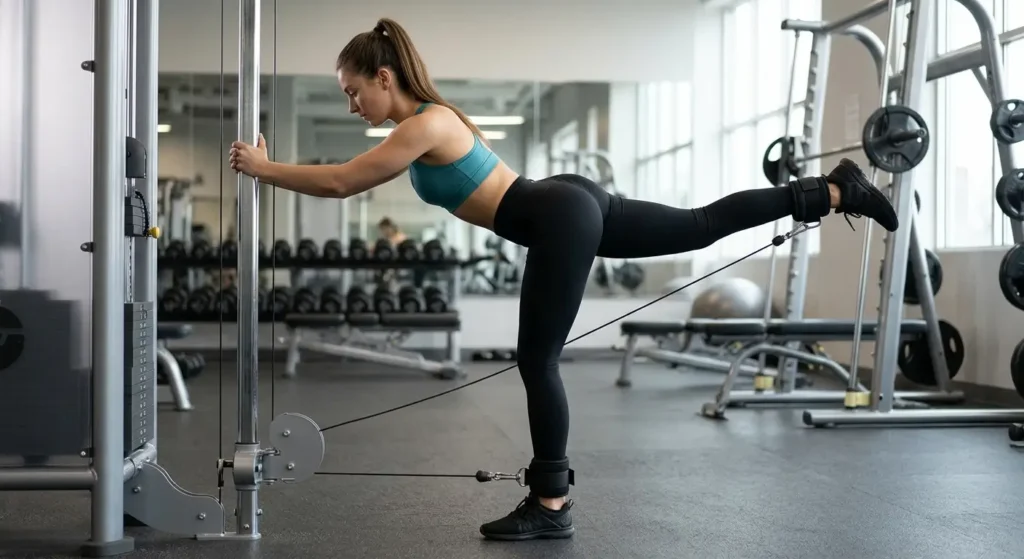
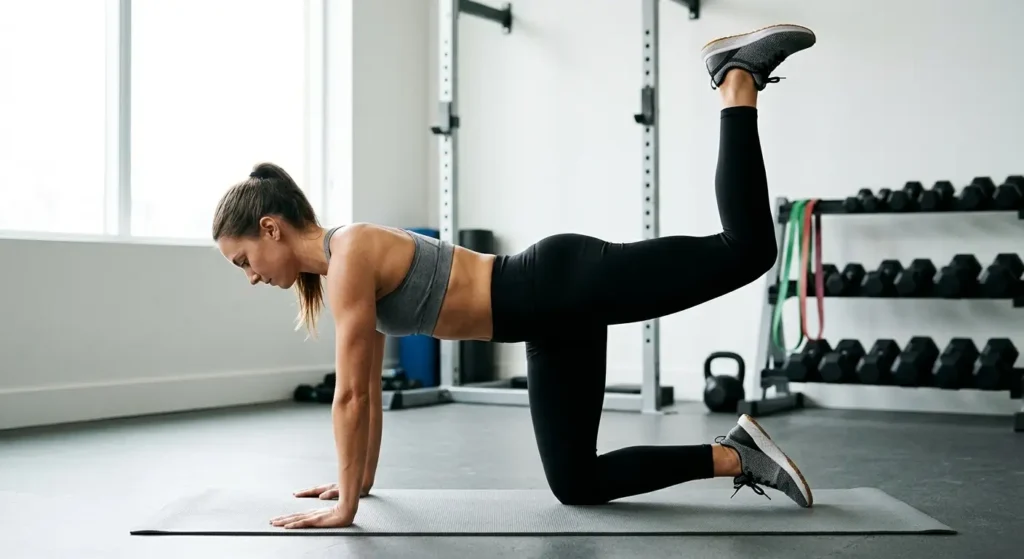
1. Quadruped Donkey Kick (A Cable Kickback Alternative)
Start on your hands and knees with your hands under your shoulders. Keep your knee bent at 90 degrees and press your heel toward the ceiling. Stop when your thigh is in line with your back. Do 3 sets of 12-15 reps per leg with 60 seconds of rest.
- Easier: Lift only halfway.
- Harder: Hold the top for three seconds, or add ankle weights.
2. Straight-Leg Quadruped Kickback
Use the same setup, but extend the leg straight back. Keep your lower back flat. Do 3 sets of 10-12 reps per leg, resting 60 seconds. This version feels closest to a cable kickback.
3. Single-Leg Glute Bridge
Lie on your back with one foot flat and the other leg extended. Push through your heel and lift your hips until your body forms a line. Squeeze for two seconds. Do 3 sets of 10-12 reps per leg, resting 60 seconds.
- Easier: Use a two-leg bridge.
- Harder: Rest your upper back on a couch and add a pause.
4. Reverse Lunge
Step one foot back and lower your back knee toward the floor. Drive through your front heel to stand. Do 3 sets of 8-12 reps per leg, resting 60-90 seconds.
5. Stair or Bench Step-Up
Use a step about 12-16 inches (30-41 cm) high. Place your whole foot on the step and stand up without pushing off the back foot. Lower for three seconds. Do 3 sets of 8-12 reps per leg. Step-ups ranked among the highest glute activation exercises in the review above.
- Easier: Use a lower step.
- Harder: Hold dumbbells or use a higher step.
For more bodyweight ideas, check our calisthenics exercises list.
Best Cable Kickback Alternatives With Dumbbells
Dumbbells let you add real load at home. If you’re buying, compare adjustable dumbbells with fixed sets for your space and budget.
1. Dumbbell Donkey Kick (A Cable Kickback Alternative)
Start on your hands and knees. Place a light dumbbell in the crease behind one knee, then squeeze your calf and hamstring to hold it. Press your heel toward the ceiling. Use 5-15 lb (2-7 kg). Do 3 sets of 10-15 reps per leg, resting 60 seconds.
The weight can slip, so start light and go slowly. Place a mat or towel under your knees for comfort.
- Easier: Skip the dumbbell.
- Harder: Pause for two seconds at the top.
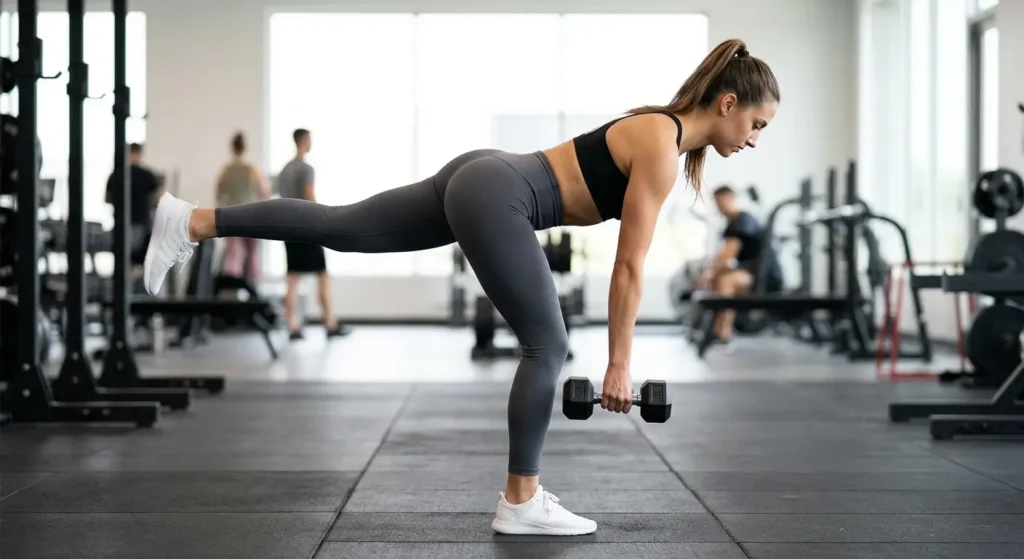
2. Single-Leg Romanian Deadlift
Hold a dumbbell in the hand opposite your working leg. Hinge at the hip and send your free leg back behind you. Lower until your torso is near parallel, then stand tall. Use 10-25 lb (5-11 kg). Do 3 sets of 8-10 reps per leg with 90 seconds of rest.
- Easier: Keep your free toe lightly on the floor, or hold a wall.
- Harder: Use a heavier dumbbell or slow the lowering phase.
3. Dumbbell Hip Thrust
Sit with your upper back against a bench about 16-18 inches (41-46 cm) high. Place a dumbbell on your hips. Drive through your heels and lift until your hips reach full extension. Squeeze for one second. Use 25-50 lb (11-23 kg). Do 3-4 sets of 8-12 reps with 90 seconds of rest.
Coach’s Tip: Tuck your chin slightly and keep your ribs down at the top. This keeps your pelvis tucked and the work in your glutes.
4. Dumbbell Bulgarian Split Squat
Put your back foot on a bench and step your front foot forward. Lower straight down, then drive up. Use 10-25 lb (5-11 kg) in each hand. Do 3 sets of 8-10 reps per leg. See our full guide to the dumbbell Bulgarian split squat.
Best Cable Kickback Alternatives With Cables and Bands
Sometimes you do have a cable machine, but the ankle-cuff station is taken or doesn’t suit you. These swaps keep the tension steady.
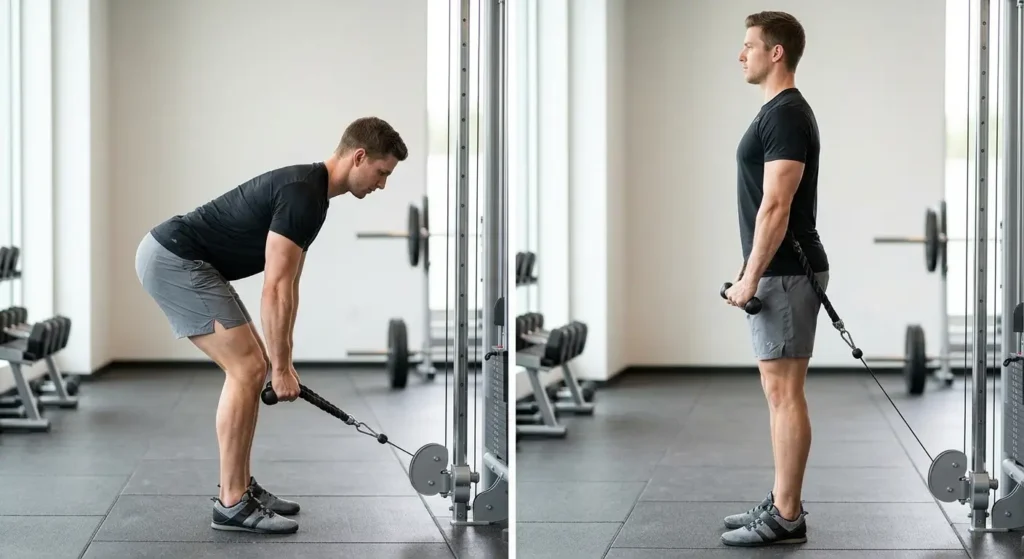
1. Cable Pull-Through (A Cable Kickback Alternative)
Face away from a low pulley with a rope between your legs. Hinge at the hips, then squeeze your glutes to stand tall. Use 20-40 lb (9-18 kg). Do 3 sets of 12-15 reps with 60 seconds of rest. Pull-throughs train the hip hinge, which is a close cousin of the kickback.
- Easier: Use a lighter stack and a smaller hinge.
- Harder: Pause for two seconds at the top.
2. Band Kickback (A Cable Kickback Alternative)
Loop a resistance band around your ankles or feet and perform kickbacks in a quadruped or standing position. Use a light band at first. Do 3 sets of 12-15 reps per leg.
3. Other Cable Moves
Our guide to back cable exercises can help you use the same machine to round out your pulling work on another day.
Machine Cable Kickback Alternatives to Consider
If your gym has machines, two options stand out:
- Glute kickback machine: It guides your leg path, so it’s beginner-friendly. Use 3 sets of 10-15 reps per leg.
- 45-degree back extension: With a hip-hinge pattern and a glute squeeze, it can work as a glute exercise. Keep your spine neutral and finish by squeezing your glutes. Use 3 sets of 10-12 reps.
Both work well, but form still matters. Start light and aim for smooth, controlled reps.
Who Should Be Careful With Cable Kickback Alternatives
Check with a doctor or physical therapist before starting if you have:
- Ongoing hip, back, or knee pain
- A recent injury or surgery
- Balance problems or dizziness
- Pregnancy or postpartum recovery
- Osteoporosis or other medical conditions
If you feel sharp pain, numbness, or tingling, stop. Beginners should start with bodyweight versions. Older adults can use a wall or chair for balance.
Sample Workout Using Cable Kickback Alternatives
Try this 35-minute home glute session twice a week, with at least one rest day between.
| Exercise | Sets | Reps | Rest |
|---|---|---|---|
| Warm-up: glute bridges and leg swings | 2 | 10 | 30 sec |
| Dumbbell hip thrust | 4 | 8-12 | 90 sec |
| Single-leg Romanian deadlift | 3 | 8-10 per leg | 90 sec |
| Step-up | 3 | 8-12 per leg | 90 sec |
| Quadruped donkey kick (add dumbbell if ready) | 3 | 12-15 per leg | 60 sec |
| Single-leg glute bridge | 2 | 10-12 per leg | 60 sec |
Progression plan: Add one rep to each set weekly. When you reach the top of the range on every set, add 5 lb (2 kg) and return to the lower rep range. After four to six weeks, take a lighter week.
Cable Kickback Alternatives FAQ
What can I do instead of cable kickbacks?
Try quadruped donkey kicks, dumbbell donkey kicks, single-leg Romanian deadlifts, step-ups, and hip thrusts. All of them train hip extension, which is what a kickback does. Choose based on your equipment, then add reps, load, or pauses over time.
Can I do glute kickbacks without a cable machine?
Yes. Do them on your hands and knees with your body weight, a resistance band, or a dumbbell behind your knee. Keep your back flat, press your heel up, and squeeze at the top. Ankle weights can add resistance when bodyweight gets easy.
Are donkey kicks as good as cable kickbacks?
They can be similar for training hip extension. An ACE-commissioned study found quadruped hip extension produced high glute activity even without weight. The study was small, so results may vary by person.
How do I make donkey kicks harder?
Slow the lowering phase to three or five seconds, pause at the top for two or three seconds, and add ankle weights or a band. Also, make sure your hips stay level. These changes increase difficulty without extra equipment.
Why do I feel cable kickbacks in my lower back?
You may be arching your back or using too much weight to swing the leg. Lower the load, brace your abs, and stop when your hip is fully extended. If back pain continues, check with a doctor or physical therapist.
How many reps of kickbacks should I do for glutes?
For muscle size, 3-4 sets of 10-15 reps per leg is a common range. A meta-analysis found similar muscle growth across light and heavy loads when sets went close to failure. Pick a range you can do with good form.
Conclusion
You don’t need a cable station to train your glutes well. The best cable kickback alternatives (donkey kicks, dumbbell hinges, step-ups, and hip thrusts) all train hip extension and let you progress over time. Pick two or three that suit your gear and mix them across the week.
Start with the quadruped donkey kick to learn the squeeze. Then add dumbbell hinges and step-ups for heavier work. Keep your reps slow and your form clean, and your glutes will respond.
