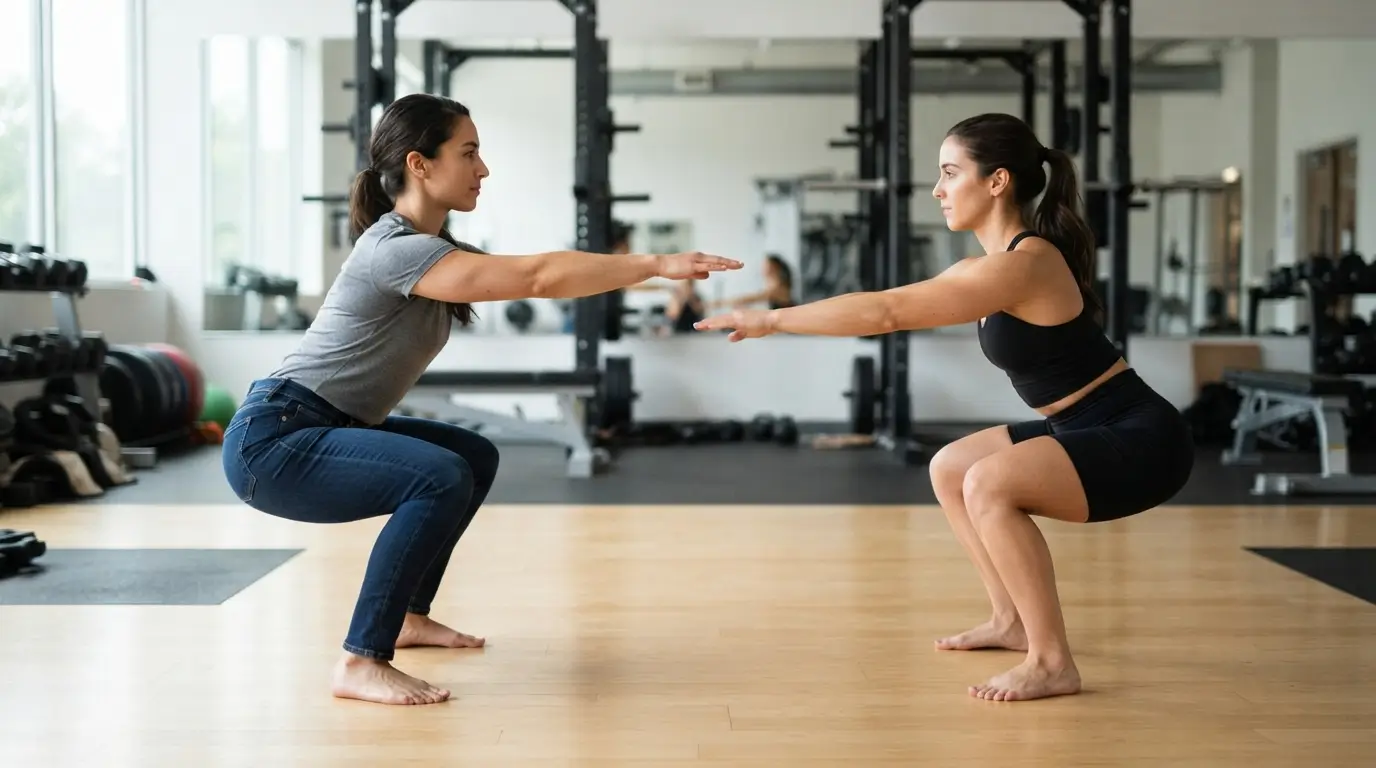
Yes, you can wear jeans to the gym, and plenty of people do when they come straight from work or errands. The better question is whether you should. The answer depends on what you plan to do once you walk in.
Can you wear jeans to the gym for an easy walk on the treadmill? Usually, yes. Can you wear them for deep squats, lunges, or a sweaty interval session? That is where denim starts to work against you.
This guide breaks it down the way a coach would explain it to a new client. You will learn which workouts are fine in denim, which are not, and why. You will also get a simple plan for days when jeans are all you have.
Quick Answer
Yes, you can wear jeans to the gym for light activity like walking, easy cycling, or upper-body machine work. However, jeans limit squats, lunges, and high-effort cardio, and cotton denim holds sweat, which may raise chafing risk. For anything intense, change into stretchy, breathable clothes.
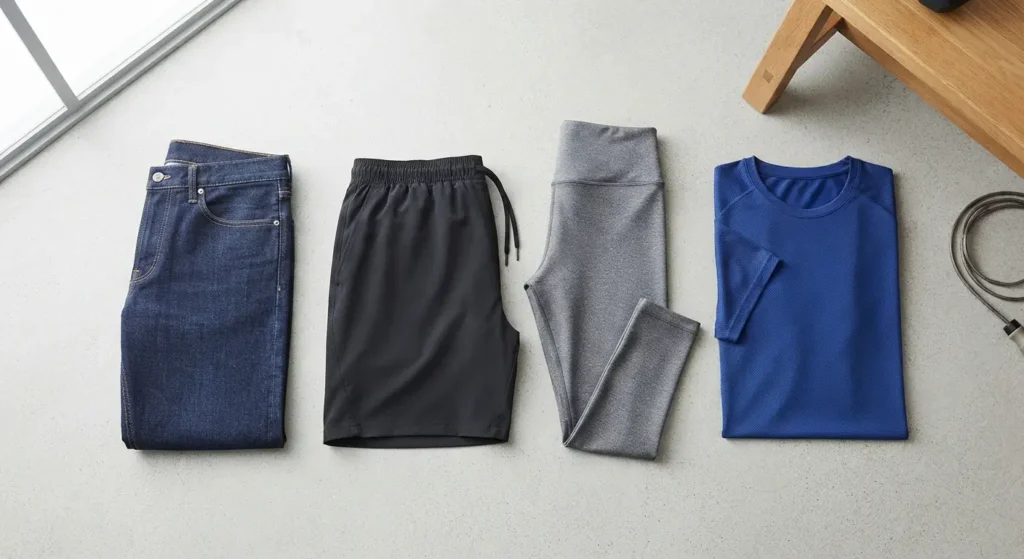
Can You Wear Jeans to the Gym? What Research and Coaching Practice Say
I could not find research that directly tests jeans against activewear for strength training. So the advice below combines general skin and clothing guidance from medical sources with standard coaching practice. Where something is a coaching observation rather than a research finding, we say so.
First, a reality check on priorities. Adults are advised to get at least 150 minutes of moderate activity and two days of muscle-strengthening work each week. Because of that, a short, easy session in jeans is usually better than skipping the gym altogether. Still, a few features of denim are worth understanding before you decide.
Why Wearing Jeans to the Gym Means Holding Sweat
Jeans are made of cotton, and cotton behaves differently from athletic fabrics. Cleveland Clinic notes that cotton soaks up moisture and dries slowly, which can easily lead to chafing. In addition, the same source explains that moisture makes chafing worse because it lets fabric slip and rub across damp, more easily damaged skin.
The inner thighs are a common trouble spot. Cleveland Clinic lists inner thigh chafing among the most frequent types, and says it is often worse in hot weather. As a result, a long, sweaty session in thick denim is more likely to leave you sore than a short walk.
Heavy seams matter too. The inseam and the crotch seam on most jeans are thick, and that bulk sits right where your legs move the most. Tags and seams can chafe as well, so a pair with flat, soft seams is the safer choice.
Can You Wear Jeans to the Gym Without Losing Range of Motion?
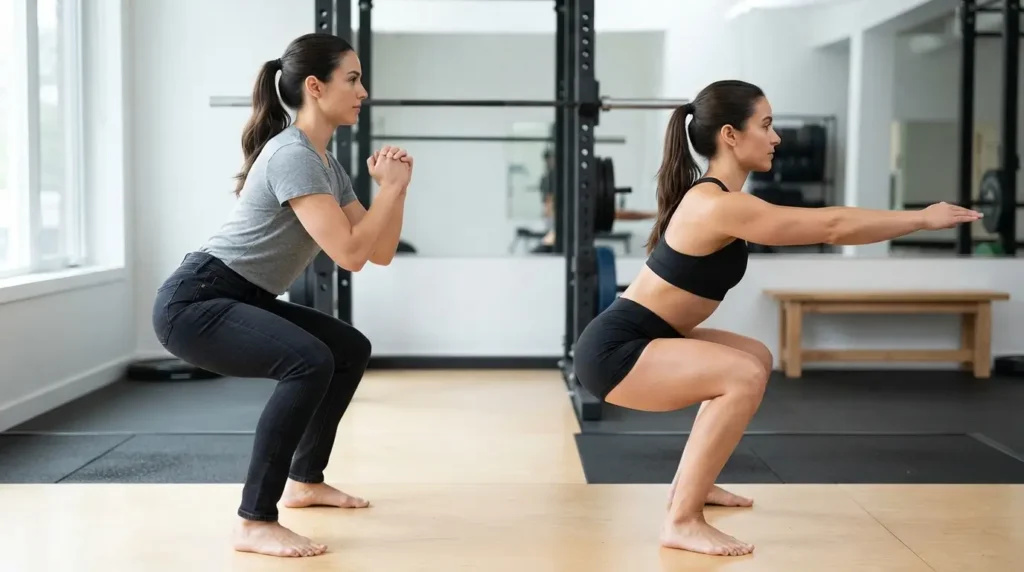
This next point comes from coaching experience, not a study. Rigid, non-stretch denim has little give across the hips, thighs, and seat. When you squat, your hips and knees bend well past 90 degrees, and the fabric pushes back.
Here is what that feels like. The waistband digs in at the bottom of the squat, your knees feel “stuck,” and you cut your depth short without noticing. Meanwhile, your body compensates by leaning forward or rounding your lower back, which is the opposite of the clean form you want.
Stretch denim with a small amount of elastane does better. Even so, it is still thicker and less forgiving than shorts, leggings, or joggers. Cleveland Clinic also warns that tight or restrictive clothing can cause chafing, so a snug pair is not a safe fix.
Jeans at the Gym: Heat and the Cold Walk Home
Denim is dense. Many people find it feels warm during exercise, especially in a heated gym or in summer. That can make you sweat more than you would in lighter clothes.
The bigger issue comes after the workout. In cold weather, Cleveland Clinic explains that sweat left sitting in cotton can make you feel colder because the moisture is not moved away from your skin. Wet denim on the walk to your car is not pleasant, and it dries slowly.
Hygiene When You Wear Jeans to the Gym
Here is the good news. The CDC recommends using a barrier such as clothing or a towel between your skin and shared equipment, including weight-training benches. Jeans do that job well, because your skin never touches the pad.
Now the other side. The CDC also advises washing and drying your clothing after each use. Most people wash jeans far less often than gym shorts, so a pair that has been through several sweaty sessions can become a poor choice for hygiene. If you are wearing jeans to the gym regularly, wash them more often than you normally would.
As a quick summary, jeans can protect you from shared surfaces, but they hold sweat, restrict movement, and need frequent washing. That mix is why they suit easy workouts better than hard ones.
Can You Wear Jeans to the Gym for Different Workouts?
The table below answers the question, can you wear jeans to the gym, for common activities. These ratings are coaching judgments based on how much movement and sweat each activity involves.
| Activity | Jeans OK? | Why | Better option |
|---|---|---|---|
| Easy treadmill walk | Yes | Low effort, little sweat | Joggers or athletic shorts |
| Easy stationary bike | Mostly | Seams can rub at the saddle | Padded shorts or soft leggings |
| Upper-body machines | Yes | Legs barely move | Any comfortable pants |
| Seated dumbbell work | Yes | Lower body stays still | Sweatpants |
| Squats and lunges | No | Restricts depth and hip bend | Shorts or stretch leggings |
| Deadlifts | Not ideal | Seat and thigh seams strain | Joggers or leggings |
| HIIT and jumping | No | Heat, sweat, and restriction | Moisture-wicking shorts |
| Rowing machine | No | Deep knee bend, sliding motion | Stretch shorts or leggings |
| Yoga and mobility | No | Needs full range of motion | Leggings |
Wearing Jeans to the Gym for Walking and Easy Cardio
Walking is the best match for denim. The effort is low, so sweat stays minimal and your hips move through a small range. Treadmill walking at a relaxed pace of 2.5 to 3 miles per hour (4 to 4.8 km/h) works fine in jeans for 20 to 30 minutes.
If you like structured walking plans, the 6-6-6 walking routine is easy to follow in everyday clothes. On a stationary bike, keep the effort light and watch the inseam. A thick seam pressing against the saddle can get uncomfortable fast.
Jeans at the Gym on Upper-Body Days
On arm and back day, your legs mostly stay put. As a result, jeans cause very few problems. Seated rows, lat pulldowns, chest presses, and shoulder presses all work well.
For beginners, start light. A seated row with 30 to 50 lb (14 to 23 kg), for 2 to 3 sets of 10 to 12 reps with 60 to 90 seconds of rest, is a reasonable starting range. Of course, adjust to your own strength.
One caution: check your back pockets and rivets before sitting on vinyl pads. Metal rivets can scratch upholstery, and a hard wallet in a back pocket can make a bench press or row uncomfortable.
Can You Wear Jeans to the Gym for Squats and Leg Day?
This is where jeans fail most often. You can do a bodyweight squat to a comfortable depth in stretch denim. Still, once you add weight, the restriction gets worse, and your form is more likely to suffer.
Lunges and Bulgarian split squats ask for a deep front-knee bend and a long rear-hip stretch. Rigid denim fights both. If you are squatting regularly, keep a pair of shorts in your bag for those days.
The leg press machine is a middle case. Your hips fold deeply at the bottom, so jeans can pinch. If you must use it in denim, shorten the range and lighten the weight.
Deadlifts and Hip Hinges in Jeans
Deadlifts and hip hinges bend you at the hips and load the seat and thighs. A seam can split under that stress, and a tight waistband can squeeze your belly during the brace. Rigid jeans also tend to ride down as you bend.
If you must deadlift in jeans, keep the weight modest and the sets crisp. Use a belt only if it fits over the waistband without bunching. Otherwise, move this lift to a day when you have proper clothes.
HIIT, Jumping, and Rowing in Jeans
High-intensity intervals, jump squats, and burpees produce heat and sweat quickly. Jeans trap both, and the extra weight of wet denim makes every jump harder. A box jump of 20 inches (51 cm) in rigid jeans is a good way to catch a toe or tear a seam.
The rowing machine has the same problem. Each stroke needs a deep knee bend while you slide back and forth on the seat. Save these for activewear.
Bodyweight Work and Mobility in Jeans
Simple bodyweight exercises like push-ups, planks, and rows are fine in jeans because your hips stay mostly neutral. However, floor work such as deep lunges, bridges, or mobility flows asks for more range. Rigid denim limits those positions, so wear softer clothes for them.
Jeans vs. Gym Clothes: Side-by-Side Comparison
This comparison covers what matters most for a beginner on a normal gym day.
| Factor | Jeans | Gym clothes (athletic fabrics) |
|---|---|---|
| Stretch | Low to moderate | Moderate to high |
| Sweat handling | Absorbs and holds moisture | Designed to move moisture away |
| Drying time | Slow | Faster |
| Heat | Dense, can feel warm | Usually lighter |
| Chafing risk | Higher in long sessions | Lower |
| Convenience | Already on you | Need to pack and change |
| Cost | Already owned | Extra purchase |
| Best for | Walking, upper-body work | Almost everything else |
Notice that jeans win only on convenience and cost. Those are real advantages for a beginner who is building a habit. Even so, they do not make up for the limits once your workout gets harder.
For sweaty sessions, athletic fabrics make a difference. Moisture-wicking fabrics pull sweat toward the outer surface of the garment, where it can evaporate. Cleveland Clinic also notes that a well-fitted, slightly snug shirt can reduce the back-and-forth fabric movement that causes chafing.
How to Wear Jeans to the Gym If You Have No Other Option
Sometimes you really do show up in jeans. Maybe you came from the office, or you forgot your bag. Here is how to make the best of it.
- Pick a jeans-friendly workout. Choose walking, light cycling, or upper-body machines. Skip squats, deadlifts, and jumps for today.
- Check your jeans first. Soft, stretchy pairs with flat seams work best. Rigid, raw denim with thick seams is the worst case.
- Empty your pockets. Remove your phone, wallet, and keys so they do not dig in or scratch the equipment.
- Loosen up. Undo the top button if you can do so comfortably, and make sure your belt does not pinch.
- Warm up gently. Spend 5 minutes walking, then do 10 easy bodyweight hip hinges and 10 arm circles each way.
- Keep it short. Aim for 20 to 30 minutes at an easy to moderate effort.
- Change afterward. Cleveland Clinic recommends promptly removing wet clothes to cut down on friction. Bring dry underwear and a spare top, if you can.
Coach’s Tip: Keep a small “emergency kit” in your car or work bag: a pair of lightweight shorts, a dry tee, and a pair of thin socks. It takes up almost no room, and it turns any surprise gym visit into a proper workout. Moreover, it removes the most common excuse for skipping a session.
Common Mistake: Doing a full leg day in rigid jeans because “I’m already here.” The restricted depth, the pinched hips, and the shifted form all raise your discomfort and lower the quality of the work. Instead, swap to an upper-body day or a walk, and save the legs for a day when you are dressed for them.
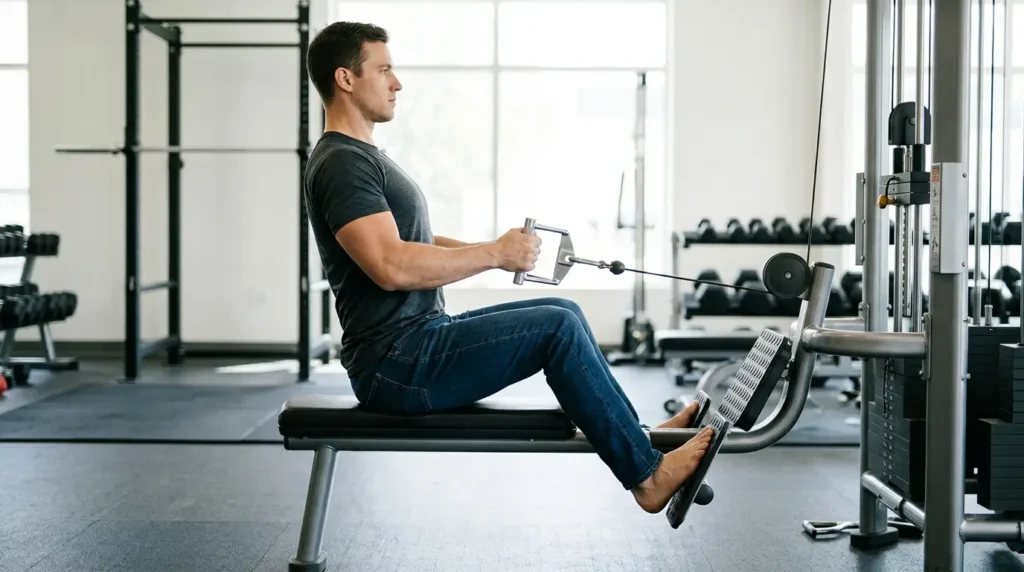
Sample 25-Minute Jeans-Friendly Workout
This routine suits beginners and avoids deep hip bends. It uses machines and dumbbells, so the lower body stays mostly still.
| Exercise | Sets | Reps | Rest |
|---|---|---|---|
| Treadmill walk (warm-up) | 1 | 5 minutes | None |
| Seated cable row | 3 | 10–12 | 60–90 sec |
| Machine chest press | 3 | 10–12 | 60–90 sec |
| Seated dumbbell shoulder press | 2 | 10 | 60 sec |
| Lat pulldown | 3 | 10–12 | 60–90 sec |
| Plank | 2 | 20–30 sec | 45 sec |
| Easy walk (cool-down) | 1 | 3–5 minutes | None |
Use a weight that leaves you 2 to 3 reps short of failure on the last set. For most beginners, that means 10 to 25 lb (4.5 to 11 kg) per dumbbell for the shoulder press, and lighter or heavier on the machines depending on your strength. Use a slow, controlled tempo, around two seconds up and two seconds down, and exhale as you push or pull.
This kind of session fits the CDC’s advice that muscle-strengthening activity should work all the major muscle groups, including the back, chest, shoulders, and arms. You would still need a separate leg session on another day.
Easier Version (Regression)
- Do 2 sets instead of 3 on each machine.
- Replace the plank with a wall plank or a knee plank for 15 to 20 seconds.
- Lower the weight until every rep feels smooth.
Harder Version (Progression)
- Add a fourth set to the row and the pulldown.
- Slow the lowering phase to three seconds.
- Increase the weight by about 5 lb (2.3 kg) once you finish all reps with good form for two sessions in a row.
- Hold the plank for 45 to 60 seconds.
Safety Notes
Safety matters more than style, so keep these points in mind if you wear jeans to the gym.
- Stop if something pinches. Waistband pressure, a pulling seam, or numbness in your thigh is a sign to stop or change the exercise.
- Watch your footwear. Wear closed, supportive shoes. Jeans do not change this rule, and flip-flops or dress shoes are a poor choice on a gym floor.
- Wash your jeans often. Follow the CDC’s advice to wash and dry clothing after each use. Wearing the same sweaty pair repeatedly is not a good habit.
- Cover cuts and scrapes. The CDC also recommends covering skin cuts with clean, dry bandages. Jeans can protect your legs, but they will not protect your hands.
- Treat chafing early. Cleveland Clinic suggests cleaning chafed skin and protecting it with petroleum jelly or an unscented moisturizer. If the irritation does not settle in a few days, or if the skin breaks or looks infected, see a doctor.
- Know your limits. If you have a skin condition, a joint problem, or a health concern, check with a doctor or physical therapist before starting a new routine.
Related Tips for Gym Beginners
Build a Simple Quick-Change Kit
A little planning removes the whole jeans problem. Pack a pair of shorts or joggers, a tee, clean underwear, thin socks, and a small towel. A durable gym bag keeps everything in one place, and you can wash your gym bag regularly so it does not smell.
Buy One Good Pair of Workout Pants
You do not need a full wardrobe. One pair of stretchy shorts and one pair of joggers or leggings cover almost every workout. As a result, you stop thinking about clothes and focus on the session.
Pick the Right Fabric for the Day
For light walking or an easy lift, a cotton-blend tee is fine. For sweaty sessions, move to synthetic, moisture-wicking pieces. Cleveland Clinic recommends avoiding cotton when you expect to sweat a lot.
Check Your Gym’s Rules
Before you decide whether you can wear jeans to the gym, remember that policies vary by gym. Some places ask members to wear athletic clothing, and some do not. Read your membership terms or ask the front desk, so you are not surprised on your first visit.
Do Not Let Clothes Be the Barrier
Finally, remember the bigger picture: can you wear jeans to the gym and still get a good workout? Yes, if you pick the right session. Showing up, even in imperfect clothes, builds the habit. Start with what you have, then upgrade your gear as you learn what you like.
Frequently Asked Questions
Is it OK to wear jeans to the gym?
It is fine for light activity such as walking, easy cycling, or machine-based upper-body work. For squats, lunges, deadlifts, and high-effort cardio, jeans restrict movement and hold sweat, so they are a poor choice. If you have no other clothes, keep the session short and easy.
Can you squat in jeans?
You can, but expect a shallower range of motion. Rigid denim resists at the hips and knees, and a seam may split in the seat. Stretch jeans help, yet many lifters still prefer shorts or leggings. If you try it, use bodyweight only and stop at a depth that feels smooth.
Can you walk on a treadmill in jeans?
Yes. Easy walking is the best fit for denim because the effort is low and sweat stays minimal. Keep the pace comfortable, such as 2.5 to 3 miles per hour (4 to 4.8 km/h), and keep sessions around 20 to 30 minutes. Choose a soft, stretchy pair and a smooth-seamed sock to limit rubbing.
Will jeans make me chafe?
They can. Cotton soaks up sweat and dries slowly, and moisture makes chafing worse, according to Cleveland Clinic. The inner thighs are a common trouble spot. Keep sessions short, avoid thick seams, and change out of damp jeans soon after you finish. Chafing that lingers is worth showing to a doctor.
Why do some gyms discourage denim?
Policies differ, so read your gym’s rules. Possible reasons include rivets and hard seams scratching bench pads, and the way rigid denim limits safe movement during lifts. Dress-code rules can also help keep sweat and dirt off shared equipment. Ask the front desk if you are unsure.
What can I wear instead of workout clothes?
Look for soft, stretchy pieces you already own: a cotton-blend tee for light sessions, sweat shorts, and sweatpants or joggers. For sweaty workouts, a synthetic, moisture-wicking top is a better choice. Pair everything with closed, supportive shoes. A cheap pair of shorts in your bag solves most problems.
Conclusion: So, Can You Wear Jeans to the Gym?
Yes, you can wear jeans to the gym, as long as you match the workout to the clothes. Walking, easy cycling, and upper-body machine work are all fine in a soft, stretchy pair. Squats, deadlifts, jumps, and sweaty intervals are better saved for shorts, joggers, or leggings.
In short, the rule is simple: the harder you plan to work, the less denim you should wear. Keep an emergency kit in your bag, wash your clothes often, and change out of damp jeans quickly. Above all, do not let your outfit keep you out of the gym.
If you want a next step, build a two-day strength plan around the CDC’s weekly guidelines and put on clothes that let you move well. Your future self, and your inner thighs, will thank you.
