Cozy Cardio Benefits: What Gentle At-Home Cardio Really Does for You
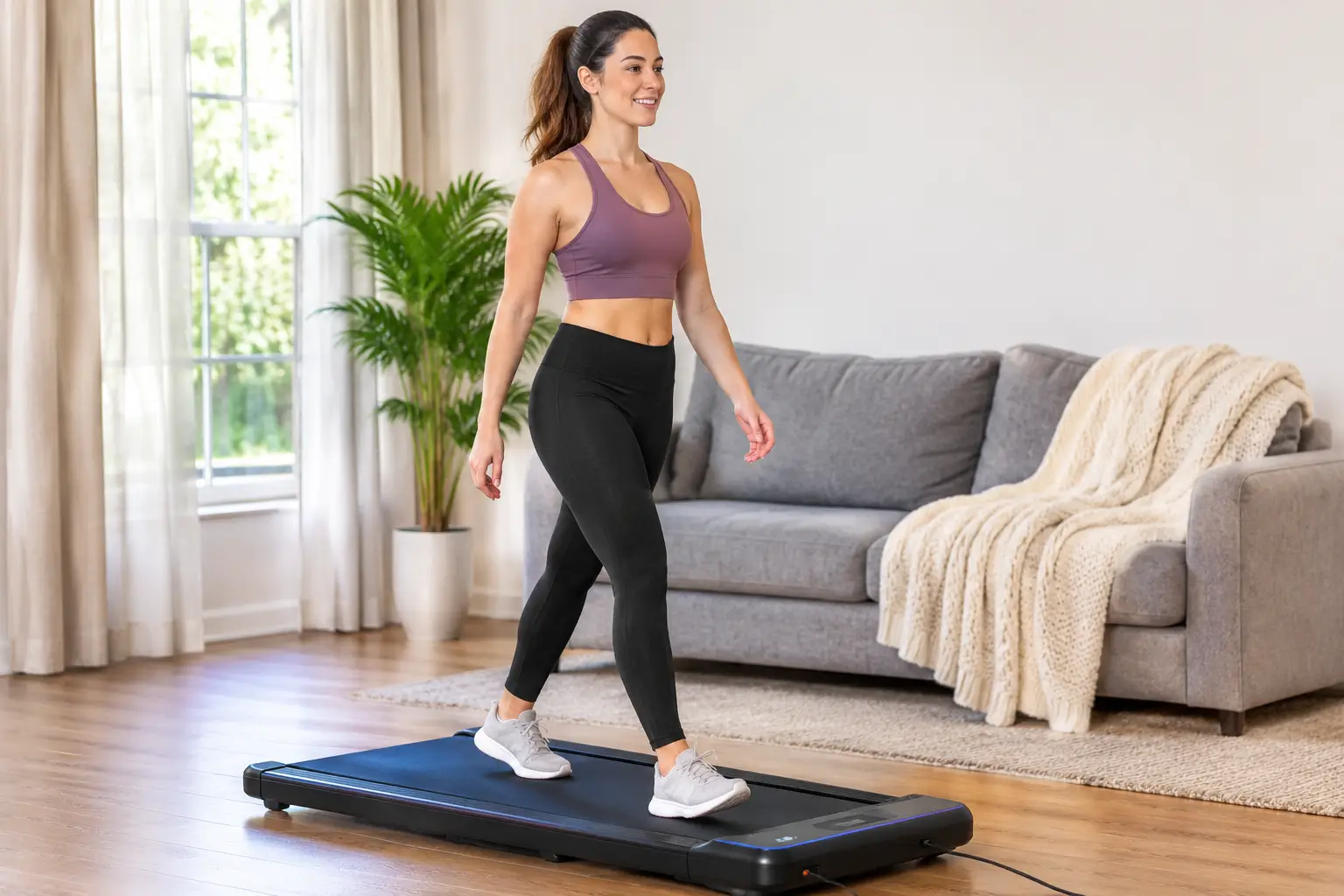
Cozy cardio benefits are getting attention for a simple reason: a workout you enjoy is a workout you actually do. Cozy cardio means easy, low-intensity movement, such as walking on a walking pad or pedaling slowly, done in a comfortable space at home. For example, think soft lighting, a favorite show, and comfortable clothes.
But does it really work? The short answer is yes, with limits. Light movement is linked to real health gains compared with sitting all day. However, it does not replace every type of training. This guide explains what the research says, where cozy cardio falls short, and how to build a routine that fits beginners, busy adults, and anyone who finds hard workouts intimidating.
Quick Answer
Cozy cardio benefits include less sitting time, a lower barrier to starting, and possible gains in mood, stress, and sleep. Research links even light activity to better health than being inactive. However, easy-paced movement may not meet the 150-minute moderate-intensity guideline, so pair it with brisker sessions and strength work.
What Is Cozy Cardio?
Cozy cardio is a social media trend, not a medical term or a formal training method. In practice, it describes gentle aerobic exercise done at home in a relaxed setting. The pace is easy, the surroundings are comfortable, and the goal is to feel good rather than to push hard.
Most people do it in one of four ways:
- Walking on a walking pad or treadmill at a slow speed
- Marching or stepping in place in the living room
- Pedaling on an under-desk bike or pedal exerciser
- Dancing gently to a playlist
The main muscles involved are the calves, quadriceps, glutes, hamstrings, and hip flexors. Your core also works a little to keep you tall and steady. Because the effort is low, the load on your joints is low too.
So how is it different from regular cardio? The biggest difference is intensity. Regular cardio asks you to breathe harder and push your heart rate up. In contrast, cozy cardio asks you to stay relaxed. That difference matters, and we will return to it below.
Cozy Cardio Benefits for Mood, Stress, and Sleep
The research behind cozy cardio benefits comes mostly from studies of walking and light activity, not from cozy cardio itself. Keep that in mind as you read. Still, the findings point in a helpful direction.
1. Less Sitting, More Movement
Because many of us sit for hours each day, light activity helps break that pattern. A systematic review and meta-analysis of device-measured activity found that moderate-to-vigorous activity cut the risk of all-cause and cardiovascular death in adults. In addition, the same review reported that initial health benefits showed up at light intensity, too.
That finding is encouraging, but it comes from observational studies. In other words, these studies show a link, not proof of cause and effect. Even so, they support a practical idea: any movement beats none.
If you track your steps, our guide to the 10,000 steps benefits explains what the research says about daily step goals.
2. A Possible Lift in Mood and Stress Relief
Exercise in almost any form can act as a stress reliever, according to Mayo Clinic. Being active may also boost feel-good endorphins and distract you from daily worries. Mayo Clinic also notes that exercise can improve sleep, which stress often disrupts.
Walking has been studied more closely for mood. A 2024 systematic review of randomized trials found that walking reduced symptoms of depression and anxiety, and its effects were similar to those of active comparison groups. Likewise, a 2024 meta-analysis in JAMA Network Open linked higher daily step counts to fewer depressive symptoms. In particular, adults who took 5,000 or more steps a day tended to have fewer symptoms than those who walked less.
However, the evidence is not perfectly clear. A separate 2024 review of walking interventions found that the benefit lost statistical significance after the authors removed outliers and studies with a high risk of bias. In other words, walking may help your mood, but you should not treat the mood-related cozy cardio benefits as a treatment for depression or anxiety. If you are struggling, talk with a doctor or mental health professional.
3. Better Sleep, Possibly
Sleep is another area where gentle movement may help. A systematic review of exercise and sleep found that 29 of 34 studies concluded that exercise improved sleep quality or duration. In contrast, four found no difference, and one reported a negative effect.
Many people also wonder about evening workouts. A systematic review of evening exercise did not support the idea that exercising at night harms sleep in healthy adults. Those studies covered exercise in general, so your own response may differ. Therefore, try cozy cardio at different times and notice how you sleep.
4. It Is Easier to Stick With
Consistency is where the cozy cardio benefits shine. A hard workout can feel like a chore. By comparison, an easy walk with a good show on is much simpler to start. As a result, when the barrier is low, you are more likely to show up on busy or low-energy days.
The CDC also points out that you do not need to do all your activity at once. You can spread it across the week and break it into smaller chunks. That flexibility is one of the practical cozy cardio benefits. For example, two 10-minute sessions still count toward your day.
5. Low Impact and Easy to Access
One of the biggest cozy cardio benefits is how little it asks of your body in terms of impact. Because of that, you do not need a gym membership, a class schedule, or special skills. For people who feel nervous about crowded gyms, that privacy matters. It also suits people returning to exercise after a break.
Coach’s Tip: Use the talk test to keep the pace honest. At a true cozy pace, you should be able to hold a full conversation without effort. If you start to sound breathless, slow down by 0.2 to 0.5 mph (0.3 to 0.8 km/h) and settle in.
What Cozy Cardio Cannot Do
Honesty builds trust, so let’s cover the limits of the cozy cardio benefits. First, easy-paced movement may not count as “moderate” activity. The CDC says that aerobic activity needs to be at a moderate or vigorous intensity to count toward the weekly guidelines. Adults need 150 minutes of moderate-intensity activity per week, or 75 minutes of vigorous activity, or an equivalent mix.
Second, cardio is only half of the picture. The same CDC guidelines recommend at least two days of muscle-strengthening activity each week. Cozy cardio, however, does not replace that. Instead, a few simple bodyweight moves can fill the gap, and our bodyweight exercises list is a good place to start.
Third, cozy cardio is not a quick route to weight loss. The calories you burn at an easy pace are modest. In addition, weight depends on many factors, including eating habits, sleep, and total weekly activity. If weight loss is your goal, talk with your doctor first. Instead, use cozy cardio as a habit builder, not a promise of results.
Common Mistake: Treating cozy cardio as your only workout. If every session stays at a very easy pace, you may fall short of the moderate-intensity guideline. Instead, add a few brisk minutes each week and two short strength sessions.
Cozy Cardio vs. Regular Cardio: Quick Comparison
| Factor | Cozy Cardio | Brisk Cardio | Vigorous Cardio |
|---|---|---|---|
| Effort feel | Easy, relaxed | Comfortably hard | Hard, breathless |
| Talk test | Full sentences, no strain | Can talk, not sing | Only a few words |
| Typical examples | Slow walking pad, gentle pedaling | Brisk walking, steady cycling | Jogging, running, fast cycling |
| Counts toward CDC aerobic guideline? | May fall below the threshold | Yes (moderate) | Yes (vigorous) |
| Best for | Starting out, active days off, stress | Building fitness | Time-efficient training |
| Joint stress | Low | Low to moderate | Moderate to high |
As the table shows, these styles are not rivals. Instead, they work as a ladder. If you want to compare gentle and faster options, see our post on slow jogging vs fast walking.
How to Do Cozy Cardio: A Simple Routine
Here is a practical routine to try. It suits beginners and can grow with you.
Set Up Your Space
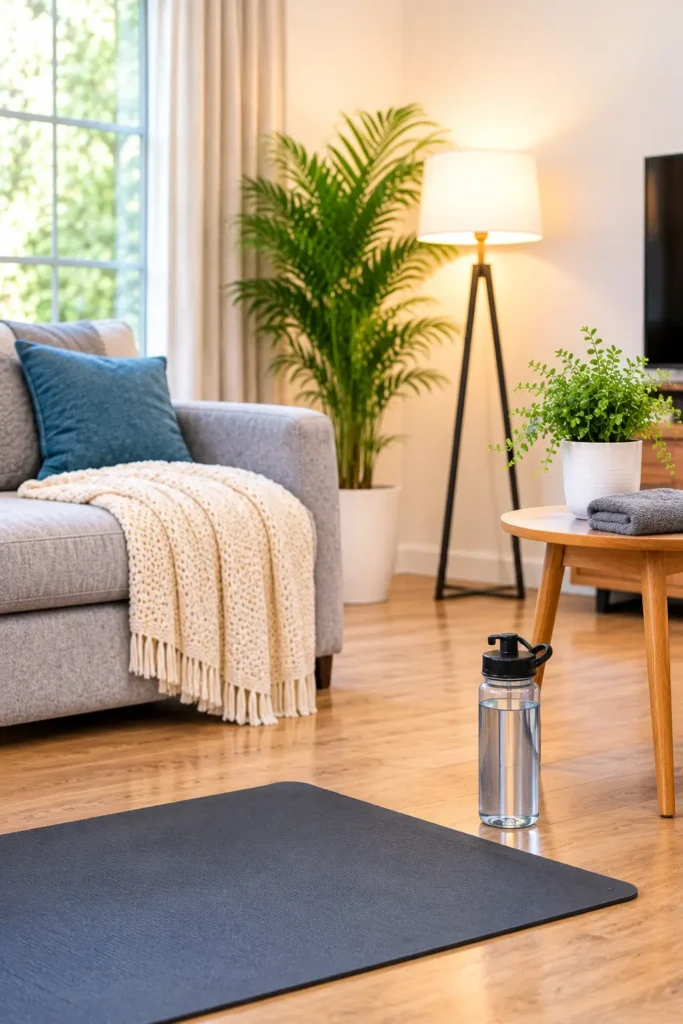
Before you start, make the space safe and comfortable:
- Clear a path at least 36 inches (91 cm) wide so you can move freely.
- Wear supportive shoes or non-slip socks, and keep floors dry.
- Keep blankets, cords, and loose fabric away from any machine.
- Place your screen at eye level so your head stays up.
- Keep water within reach.
Form Cues for Easy Walking
- Stand tall, with your chest open and your shoulders relaxed.
- Look ahead, not down at your phone.
- Swing your arms lightly at your sides.
- Roll each foot from heel to toe in a smooth, quiet step.
- Keep your steps short and steady, and breathe through your nose and mouth.
Overall, the movement should feel smooth and easy. Your calves and thighs may feel gently warm, but you should not feel strain or pain.
A Four-Week Starter Plan
| Week | Sessions per Week | Time per Session | Pace and Effort | Notes |
|---|---|---|---|---|
| 1 | 3 | 15-20 min | Very easy, full conversation | Rest day between sessions |
| 2 | 4 | 20-30 min | Easy, steady | Split into two bouts if needed |
| 3 | 4-5 | 30 min | Easy, plus two 2-minute brisk pickups | Rest 2 min at an easy pace between pickups |
| 4 | 5 | 30 min | Easy, plus three 3-minute brisk blocks | Brisk blocks should feel moderate |
For distance, an easy pace of about 2 mph (3.2 km/h) covers roughly 1 mile (1.6 km) in 30 minutes. Brisk pickups may land near 3 mph (4.8 km/h) for many adults [VERIFY]. Use the talk test rather than the number, because fitness levels vary widely.
Each Session at a Glance
- Warm-up (3-5 minutes): Walk or march very slowly.
- Main block (15-25 minutes): Keep a steady, easy pace.
- Cool-down (3-5 minutes): Slow down gradually.
- Stretch (3-5 minutes): Hold calf, hamstring, and hip flexor stretches for 20-30 seconds each side.
Coach’s Tip: Pair the session with a cue you already have, such as your favorite episode or a morning coffee. Habits stick faster when they attach to something you already do.
Easier Version (Regression)
If 15 minutes feels like too much, start with five to ten minutes. Slow your pace, or sit and pedal gently instead. You can also break the day into two or three short walks. The CDC notes that smaller chunks of activity are fine.
Harder Version (Progression)
When the easy pace feels simple, raise the challenge in small steps:
- Add a 1-2% incline if your treadmill allows it.
- Lengthen the brisk blocks from three minutes to five.
- Add two strength days with 2 sets of 10-12 bodyweight squats, 2 sets of 8-12 wall push-ups, and 2 sets of 12 glute bridges, resting 60 seconds between sets.
- Try leg lifts with a light ankle weights set of 1-2 lb (0.5-0.9 kg), done standing or seated.
Add only one change at a time. If something hurts, then go back to the previous step.
Cozy Cardio Workout Ideas
You do not need fancy gear. Instead, pick what suits your space and budget.
No equipment: Marching in place, step-touches, hallway walking, and gentle dancing all work. Aim for 10 to 20 minutes to start.
Walking pad or treadmill: A slow belt speed makes steady walking easy to repeat. If you wonder how treadmill work relates to fat loss, read our treadmill for belly fat guide.
Seated or desk options: If you work from home, under-desk ellipticals and a pedal exerciser let you move while you work or watch TV. They also suit people who prefer to stay seated.
Small spaces: If you live in a smaller home, our list of apartment workout equipment shows compact choices.
Structured walks: If you like a plan, a routine such as the 6-6-6 walking routine can add some structure to your easy days.
How to Build on Cozy Cardio Benefits and Meet the Guidelines
The cozy cardio benefits make it a great starting point. To meet the CDC guidance, though, you will want to build up. Here is a simple weekly layout for a beginner:
- Three days: Cozy cardio, 20-30 minutes, easy pace
- Two days: Brisk walking or steady cycling, 20-30 minutes, moderate effort
- Two days: Short strength sessions, 15-20 minutes
- One day: Rest or very light movement
This mix gives you comfort and challenge in the same week. Moreover, the brisk days add up toward the 150-minute moderate-intensity target. If that total feels far away, do not worry. Instead, build toward it over several weeks. The CDC says that some activity is better than none, and that even small amounts can offer benefits.
Safety Notes: Who Should Check With a Doctor First?
Gentle movement is safe for most people. Still, the CDC advises that you consider checking with your doctor before starting if you have a health condition or symptoms. Please talk with a doctor or physical therapist first if you:
- Have heart, lung, kidney, or joint conditions
- Feel chest pain, dizziness, or unusual shortness of breath during activity
- Pregnancy or the postpartum period
- Older age with balance problems or a history of falls
- Recovery from an injury or surgery
- Plan to use exercise as part of a weight loss plan
Stop and seek medical help if you feel chest pain, severe dizziness, or sudden shortness of breath. In addition, use a stable machine, keep a handrail or wall nearby if your balance is shaky, and avoid walking with loose blankets or cords near a moving belt.
Related Tips to Stay Consistent
- Schedule it. Put your session in your calendar like any other appointment.
- Make it a treat. Save a favorite show or podcast for cozy cardio time only.
- Track gently. Log minutes, not perfection. A simple checkmark works.
- Prepare the night before. Lay out shoes and clear the walking path.
- Be flexible. On busy days, two 10-minute sessions still count.
- Mix it up. Rotate walking, pedaling, and dancing to avoid boredom.
FAQ
Is cozy cardio actually good for you?
Yes, for most healthy adults it is a good way to move more. Research links light activity to better health outcomes than inactivity, and walking trials show fewer symptoms of depression and anxiety. Still, it works best alongside some brisker cardio and strength training each week.
Does cozy cardio burn fat?
Cozy cardio burns some calories, but at an easy pace the total is modest. Fat loss depends on your overall eating pattern, sleep, and total weekly activity, not one workout style. Even so, cozy cardio can support consistency, which matters most. Therefore, check with your doctor before starting any weight loss plan.
How long should I do cozy cardio?
Start with 20 to 30 minutes, three to five days a week. If that feels like too much, split it into two 10-minute walks. The CDC recommends 150 minutes of moderate activity weekly for adults, so add brisker minutes over time.
Is cozy cardio enough exercise?
Not by itself, for most adults. The CDC guidelines call for moderate or vigorous aerobic activity plus two days of muscle strengthening. Easy-paced cozy cardio may fall below moderate intensity. Use it as a foundation, then add brisk intervals and simple strength work.
Can cozy cardio improve sleep?
It may help. A review of exercise and sleep found that most studies reported better sleep quality or duration, and another review found evening exercise did not harm sleep in healthy adults. Still, keep the effort easy, and notice how you sleep after evening sessions.
Can I do cozy cardio every day?
Yes, most healthy adults can walk or cycle gently every day, since the effort is low. Listen to your body, keep your pace conversational, and take an even easier day if you feel sore or tired. If you have a medical condition, ask your doctor what daily amount is right for you.
Conclusion
Cozy cardio benefits come down to one idea: easy movement is easier to repeat. Light activity is linked to better health than sitting, walking may support mood and stress relief, and a comfortable routine can make it simpler to build a habit. At the same time, easy-paced sessions may not reach the moderate-intensity guideline, and they do not replace strength training.
So treat cozy cardio as your foundation. Start with 15 to 20 minutes, keep the pace conversational, and add brisk blocks and two strength days as you feel ready. Over time, that mix gives you both the comfort that keeps you coming back and the challenge that keeps you progressing.
